
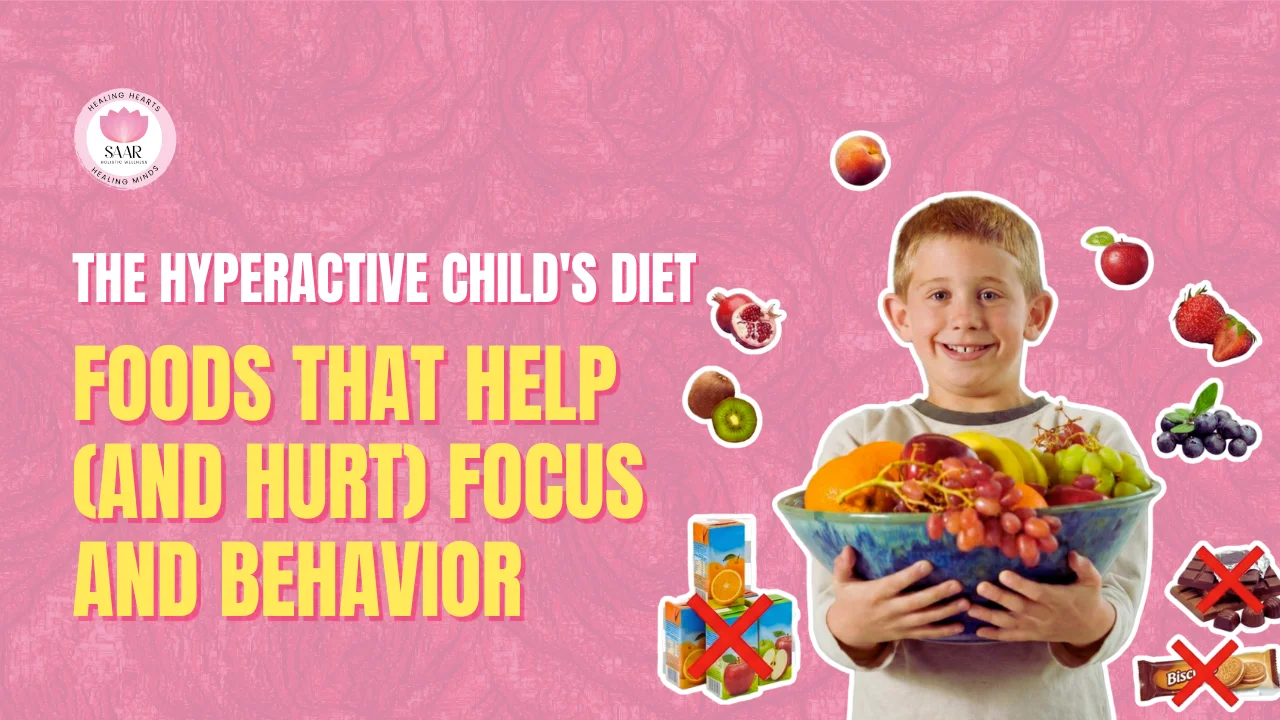
Today, I’m going to share something that could change your daily battles with your hyperactive child not overnight, but gradually and genuinely.
I’m talking about food. And before you roll your eyes thinking this is another ‘eliminate sugar and everything will be fine’ lecture it’s not. The relationship between diet and hyperactive behavior is far more nuanced, more science-backed, and more practical than most parents realize.
The truth is, food won’t “cure” hyperactivity. But the right foods can give your child’s developing brain the best possible chance to focus, regulate emotions, and manage their big energy.
Let me show you what actually makes a difference.
The Sugar Myth (It’s Complicated)
Here’s the truth parents need to hear: sugar doesn’t cause hyperactivity. Research has debunked this myth repeatedly. So why does every parent swear their child “goes crazy” after birthday cake?
The answer is context. At birthday parties, children are already overstimulated by excited friends, games, noise, and new environments. The cake isn’t causing the behavior; it’s just happening at the same time. Our brains make the connection even when it’s not really there.
But and this is important, sugar does affect behavior, just not the way we think. Here’s what actually happens: when your child eats something high in sugar without protein or fiber, their blood glucose spikes quickly. Their body releases insulin to bring it down, sometimes overshooting and causing a crash. During that crash, they feel tired, irritable, and unfocused. Then they crave more sugar to feel better again.
It’s not hyperactivity; it’s a blood sugar rollercoaster. And for children who already struggle with self-regulation, these ups and downs make everything harder.
I don’t tell parents to eliminate sugar entirely. That’s unrealistic and can create unhealthy relationships with food. Instead, I suggest pairing it with protein. If your child wants cookies, add a glass of milk or a handful of nuts. The protein slows down sugar absorption and prevents the crash.
The Real Culprits: Artificial Additives
While we’re clearing up myths, let me tell you what actually does affect some hyperactive children: artificial food dyes and preservatives.
Studies show that certain children, not all, but a meaningful percentage show increased hyperactive behavior when consuming artificial colors like Red 40, Yellow 5, and Yellow 6. These are found in candy, fruit snacks, bright cereals, sports drinks, and even some seemingly healthy foods like flavored yogurt.
I’ve worked with families who eliminated artificial dyes and saw noticeable improvements in focus and emotional regulation within two weeks. One mother told me her son’s teacher asked what medication they’d started but they hadn’t started anything. They’d just switched from neon orange cheese crackers to plain ones.
I’m not saying artificial dyes affect every hyperactive child. But they’re easy to remove and worth trying for two weeks to see if you notice a difference. Read labels carefully; these additives hide in unexpected places.
Foods That Actually Help: Building a Better Brain
Now for the good news: certain nutrients genuinely support brain function, focus, and emotional regulation.
Omega-3 Fatty Acids are probably the most researched nutrient for ADHD and hyperactivity. These essential fats build brain cell membranes and support neurotransmitter function. Multiple studies show that children with hyperactivity often have lower omega-3 levels, and supplementing can improve attention and reduce impulsive behavior.
The best sources are fatty fish like salmon, sardines, and mackerel. I know most hyperactive kids won’t touch these. So try:
- Ground flaxseeds mixed into smoothies or oatmeal
- Chia seeds in yogurt
- Walnuts as a snack
- Omega-3 fortified eggs
- High-quality fish oil supplements (check with your pediatrician on dosing)
Protein is your secret weapon for stable energy and focus. It slows down digestion, prevents blood sugar crashes, and provides amino acids needed to make neurotransmitters like dopamine and serotonin, the brain chemicals that help with attention and mood regulation.
I recommend protein at every meal and snack. This doesn’t mean your child needs to eat chicken breast constantly. Try:
- Eggs in any form (scrambled, hard-boiled, made into muffins)
- Greek yogurt
- Cheese sticks
- Nut or seed butter
- Beans and lentils
- Lean meats
Aim for protein at breakfast especially. Children who eat protein-rich breakfasts show better focus and fewer behavioral issues at school compared to those eating sugary cereals or pastries.
Complex Carbohydrates provide steady, sustained energy unlike refined carbs that spike and crash. Think whole grain bread instead of white, brown rice instead of white, oatmeal instead of sugary cereal. These foods release glucose slowly, keeping your child’s energy and mood more stable throughout the day.
Iron and Zinc deficiencies have been linked to attention problems and hyperactive behavior. Many children don’t get enough, especially picky eaters. Good sources include lean red meat, beans, fortified cereals, and pumpkin seeds. If you suspect deficiency, ask your pediatrician to check levels that don’t supplement without testing first.
The Forgotten Essential: Water
Here’s something most parents completely overlook: dehydration affects behavior.
Even mild dehydration just 1-2% below optimal hydration impairs concentration, increases fatigue, and worsens mood. And children are terrible at recognizing their own thirst. By the time they say “I’m thirsty,” they’re already dehydrated.
Hyperactive children are especially vulnerable because they’re constantly moving and often forget to drink. I’ve seen remarkable improvements in focus and emotional control when parents simply ensured their child drank enough water throughout the day.
The guideline is roughly 5-8 cups daily for children ages 5-12, depending on size and activity level. Make it easier:
- Send a water bottle to school with their name on it
- Offer water with every meal and snack
- Set reminders if needed
- Make it appealing with fun straws or their favorite cup
Limit juice and sugary drinks; they add empty calories and don’t hydrate as effectively as water.
Meal Timing Matters More Than You Think
When your child eats is almost as important as what they eat.
I consistently see behavioral problems in children who skip breakfast, eat lunch late, or go too long between meals. Hyperactive children have high energy needs, and when their brain runs out of fuel, behavior deteriorates fast.
The strategy that works: three balanced meals plus two planned snacks. This keeps blood sugar stable and provides consistent energy for their busy brain and body.
Breakfast within one hour of waking is non-negotiable. Even if your child isn’t hungry, offer something with protein: a cheese stick and apple, peanut butter toast, or a yogurt smoothie.
Regular snack times prevent the late-afternoon meltdowns. Around 3-4 PM, when blood sugar naturally dips, offer a snack with protein and complex carbs crackers with cheese, apple with almond butter, or trail mix.
Dinner timing affects sleep, which affects next-day behavior. Aim for dinner at least two hours before bed. A too-late or too-heavy meal disrupts sleep quality, creating a vicious cycle.
Start Small, Be Realistic
I know this sounds overwhelming. You’re already managing so much with your hyperactive child, and now I’m asking you to think about every food choice?
Here’s my advice: pick one change to start with. Just one. Maybe it’s adding protein to breakfast. Maybe it’s buying a water bottle for school. Maybe it’s reading labels and avoiding artificial dyes for two weeks.
Make that one change consistent for two weeks, then assess. Did you notice anything? If yes, keep it and add another small change. If not, try something else.
Perfect nutrition doesn’t exist, especially with picky eaters. Some days your child will eat chicken nuggets and applesauce and that’s okay. The goal is progress, not perfection, a general pattern of brain-supporting foods, not rigid rules that create food battles.
Food Isn’t Everything (But It Helps)
I need to be honest: changing your child’s diet won’t “fix” hyperactivity. If you’re dealing with ADHD, you’ll still need behavioral strategies, possibly medication, and definitely patience.
But food can be a powerful support tool. It won’t solve everything, but it can take the edge off. It can give your child’s brain the nutrients it needs to function optimally. It can reduce the blood sugar crashes that make self-regulation even harder.
You’re already doing so much. Adding these nutritional strategies isn’t about being a perfect parent, it’s about giving your child every possible advantage in managing their big energy and beautiful, busy brain.
Start where you are. Do what you can. And remember: progress over perfection, always.


