
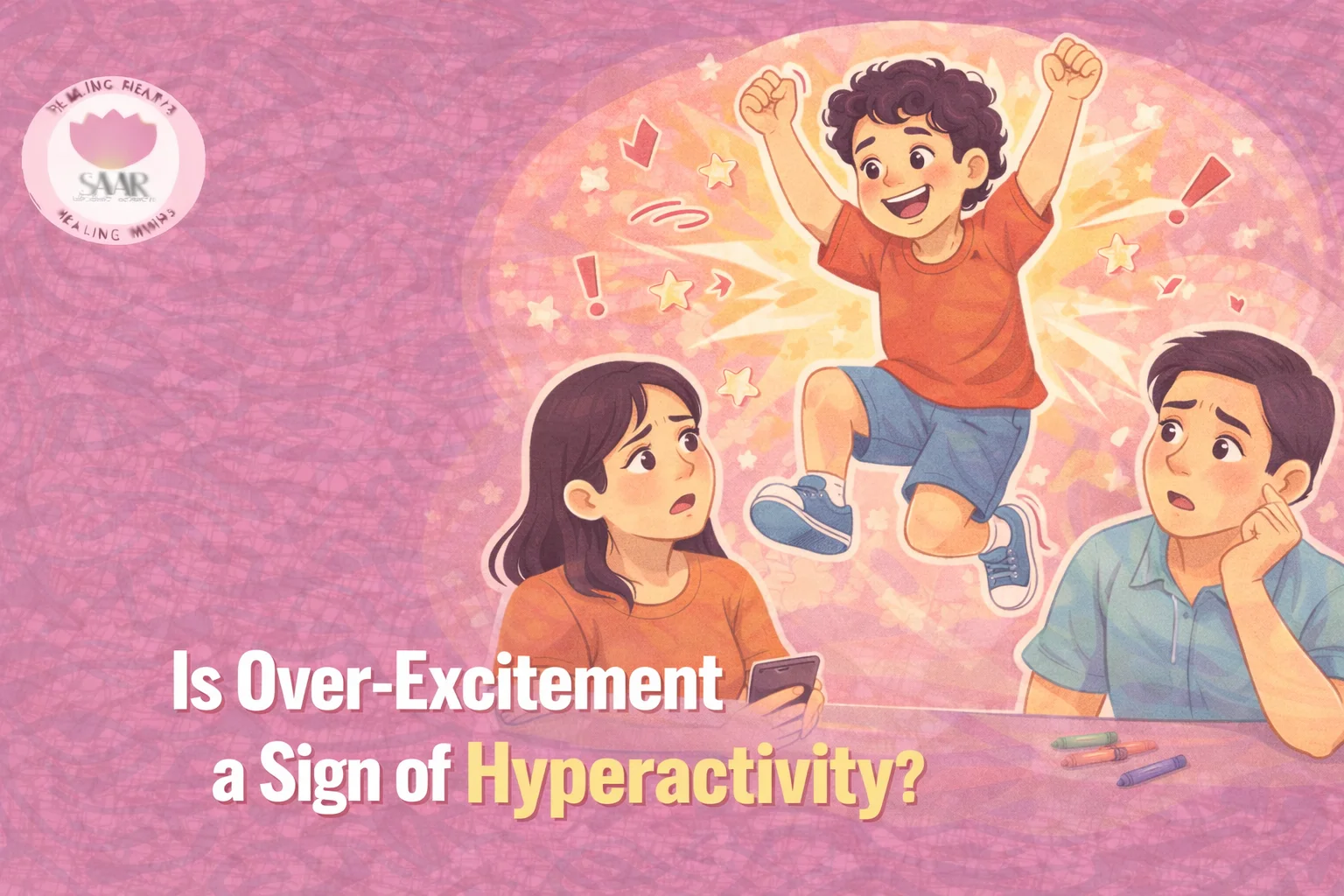
My Child Gets Too Excited… Is This Normal?
Birthday parties.
Family gatherings.
School events.
While other children are enjoying calmly, your child is:
- Jumping around non-stop
- Shouting loudly
- Interrupting others
- Getting overly emotional
- Unable to calm down
And somewhere in that moment, you feel people watching… judging.
You hear comments like:
- “Why is your child so hyper?”
- “Control him.”
- “Other kids are not like this.”
And you start wondering:
👉 Is this just excitement… or something more?
What Is Overexcitement in Children?
Overexcitement is when a child reacts more intensely than expected to a situation.
It can look like:
- Sudden bursts of energy
- Loud talking or shouting
- Running or jumping excessively
- Difficulty calming down
- Emotional outbursts (crying/laughing quickly)
In many cases, this is normal, especially in younger children.
But the key is frequency, intensity, and control.
When Is Overexcitement Normal?
Overexcitement is usually normal if:
- It happens only in special situations (parties, outings)
- The child calms down after some time
- It does not affect daily routine or school behavior
- The child can listen when guided
Children feel safe expressing emotions where they feel comfortable and excitement is a big emotion.
When Overexcitement May Be a Sign of Hyperactivity
It may indicate hyperactivity if your child:
- Gets overexcited in most situations (not just special events)
- Struggles to calm down even after reminders
- Shows similar behavior in school
- Has difficulty sitting still regularly
- Acts impulsively (interrupting, pushing, shouting)
- Gets frequent complaints from teachers
The difference is:
👉 Normal excitement is situational
👉 Hyperactivity is consistent and harder to control
Why Some Children Get Overexcited Easily
Children may struggle with excitement because of:
- High energy levels
- Difficulty with emotional regulation
- Sensory overload (noise, people, stimulation)
- Attention challenges
- Immature impulse control
So overexcitement is often not “bad behavior”
it’s a sign the child needs help managing big emotions.
A Special Note for Mothers
Let’s be real for a moment.
When your child gets overexcited in public, you feel:
- Embarrassed
- Judged
- Frustrated
- Tired of explaining
And people often make it worse by saying:
- “You need to control your child”
- “You are too soft”
- “He is too much”
But here’s what matters:
👉 Your child is not trying to embarrass you
👉 Your child is struggling to regulate excitement
And you…
You are doing your best in a difficult moment.
You don’t need more judgement.
You need understanding and the right tools.
What Parents Can Do
1️⃣ Prepare Before Events
Explain expectations in simple terms before going out.
2️⃣ Allow Movement Breaks
Don’t expect long periods of stillness give space to move.
3️⃣ Teach Calm-Down Techniques
Deep breathing, pausing, stepping aside practice at home.
4️⃣ Stay Calm
Your reaction determines how quickly your child settles.
5️⃣ Don’t Shame the Child
Avoid saying “You are embarrassing.” It lowers confidence.
When Should You Seek Support?
If overexcitement:
- Happens frequently
- Leads to school complaints
- Causes social difficulties
- Feels unmanageable
Then guidance can help you understand the root cause.
If you feel:
- Your child is “too much” in public
- You are constantly judged
- You don’t know how to calm your child
- Daily situations feel exhausting
You don’t have to handle this alone.
Our one-to-one parenting counselling sessions help parents:
- Understand hyperactivity and emotional behavior
- Learn practical calming techniques
- Handle public situations confidently
- Reduce stress and guilt
👉 Book a session today because your child doesn’t need control, they need guidance.
A Gentle Reminder
Excitement is not a problem.
But difficulty managing it can be.
And with the right support, children can learn to regulate step by step.


