
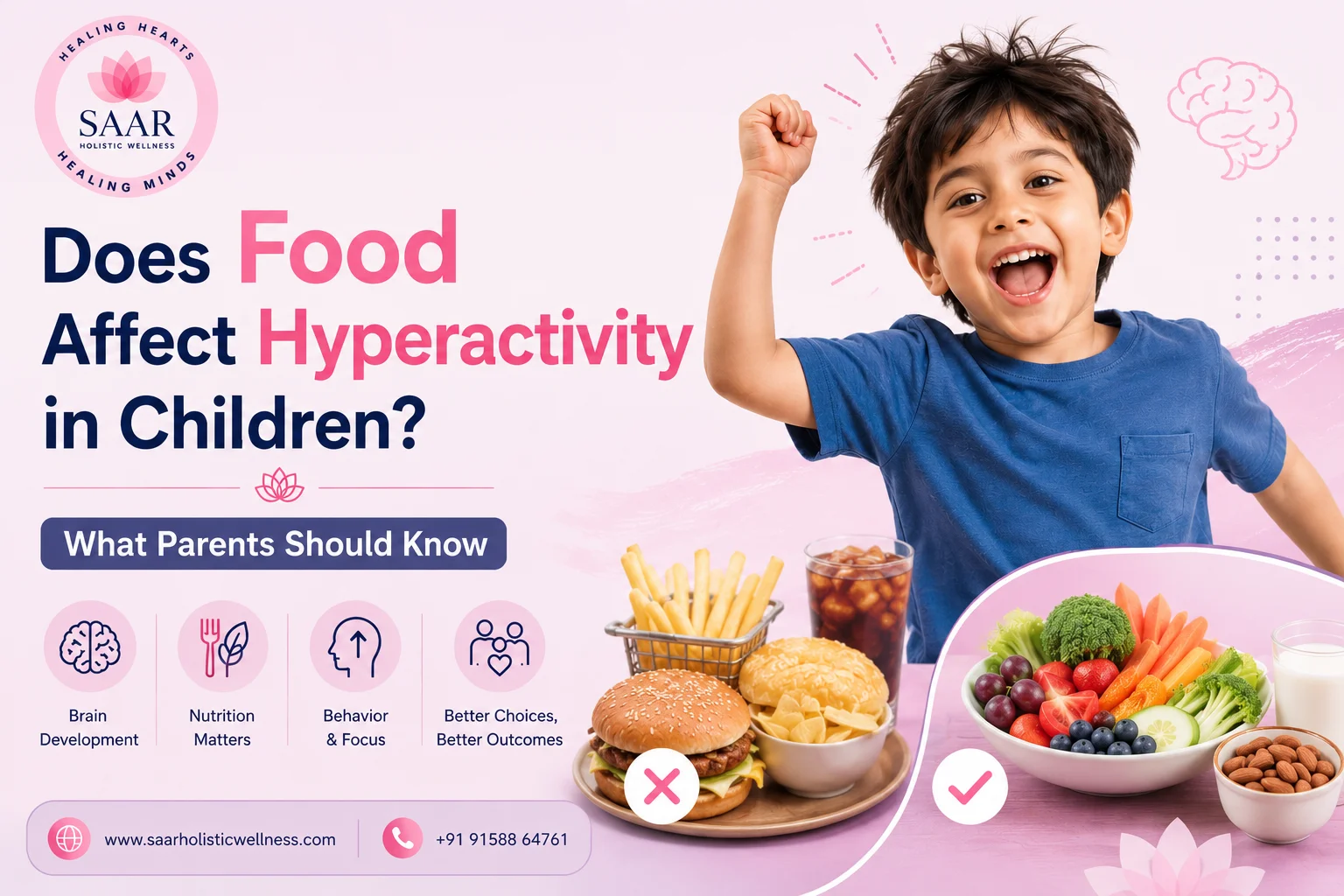
Is My Child Hyper Because of Food?
If your child is constantly:
- Running around
- Unable to sit still
- Easily distracted
- Emotionally reactive
- Getting school complaints
Then chances are someone has already said this to you:
👉 “Stop giving sugar.”
👉 “It’s because of junk food.”
👉 “Food is making your child hyperactive.”
And as a parent especially a mother this becomes stressful.
You start questioning:
- Every chocolate
- Every snack
- Every birthday treat
- Every packet of chips
So let’s understand this properly and calmly.
Does Food Really Affect Hyperactivity in Children?
The honest answer is:
👉 Food does not directly “cause” hyperactivity or ADHD.
👉 But food can influence a child’s:
- Energy levels
- Attention span
- Mood
- Sleep
- Emotional regulation
So while diet is usually not the only reason behind hyperactive behavior, it can absolutely make certain behaviors better or worse.
Why Nutrition Matters for Hyperactive Kids
Children’s brains and bodies are still developing.
What they eat affects:
- Brain function
- Concentration
- Emotional stability
- Energy regulation
When children eat foods high in:
- Sugar
- Artificial additives
- Processed ingredients
some children may become:
- More restless
- More impulsive
- More emotionally reactive
This is especially noticeable in children who already struggle with attention or hyperactivity.
Does Sugar Cause Hyperactivity?
This is one of the biggest parenting myths.
Research shows:
👉 Sugar alone does not directly cause ADHD.
However:
- Too much sugar can create sudden energy spikes
- Followed by crashes, irritability, and mood swings
So while sugar may not “create” hyperactivity, it can increase restlessness in some children.
Moderation matters more than fear.
Foods That May Support Better Focus and Calmness
Experts often recommend balanced nutrition including:
1️⃣ Protein-Rich Foods
Such as:
- Eggs
- Paneer
- Nuts
- Dal
- Yogurt
Protein helps stabilize energy and focus.
2️⃣ Healthy Fats
Foods rich in Omega-3 may support brain health:
- Walnuts
- Flaxseeds
- Fish (if non-vegetarian)
3️⃣ Fruits and Vegetables
Natural nutrients support:
- Brain development
- Mood regulation
- Overall health
4️⃣ Proper Hydration
Dehydration can affect:
- Mood
- Focus
- Irritability
Water matters more than many parents realize.
Foods Parents May Need to Reduce
Some children become more sensitive after consuming:
- Highly processed junk food
- Excess sugary drinks
- Artificial colors and preservatives
- Excess packaged snacks
The goal is not perfection.
The goal is balance and observation.
💛 A Special Note for Mothers
Let’s be honest.
When a child is hyperactive, mothers often feel blamed for everything:
- “You feed too much junk.”
- “This is because of your parenting.”
- “You don’t manage food properly.”
And slowly, guilt enters every meal.
But please remember:
👉 Your child’s behavior is not caused by one chocolate or one ice cream.
👉 You are not a careless mother because your child likes treats.
Parenting is already emotionally exhausting.
You don’t need food guilt added to it.
Small lifestyle improvements matter more than extreme restrictions.
Food Alone Is Not the Whole Picture
Hyperactivity is usually influenced by multiple factors:
- Sleep
- Screen time
- Emotional regulation
- Routine
- Environment
- Attention challenges
- Diet and lifestyle
That’s why experts focus on overall balance, not quick fixes.
If you are:
- Confused about your child’s hyperactivity
- Unsure whether diet is affecting behavior
- Feeling blamed or overwhelmed
- Struggling with focus, school complaints, or emotional outbursts
You don’t have to figure this out alone.
Our one-to-one parenting counselling sessions help parents:
- Understand child behavior deeply
- Build healthier routines around food, sleep, and screen time
- Manage hyperactivity calmly
- Reduce stress and parenting guilt
👉 Book a session today because understanding your child changes everything.
A Gentle Reminder
There is no “perfect food” that instantly changes behavior.
But small changes, made with patience, consistency, and understanding, can support your child in meaningful ways.
And the fact that you are learning and trying already makes a difference.


