
Will This School Understand My Child… or Label Them?
Choosing a school is already a big decision.
But when your child is hyperactive, it becomes even more emotional.
You’re not just looking for academics anymore.
You’re asking deeper questions:
- Will teachers understand my child?
- Will my child be constantly complained about?
- Will they be labeled as “difficult”?
- Will they feel confident or rejected?
If you’re thinking like this, you’re not overthinking you’re being a conscious parent.
Why the Right School Matters More for Hyperactive Children
Hyperactive children often struggle with:
- Sitting for long periods
- Following strict routines
- Managing impulses
- Handling pressure
In a rigid environment, they may:
- Get frequent complaints
- Lose confidence
- Feel misunderstood
But in a supportive environment, they can:
- Thrive
- Build confidence
- Improve behavior naturally
So the school environment plays a huge role in your child’s development.
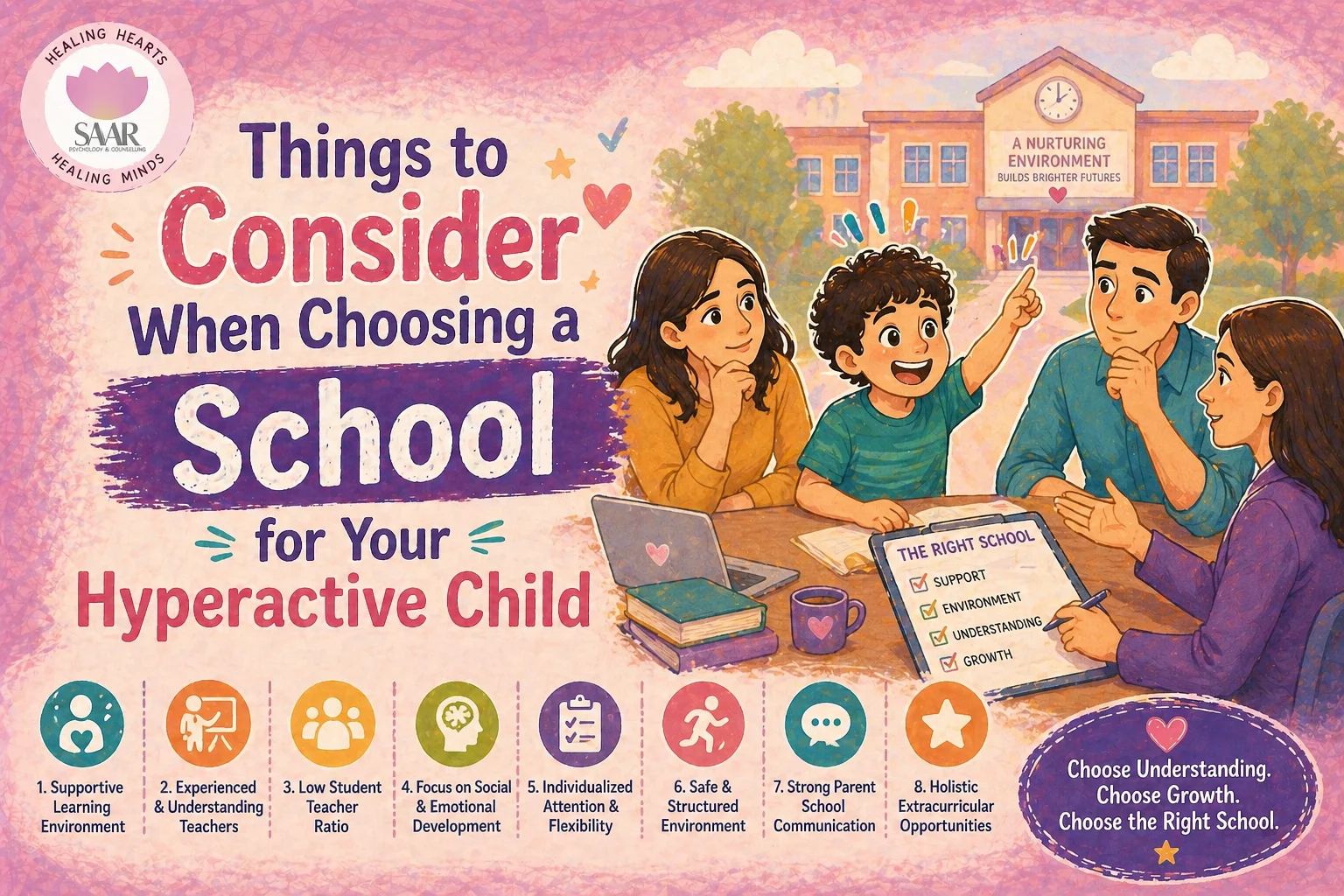
Key Things to Consider When Choosing a School for Your Hyperactive Child
1️⃣ Teacher Mindset Matters More Than Infrastructure
A school may have great facilities, but if teachers don’t understand child behavior, it becomes difficult.
Look for teachers who:
- Are patient
- Are willing to listen
- Focus on understanding, not labeling
- Communicate calmly with parents
A supportive teacher can change your child’s entire experience.
2️⃣ Class Size and Attention Level
Smaller class sizes are often better.
Why?
- More individual attention
- Better monitoring
- Less chaos and overstimulation
Hyperactive children benefit from structured attention.
3️⃣ Flexibility in Teaching Style
Some schools are extremely rigid:
- Long sitting hours
- Strict silence
- One-way teaching
Hyperactive children need:
- Movement
- Interaction
- Breaks
Ask if the school allows flexibility in learning styles.
4️⃣ Approach to Discipline
This is one of the most important factors.
Avoid schools that:
- Use harsh punishment
- Label children quickly
- Focus only on control
Look for schools that:
- Focus on behavior understanding
- Use positive reinforcement
- Encourage emotional regulation
5️⃣ Communication With Parents
You don’t want a school that only calls when there’s a problem.
Look for schools that:
- Share feedback regularly
- Work as a team with parents
- Focus on solutions, not complaints
6️⃣ Support for Behavior and Emotional Needs
Check if the school:
- Has a counsellor
- Understands attention and behavior issues
- Supports children who need extra guidance
This becomes very important in the long term.
7️⃣ Environment and Structure Balance
Hyperactive children need:
- Structure (routine, clarity)
- But also flexibility (movement, breaks)
Too much rigidity → stress
Too much freedom → chaos
Balance is key.
A Special Note for Mothers
Let’s be honest.
Choosing a school for a hyperactive child is not just a decision — it’s an emotional responsibility.
You may feel:
- Fear of judgement
- Pressure from family
- Confusion between options
- Anxiety about your child’s future
And sometimes, people say:
👉 “Put him in a strict school — he’ll become fine.”
But strictness doesn’t always mean understanding.
What your child needs is:
👉 Support
👉 Patience
👉 Guidance
And you are trying your best to give that.
You are not overprotective.
You are aware.
What Questions Should You Ask Before Finalizing a School?
- How do teachers handle hyperactive children?
- What happens if a child struggles to sit or focus?
- How do you communicate with parents?
- Do you provide behavioral support?
- How do you handle repeated complaints?
These questions give clarity beyond brochures.
If you’re:
- Confused about choosing the right school
- Already dealing with school complaints
- Worried about your child being misunderstood
- Feeling pressured and unsure
You don’t have to take this decision alone.
Our one-to-one parenting counselling sessions help parents:
- Understand their child’s behavior
- Choose the right environment
- Handle school communication
- Support their child confidently
👉 Book a session today because the right guidance can change your child’s journey.
A Gentle Reminder
Your child is not “difficult for school.”
Your child just needs the right school environment.
And the fact that you are thinking this deeply means
👉 you are already doing something right.


