
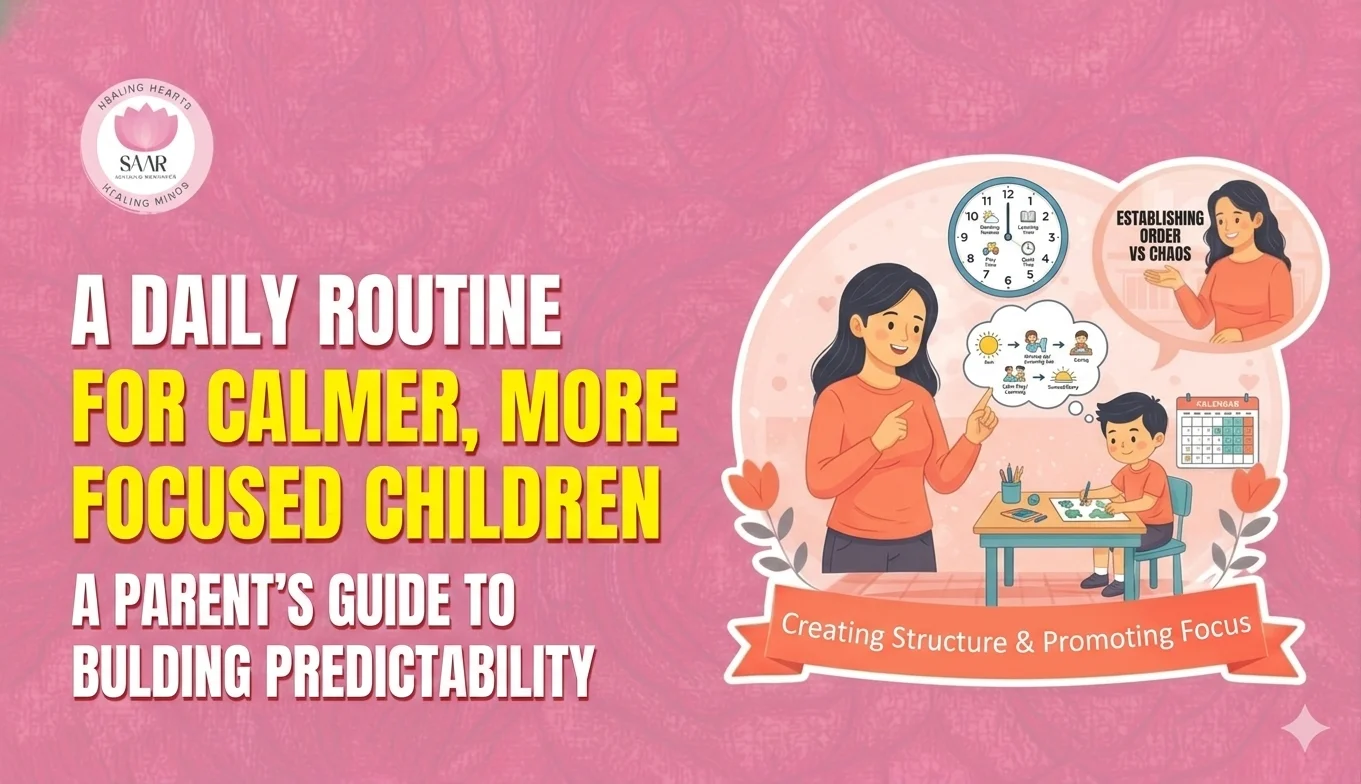
If you’re parenting a hyperactive child, you already know this:
The day can feel chaotic.
One moment they’re calm.
The next moment they’re running, arguing, or completely distracted.
Many parents try stricter discipline — but what hyperactive children truly need is structure.
A predictable daily routine reduces anxiety, impulsivity, and emotional outbursts.
When children know what to expect, their nervous system feels safer.
Here’s a practical daily routine that helps hyperactive children stay calm and focused.
🌅 Morning Routine (Start the Day Calmly)
Mornings set the tone for the entire day.
Hyperactive children struggle with rushed transitions, so keep mornings structured and predictable.
Suggested Morning Plan:
- Fixed wake-up time (same daily)
- 5 minutes of stretching or light movement
- Hygiene routine in clear steps (brush → wash → dress)
- Simple breakfast (avoid high sugar)
- Visual checklist near the door (shoes, bag, water bottle)
✔ Keep instructions short
✔ Avoid long lectures
✔ Stay calm even if they move slowly
Consistency in the morning reduces school-time impulsivity.
🏫 After-School Routine (Prevent Emotional Meltdowns)
Many hyperactive children feel overstimulated after school.
Instead of jumping into homework immediately:
- Snack + 20–30 minutes of free movement
- Outdoor play
- Cycling
- Dancing
- Jumping exercises
- Short relaxation reset
- Deep breathing
- Quiet time
- Listening to calming music
Movement first, focus later.
Homework Routine (Improve Focus Without Fights)
Homework is often the biggest struggle.
Try the “25–5 method”:
- 20–25 minutes focused work
- 5-minute movement break
Break tasks into smaller chunks:
Instead of “Finish your homework,” say:
“Complete question 1–3.”
Use:
- A distraction-free study corner
- Minimal screen exposure
- Encouragement after small wins
Hyperactive children need structured focus periods — not pressure.
Evening Routine (Wind Down the Nervous System)
Evenings should calm, not stimulate.
- Light physical play before dinner
- Family conversation time
- No screens at least 1 hour before bed
- Fixed bedtime routine (bath → story → sleep)
Sleep consistency improves attention and emotional control significantly.
Why Routine Works for Hyperactive Children
Hyperactive children struggle with regulation.
Routine provides:
- Predictability
- Reduced anxiety
- Fewer power struggles
- Clear expectations
- Improved emotional safety
When structure increases, impulsivity decreases.
It’s not about strictness.
It’s about stability.
What Parents Should Remember
Progress may not be instant.
Some days will still feel hard.
But routines build neural patterns over time.
Calm repetition creates regulation.
Stay consistent for at least 3–4 weeks before judging results.
A Special Note for Mothers 💛
Let’s pause for a moment.
Creating and maintaining this routine often falls mostly on you.
You remind.
You repeat.
You organize.
You regulate yourself — so your child can regulate too.
And sometimes, you feel exhausted.
You may think:
- “Why is this so hard for my child?”
- “Am I not doing enough?”
- “Other kids seem calmer… why not mine?”
- “What if this never improves?”
Managing a hyperactive child requires more patience, more emotional control, and more consistency.
And that emotional load is real.
But struggling does not mean you’re failing.
It means you’re doing something demanding.
And sometimes, you need guidance too.
When a mother feels supported and calmer,
a child feels safer and more regulated.
You don’t have to carry the structure alone.
If daily chaos is overwhelming you…
If homework turns into arguments…
If school complaints are increasing…
👉 It may be time for structured parenting support.
Guidance can help you:
✔ Create realistic routines that work
✔ Learn calm discipline techniques
✔ Reduce guilt and emotional burnout
✔ Improve your child’s focus and regulation
Because hyperactive children don’t need harsher control.
They need predictable structure and emotionally regulated parents.
And with the right support, calm is possible. 💛
Book One on One Consultation now for Hyperactive Kids


