
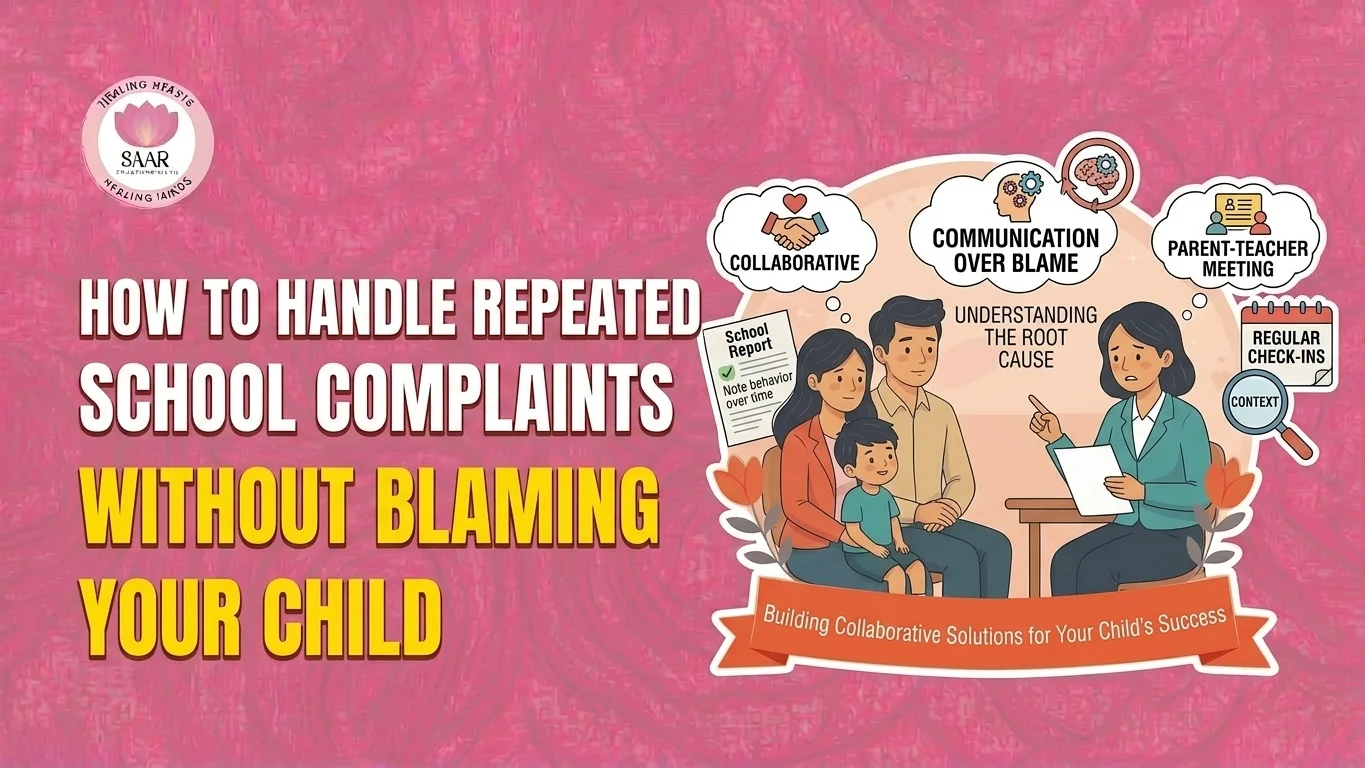
Few things feel heavier than repeated messages from school:
“We need to talk about your child’s behavior.”
Once may feel manageable.
Twice feels worrying.
Repeated complaints feel overwhelming.
You may feel embarrassed, anxious, or defensive.
And sometimes without meaning to frustration spills onto your child.
But here’s something important:
👉 Blame does not solve behavior.
Understanding does.
Let’s explore how to handle repeated school complaints calmly and constructively — without damaging your child’s confidence or your relationship.
Step 1: Pause Before Reacting
When you hear another complaint, your mind may jump to:
- “Why does this keep happening?”
- “What will the teacher think?”
- “Is my child becoming a problem?”
Instead of reacting immediately:
Pause.
Breathe.
Separate emotion from response.
Reacting from fear often leads to punishment.
Responding from curiosity leads to solutions
Step 2: Gather Clear Information
Ask specific questions:
- When does this behavior happen?
- During which subjects or activities?
- Who is involved?
- How does my child respond afterward?
Patterns matter more than isolated incidents.
Repeated complaints usually indicate a skill gap — not intentional defiance.
Step 3: Talk to Your Child Without Accusation
Avoid starting with:
“Why do you keep getting into trouble?”
Instead try:
“I heard school has been tough lately. Help me understand what’s happening.”
When children feel attacked, they shut down.
When they feel safe, they open up.
Your goal is connection before correction
Step 4: Look for the Root Cause
Repeated school complaints often relate to:
- Impulse control challenges
- Emotional regulation difficulties
- Hyperactivity
- Attention struggles
- Social misunderstandings
- Stress at home or school
Behavior is usually communication.
Instead of asking, “How do I stop this?”
Ask, “What is my child struggling with?”
Step 5: Collaborate With the School
Shift from defensiveness to partnership.
Say:
“I want to support my child better. What strategies are working in class?”
Ask if:
- Movement breaks are possible
- Seating adjustments can help
- Clear behavioral cues can be used
Consistency between home and school strengthens improvement.
Step 6: Avoid These Common Mistakes
Repeated complaints can push parents into patterns that worsen behavior:
❌ Immediate scolding before hearing your child
❌ Comparing your child to classmates
❌ Labeling your child as “problematic”
❌ Threatening extreme punishments
❌ Ignoring emotional distress
Shame may stop behavior temporarily — but it damages self-esteem long-term.
When to Consider Professional Support
If complaints are frequent and intense, consider:
- Child behavior assessment
- Parenting guidance sessions
- Emotional regulation coaching
- Structured behavioral planning
Seeking support doesn’t mean your child is “bad.”
It means you’re proactive.
Early guidance prevents long-term emotional impact.
A Special Note for Mothers 💛
Let’s be honest.
Repeated school complaints often hit mothers the hardest.
You carry the phone call all day.
You replay the teacher’s words at night.
And the questions begin:
- “Did I not raise my child properly?”
- “Am I not giving enough time?”
- “Is everyone judging me?”
- “What if this affects my child’s future?”
You may feel embarrassed in parent groups.
You may compare yourself to other mothers.
You may feel exhausted from defending and disciplining at the same time.
And sometimes, it feels lonely.
But hear this clearly:
👉 School complaints are not proof of parenting failure.
Some children simply need different strategies, more structure, or emotional regulation support.
And sometimes, you need support too.
When a mother feels calmer and guided,
a child feels safer and more understood.
You deserve understanding not silent self-blame.
A Gentle Reminder
Repeated school complaints do not define your child.
They are signals.
Signals that something needs support, structure, or skill-building.
When you shift from blame to curiosity,
from punishment to guidance,
real progress begins.
If you are:
- Feeling overwhelmed by repeated complaints
- Unsure how to respond without anger
- Tired of daily discipline battles
- Silently blaming yourself
👉 You don’t have to handle this alone.
Parenting guidance can help you:
✔ Understand the root cause of school behavior
✔ Communicate calmly with teachers
✔ Support your child without shame
✔ Reduce guilt and emotional burnout
Our one-to-one parenting counselling sessions help you:
Because your child doesn’t need more blame.
They need support.
And so do you. 💛


