
It’s a phrase many Indian parents have grown up hearing — and believing.
But what if this mindset is silently shaping a generation of anxious, fearful children?
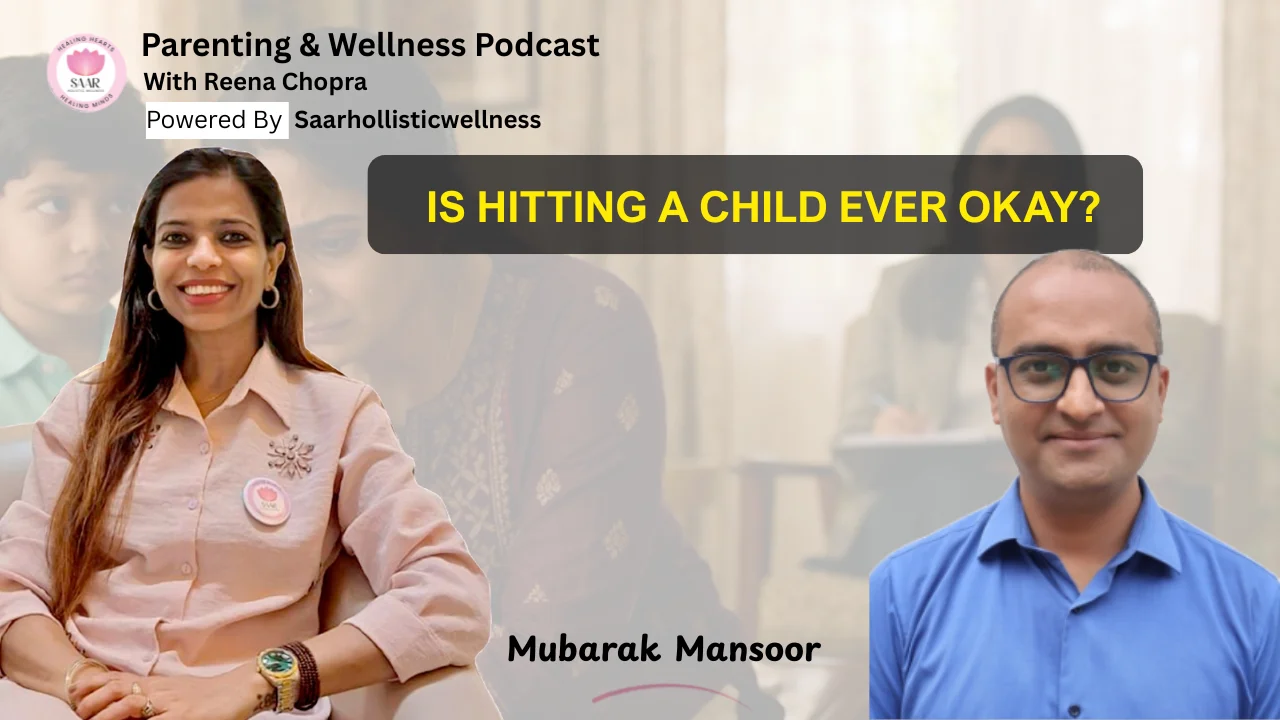
In this eye-opening episode of the Parenting Podcast by Saar Holistic Wellness, psychologist Reena Chopra sits with Mubarak Mansoor, a renowned clinical psychologist, to decode the psychology behind physical punishment — and offer science-backed alternatives for mindful discipline.

The Cultural Conditioning Behind Hitting
In many Indian homes, discipline often means obedience through fear.
Parents say:
“I was hit as a child and I turned out fine.”
But psychologists argue — “fine” doesn’t mean emotionally healthy.
As Mubarak Mansoor explains:
“Children who grow up fearing punishment learn to avoid mistakes — not to learn from them. That blocks emotional growth.”
What starts as a small slap for “teaching manners” can grow into a lifelong cycle of shame and low self-worth.
The Brain Science: What Happens When You Hit a Child
When a child is hit or yelled at, the brain releases cortisol, the stress hormone.
This affects three critical areas:
- Amygdala → triggers fear responses
- Hippocampus → affects memory and emotional regulation
- Prefrontal Cortex → delays decision-making and empathy
Repeated stress changes the brain’s wiring.
The child begins to associate love with fear and protection with pain.
Over time, this can manifest as:
- Anxiety or anger outbursts
- Poor academic focus
- Withdrawal or depression
- Trouble forming safe relationships
Why Parents Hit (and How to Break the Pattern)
Most parents don’t hit out of cruelty — they hit out of frustration and lack of tools.
They were never taught emotional regulation themselves.
“We repeat what we don’t repair,” says Reena Chopra.
Common Triggers:
- Exhaustion from work-life imbalance
- Unmet expectations
- Comparison with other parents
- Mother guilt or social pressure
The first step toward change is awareness — knowing that anger is a signal, not a solution.
The Long-Term Emotional Impact
A child who’s physically punished learns three dangerous lessons:
- Love is conditional.
- Conflict equals danger.
- Honesty gets punished.
This often shows up later as:
- People-pleasing or emotional avoidance
- Fear of authority or assertiveness
- Difficulty trusting relationships
As Mubarak Mansoor emphasizes:
“When parents use fear, children learn survival, not strength.”
Mindful Discipline: The Healthier Alternative
Mindful parenting doesn’t mean permissive parenting.
It means guiding with connection, not control.
Step-by-Step Framework:
- Pause before reacting – Take a deep breath before responding.
- Label your emotion – “I’m feeling angry because…” helps self-awareness.
- Name the child’s feeling – “You’re upset because your toy broke.”
- Set clear boundaries – Firmly say what’s not okay without yelling.
- Repair after conflict – A hug or small conversation rebuilds safety.
This teaches children emotional vocabulary and accountability, without fear.
Mother Guilt and Self-Compassion
Many mothers confess:
“I hit my child and feel terrible after.”
This guilt is universal — but guilt can transform into growth when used as reflection.
As Reena Chopra explains:
“The most healing phrase a mother can say is, ‘I’m sorry, I’ll do better next time.’ It teaches empathy through example.”
Building Emotional Intelligence in Kids
Children mirror what they see.
If parents model calm communication, kids internalize emotional safety.
Try these simple practices:
- Daily “emotion check-ins” (How was your day? What made you happy?)
- Teach breathing or grounding techniques for anger.
- Replace punishment with consequence-based learning (e.g., “You broke it, now fix it.”)
The goal isn’t perfection — it’s connection.
When to Seek Professional Help
If a child shows chronic fear, aggression, or withdrawal, therapy helps identify deeper trauma.
A child psychologist can assist in emotional regulation training for both child and parent.
At Saar Holistic Wellness, our programs focus on holistic family healing — not just behavior correction.
The Takeaway
Violence doesn’t teach values. Connection does.
Parenting is not about control — it’s about co-regulation.
The next time anger rises, remember:
“Your calm is your child’s cure.”
Replace the slap with a pause, and you’ll raise not just an obedient child, but a confident, emotionally aware human being.


