
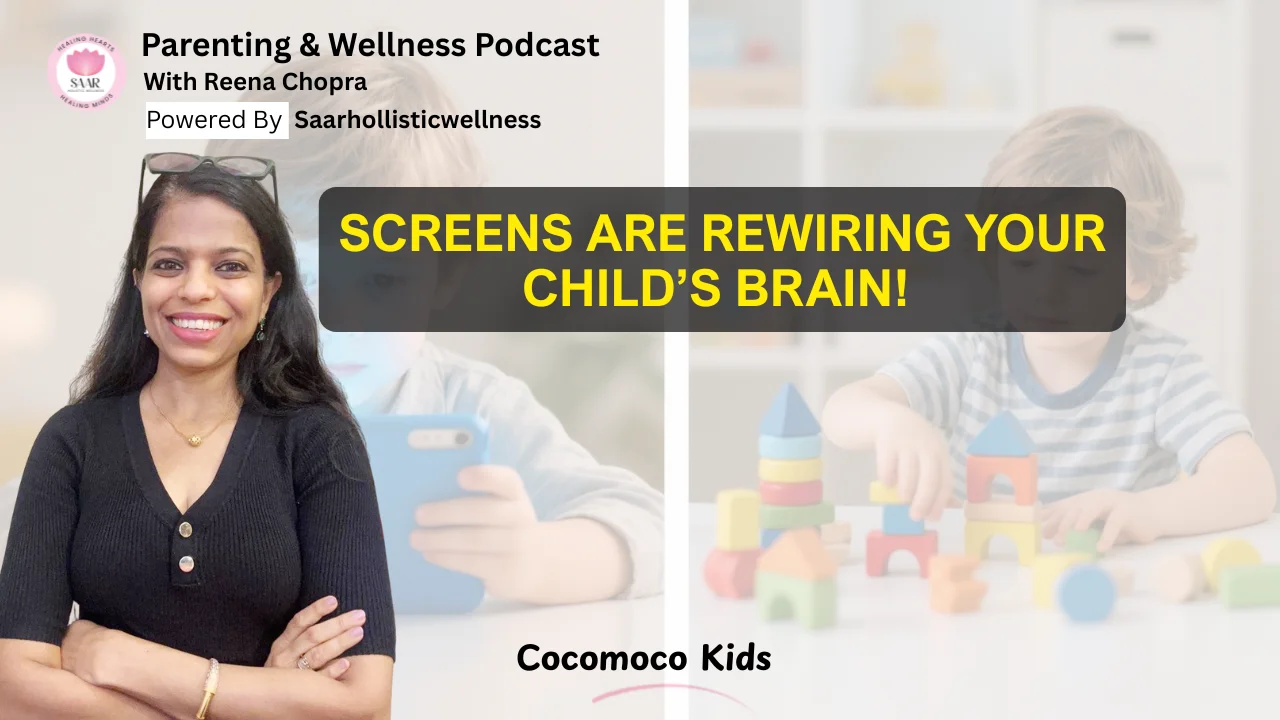
Screens can stimulate but also overstimulate. The human brain under age 5 develops through movement, touch, and connection — not passive viewing. Reena Chopra and Cocomoco Kids highlight how replacing passive screen time with interactive playtime rewires creativity, speech, and confidence.
The Silent Threat in Modern Homes
We love our gadgets, and so do our children.
Tablets, reels, and cartoon channels keep little ones busy while we catch a breath between work calls. But behind the calm silence of a screen lies a growing concern — the impact of excessive screen time on a child’s developing brain.
During a recent Parenting Podcast, I sat with the team at Cocomoco Kids to explore a question that every modern mother must ask:
Are screens helping our kids learn, or quietly rewiring their brains?

Parenting Is Not Instinct — It’s a Skill to Learn
Most of us believe parenting comes naturally. Yet, neuroscience shows it’s a learned art.
Children don’t copy what we tell them; they absorb our energy. If we’re anxious, they sense it.
If we’re calm and engaged, their brains mirror that calmness through co-regulation.
That’s why mindful play and conscious environment design are as important as nutrition.
When parents learn how a child’s brain grows, we move from guilt to guidance.
Why Screens Hurt Young Brains
Before age 6, a child’s brain grows faster than at any other time. Every minute spent swiping instead of exploring changes neural wiring.
Research from Indian pediatric neurology units now links high early-screen exposure to:
- Speech delays and reduced vocabulary.
- Shortened attention span and impulse control issues.
- Sensory overload, where normal noise feels unbearable.
- “Virtual autism” — a pattern of delayed speech and social response caused by overstimulation from screens.
In one case shared during our podcast, a 3½-year-old child could barely form sentences despite good hearing. The reason wasn’t cognitive delay — it was hours of daily screen time.
Children Absorb Energy — Not Just Information

Every room a child walks into becomes their classroom.
If that space is filled with stress, loud TV, and rushing adults, their nervous system learns chaos.
If it’s filled with music, eye contact, laughter, and tactile toys, their brain learns safety.
Your tone of voice, your expressions, even how you look at your phone — these shape emotional memory.
We’re not just raising children; we’re wiring future adults to handle life’s pace.
When Caregiver Energy Turns Toxic
Parents often overlook how domestic help, daycare staff, or grandparents influence emotional tone.
A caregiver who’s impatient, critical, or glued to the TV can unknowingly pass stress to a child.
In the episode, I shared a story of a boy who became hyperactive and aggressive because his caregiver constantly argued at home. Once the environment changed, so did the child’s behavior.
That’s the magic of environment — children mirror what surrounds them.
Smart Play: How Learning-Based Toys Heal the Brain
This is where conscious brands like Cocomoco Kids come in.
Their learning-based toys combine fun with brain science: puzzles for logical reasoning, maps for spatial awareness, and DIY kits for emotional regulation.
Unlike screens that feed passive dopamine, these toys:
- Encourage decision-making and patience.
- Activate fine-motor skills through touch.
- Improve focus and creative confidence.
- Foster bonding when played together.
So the next time your child asks for a tablet, offer a puzzle or craft instead. The brain reward is the same — curiosity satisfied, but without digital harm.
Daily Affirmations for Parents and Kids
Words sculpt neural pathways. Start and end each day with a short affirmation ritual:
Morning ☀️
“I am calm. I am kind. I am ready to learn.”
Bedtime 🌙
“I am proud of myself. I am loved. Tomorrow is a new adventure.”
It takes one minute but sets a lifetime tone of self-worth.
How to Do a Mini Digital Detox at Home

Step 1: Establish “No-Screen Zones” — bedroom, dining table, and car rides.
Step 2: Replace idle time with sensory play — clay, water, building blocks.
Step 3: Use the 3-2-1 rule before bed: no screens 3 hours before sleep, 2 minutes of eye contact, 1 bedtime story.
Step 4: Watch for red flags — tantrums when screen removed, delayed speech, lack of eye contact. Seek professional help early.
When to Ask for Help
If your child:
- Stops responding to their name,
- Shows sudden language regression,
- Spends hours in front of screens without boredom,
- Has frequent meltdowns or hyperactivity —
then it’s time to consult a child psychologist or speech therapist.
Early intervention can reverse most screen-related issues within months.
Calm Mother → Calm Brain
Children need calm more than perfection.
When you choose mindful play, hydration, movement, and patience, you teach your child that peace is power.
Your calm literally wires their brain for emotional stability.
💬 Final Takeaway
Parenting in the digital age isn’t about rejecting technology; it’s about teaching balance.
Let screens be tools — not teachers.
Let toys be creative bridges — not distractions.
And remember, your presence is the most powerful educational app your child will ever know.
At Saar Holistic Wellness, we empower parents to understand emotional and neurological wellness in children. Learn more through our Parenting Courses or become a Certified Parenting Coach to help families thrive in the digital age.
Explore mindful play solutions from Cocomoco Kids — designed to enhance creativity, decision-making, and emotional intelligence through play.
🎧 Watch related episodes: