
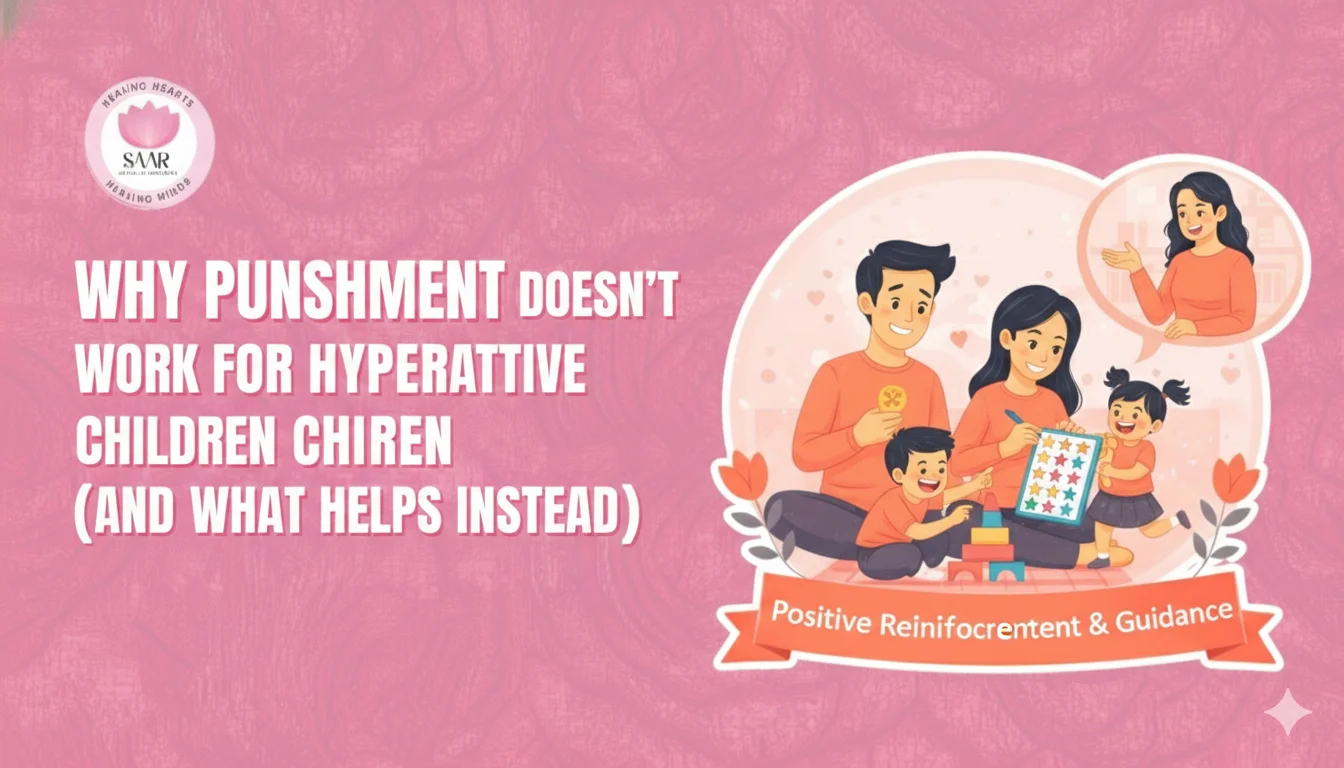
When Discipline Turns Into Daily Struggle
If you’re parenting a hyperactive child, you may feel stuck in a cycle:
your child misbehaves → you punish → behavior repeats → frustration grows.
Many parents ask:
- Why doesn’t punishment work for my child?
- Why do things get worse instead of better?
The truth is simple but important:
👉 Hyperactive children don’t misbehave because they don’t care.
👉 They misbehave because they struggle with control, regulation, and focus.
Understanding this changes everything.
Why Punishment Fails With Hyperactive Children
Traditional punishment assumes a child can:
- Pause before reacting
- Control impulses
- Predict consequences
Hyperactive children often cannot do this consistently.
Punishment fails because it:
- Overstimulates an already active nervous system
- Creates fear instead of understanding
- Increases shame and frustration
- Damages parent-child trust
This is why repeated punishment rarely improves behavior long-term.
Hyperactivity Is Regulation Issue , Not a Discipline Issue
Hyperactive children struggle with:
- Impulse control
- Emotional regulation
- Sensory overload
- Attention management
Punishment addresses behavior but ignores the root cause.
A child who cannot regulate emotions cannot “behave better” simply by being punished.
What Happens When Hyperactive Children Are Punished Repeatedly
Over time, punishment can lead to:
- Low self-esteem
- Increased aggression or withdrawal
- Anxiety around authority figures
- Resistance instead of cooperation
Many hyperactive children start believing:
👉 “I’m bad.”
Instead of: “I’m struggling.”
What Works Better Than Punishment for Hyperactive Children
1. Connection Before Correction
Children listen better when they feel understood.
Acknowledging emotions first reduces resistance.
2. Clear Structure and Predictable Routines
Routine reduces anxiety and impulsive reactions.
Hyperactive kids feel safer when they know what to expect.
3. Calm, Consistent Responses
Yelling or harsh discipline increases dysregulation.
Calm repetition builds learning.
4. Teaching Skills Instead of Giving Consequences
Hyperactive children need help learning:
- How to pause
- How to express emotions
- How to manage energy
Skills change behavior — punishment doesn’t.
When discipline turns into a daily battle, the mother often carries the deepest exhaustion.
You try to stay calm.
You promise yourself you won’t shout today.
But by evening, you feel drained… and guilty.
And the questions start again:
- “Why can’t I handle this better?”
- “Am I too strict… or too soft?”
- “Why does my child only behave for others?”
- “Is this my fault?”
While others see a “hyperactive child,”
you feel the emotional weight of every complaint, every meltdown, every public stare.
You love your child deeply.
But some days, you feel tired of fighting the same battles.
And that doesn’t make you a bad mother.
It makes you a human one.
If you feel overwhelmed, frustrated, or silently breaking down — you don’t have to figure this out alone.
Because when a mother feels calmer and supported,
a child begins to feel safer and more regulated too.
You don’t need more blame.
You need understanding.
When Parents Need Guidance Too
Parenting hyperactive children is emotionally exhausting.
Many parents benefit from parenting guidance or professional coaching, where they learn:
- Regulation strategies
- Calm discipline techniques
- Emotional communication tools
Support helps parents stay consistent and confident.
Book One on One Consultation now for Hyperactive Kids
A Gentle Reminder
Your child doesn’t need stricter punishment.
They need better understanding and support.
When parents shift from control to connection, behavior begins to change.


