
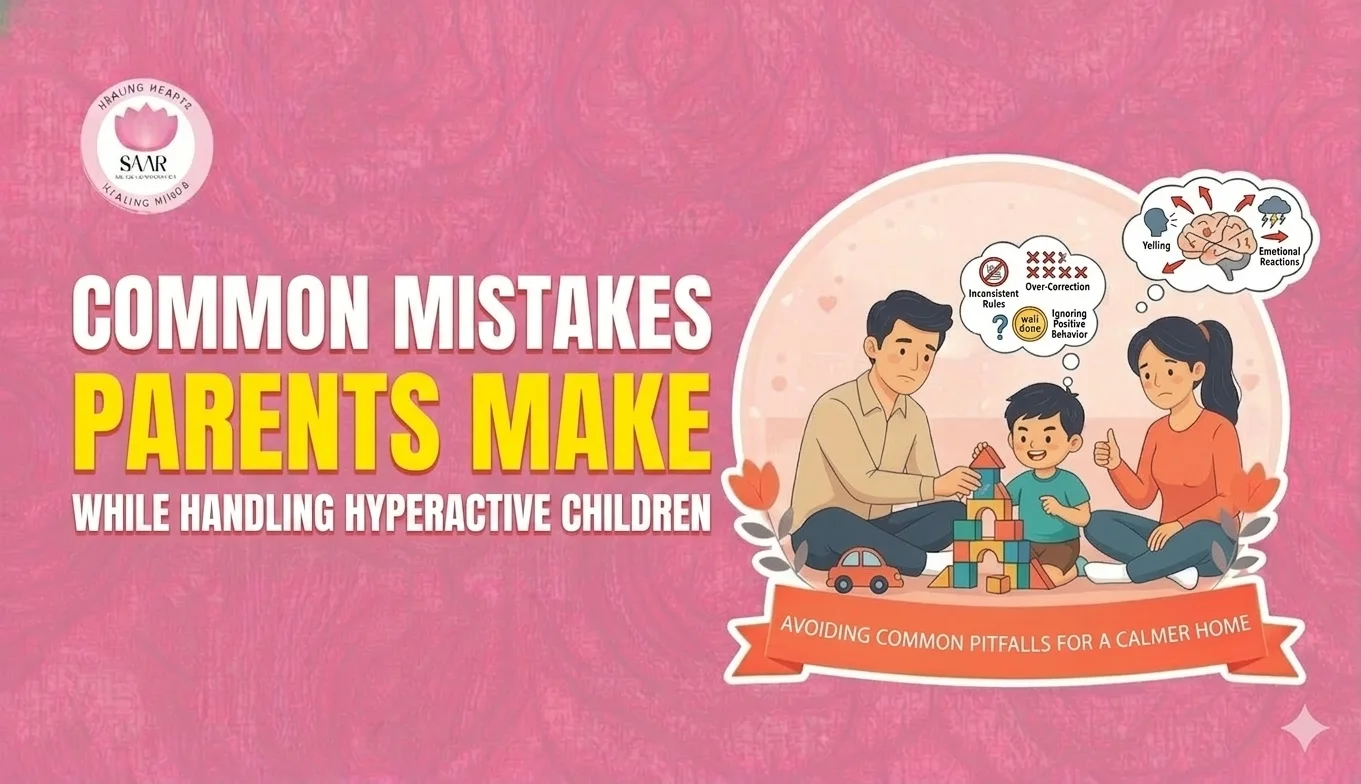
Parenting a hyperactive child is not easy.
The constant movement.
The impulsive reactions.
The repeated reminders.
The school complaints.
Over time, frustration builds — and many parents unknowingly fall into patterns that actually make behavior worse.
If you’re struggling, you’re not alone.
Let’s look at the most common mistakes — and what works better instead.
1. Using Excessive Punishment
Many parents believe stricter discipline will fix hyperactivity.
But hyperactive children struggle with regulation — not understanding.
When punishment becomes frequent:
- Shame increases
- Resistance grows
- Emotional outbursts intensify
- Parent-child trust weakens
👉 Hyperactivity is often a nervous system issue, not a discipline issue.
Better Approach: Teach regulation skills instead of increasing consequences.
2. Expecting Immediate Control
Parents often say:
“Just sit properly.”
“Stop talking.”
“Control yourself.”
But hyperactive children may not have consistent impulse control yet.
Expecting instant behavioral change creates daily conflict.
Better Approach: Break expectations into small, achievable steps and celebrate small improvements.
3. Inconsistent Rules
Some days you’re strict.
Other days you’re too tired to respond.
Inconsistency confuses hyperactive children.
When boundaries shift daily, behavior becomes more unpredictable.
Better Approach: Set clear, simple rules and follow through calmly every time.
Consistency is more powerful than intensity.
4. Comparing Your Child to Others
“Look at your cousin.”
“Other kids sit quietly.”
Comparison increases shame — not motivation.
Hyperactive children already feel “different.”
Better Approach: Focus on your child’s progress, not someone else’s behavior.
5. Yelling or Reacting Emotionally
Hyperactive children are already overstimulated.
When parents shout:
- Nervous systems escalate
- Emotional reactions increase
- Learning shuts down
Calm correction works better than loud correction.
6. Ignoring Sleep and Routine
Late bedtimes, irregular schedules, and excessive screen time worsen hyperactivity.
Routine reduces impulsivity.
Lack of structure increases chaos.
7. Blaming Yourself Constantly
This may be the biggest mistake of all.
Many parents — especially mothers — internalize the struggle.
They think:
“If I was stricter…”
“If I was more patient…”
“If I gave more time…”
But hyperactivity is not proof of poor parenting.
A Special Note for Mothers 💛
When behavior becomes daily struggle, the emotional weight often falls on you.
You manage:
- School calls
- Homework battles
- Public embarrassment
- Family comments
- Your own exhaustion
And the thoughts begin:
- “Did I not raise my child properly?”
- “Am I not giving enough time?”
- “Is everyone judging me?”
- “What if this affects my child’s future?”
You love your child deeply — but some days, you feel drained and frustrated.
And then guilt follows.
But struggling does not mean failing.
It means you are handling something that requires more patience, more strategy, and more support.
And you deserve support too.
Because when a mother feels calmer and guided,
a hyperactive child feels safer and more regulated.
A Gentle Reminder
Hyperactive children do not need harsher control.
They need:
- Structure
- Emotional coaching
- Consistency
- Calm parenting
Mistakes are part of learning — for parents too.
Awareness is the first step toward change.
If you recognize yourself in these mistakes…
If daily discipline feels exhausting…
If you’re unsure what’s working and what’s not…
👉 You don’t have to navigate this alone.
Parenting guidance can help you:
✔ Replace frustration with clear strategies
✔ Learn calm discipline techniques
✔ Reduce guilt and emotional burnout
✔ Build a structured and peaceful home environment
Because managing hyperactivity is not about being a stricter parent.
It’s about being a more supported one.
And with the right tools, change is possible.


