
A 2023 study from Karnataka found that 86% of adolescents preparing for competitive exams reported high academic stress, and nearly 29% showed moderately high anxiety levels. I see this in my own practice every exam season: a steady stream of parents, mostly mothers, sitting across from me and asking the same question in different words: “Is this just normal exam pressure, or is my child actually struggling?”
It’s a fair question, and an important one. Because how you respond depends entirely on the answer.
Why This Distinction Matters So Much
Some stress before exams is expected, even useful. It’s what pushes a teenager to revise, to show up prepared, to care about doing well. But stress and anxiety are not the same thing, even though they can look identical from the outside. Stress tends to ease once the exam is done. Anxiety often doesn’t linger, spreads to other areas of life, and starts to interfere with the very performance it’s supposedly about.
In India, where board results, entrance exams, and family expectations carry enormous weight, this line gets blurred easily. I often hear parents say “every child feels this pressure,” which is true but that doesn’t mean every child is coping with it in a healthy way.
What Normal Exam Stress Looks Like
A teenager under typical exam pressure might seem tense, a little short-tempered, or less social in the weeks before exams. This kind of stress usually comes and goes with the workload worse before a test, easier once it’s submitted. They can still sleep reasonably, eat normally, and talk about something other than the exam if you bring it up.
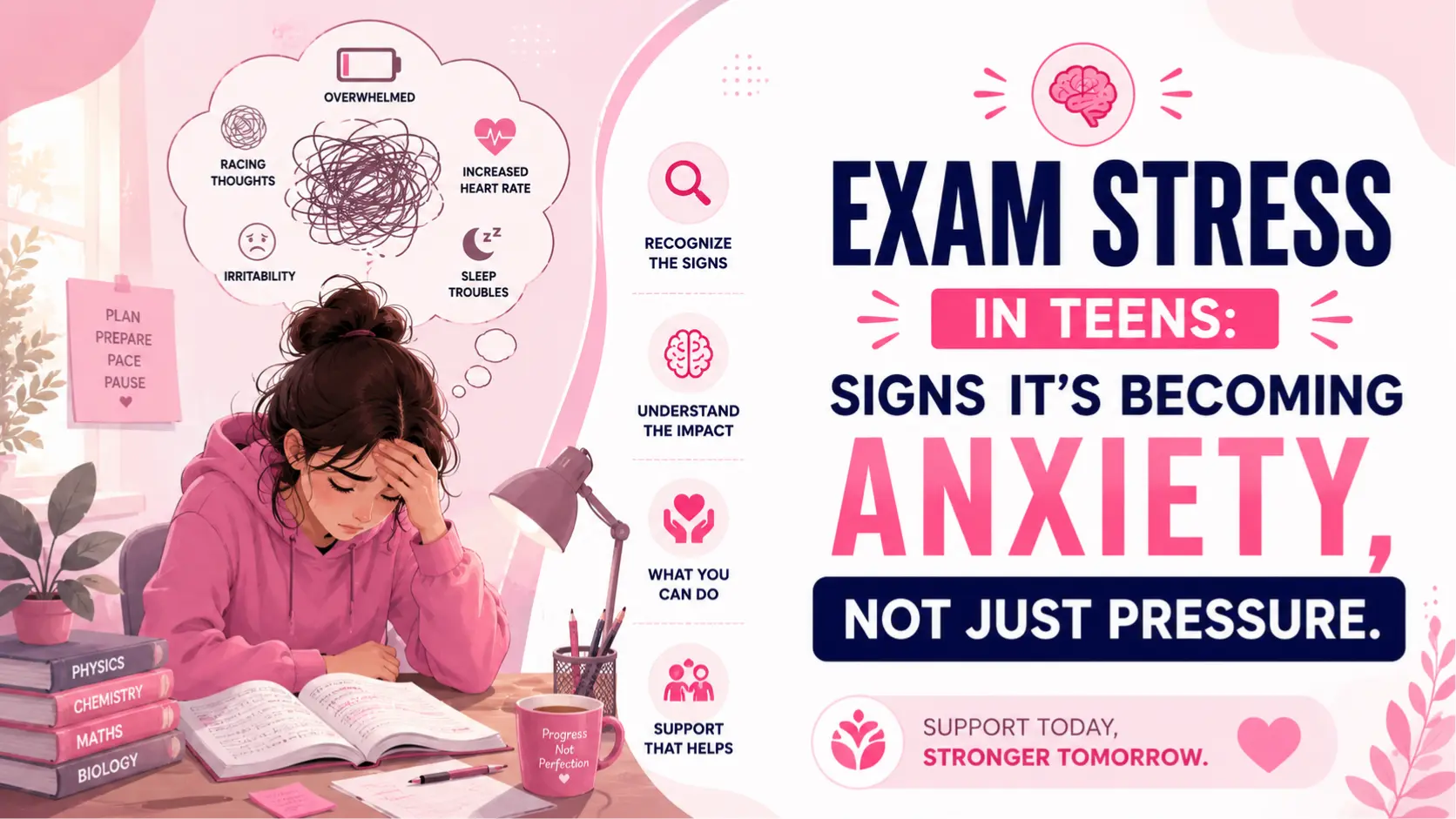
Signs It’s Becoming Anxiety
Anxiety shows up as a pattern that doesn’t let go, even when there’s no immediate exam pressure. These are the signs I ask parents to watch for:
- Physical symptoms with no medical cause stomach aches, headaches, nausea, especially on school or exam days
- Sleep that’s disrupted for weeks, not just the night before a test
- Catastrophic thinking statements like “if I fail, my life is over,” said with real conviction, not just frustration
- Avoidance skipping study sessions or even school because the thought of it feels unbearable
- Irritability or tearfulness that seems out of proportion to what’s happening
- A drop in appetite, or eating changes tied closely to academic deadlines
- Persistent self-criticism that continues even after doing reasonably well
If these patterns are showing up consistently, and not easing once the immediate exam is over, your teen may be dealing with something beyond ordinary pressure.
The Indian Context Makes This Harder to Spot
I want to be direct about something that generic parenting advice tends to skip. In many Indian households, academic performance is closely tied to family pride, community comparison, and a child’s sense of self-worth. Add to this the influence of coaching culture, joint family opinions, and the sheer competitiveness of exams like boards, JEE, or NEET and it becomes very easy for a teen’s anxiety to be mistaken for “just how things are.”
I also see many parents unintentionally add pressure while trying to be supportive, comparing marks, referencing a cousin’s rank, or repeating “just focus” without realising how much weight that carries for an anxious teenager.
How You Can Support Your Teen Right Now
None of this requires lowering your expectations. It requires shifting how you talk about them.
- Separate effort from outcome in your language. Praise the studying, not just the score.
- Watch for physical signs, not just emotional ones; the stomach aches and headaches are often the first clue.
- Give permission to talk about fear. Ask directly: “What’s the scariest part of this exam for you?” It opens more than “don’t worry” ever does.
- Protect basic routines: sleep, meals, some downtime even during exam season. Anxiety worsens when these disappear entirely.
- Avoid comparison, even well-meaning ones. It rarely motivates and almost always adds pressure.
When to Reach Out for Support
If your teen’s exam-related distress isn’t easing with rest, reassurance, or a lighter schedule or if you’re noticing several of the signs above it’s worth having a professional conversation, not as a last resort, but as a proactive step.
In my practice, I help teenagers build a healthier relationship with pressure itself, not just get through one exam season. That shift tends to serve them well beyond this one exam.


