
A study cited by the American Association of Marriage and Family Therapy found that around 70 to 75% of couples report improved relationship satisfaction after engaging in couples therapy. I share that number because so many parents I meet believe that once a relationship starts to feel like a business partnership, it’s already too late to fix. It isn’t.
In my practice, I hear a version of this sentence almost every week: “We’re great co-parents. We just don’t feel like a couple anymore.” If that sentence describes your marriage right now, I want you to know this is one of the most common things I work through with couples, and it’s rarely a sign that love is gone.
Why Parenting Can Quietly Replace Partnership
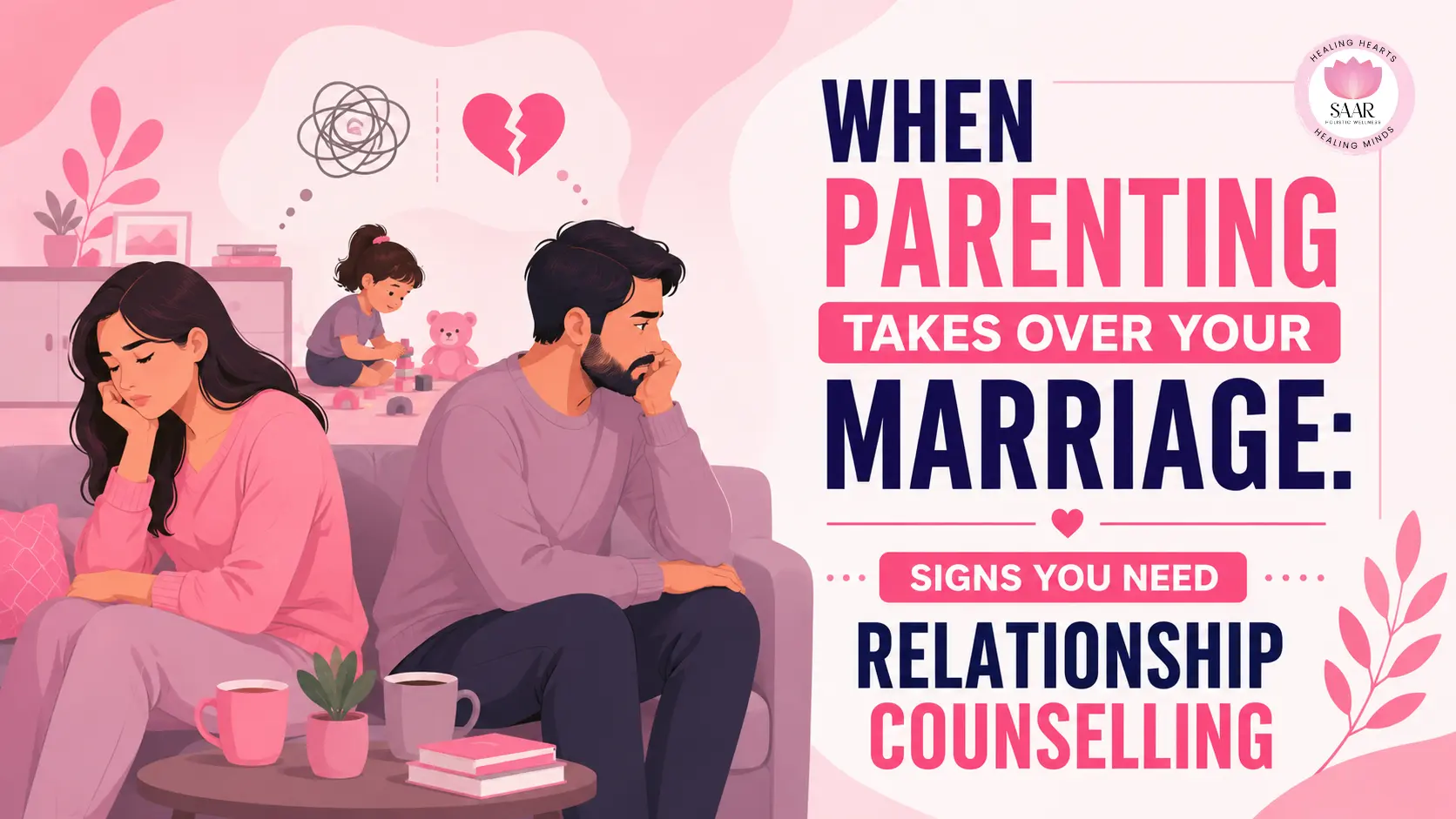
When children enter the picture, every conversation tends to become operational. Who’s doing pickup. Who’s managing the doctor’s appointment. Who’s handling bedtime tonight. Somewhere in the middle of running a household well, the emotional relationship between two partners can slip into the background.
This doesn’t happen because something is broken between you. It happens because urgency always wins. A crying toddler will always feel more pressing than a conversation about how disconnected you’ve been feeling. Over time, though, those unspoken feelings add up.
Signs You’ve Drifted Into “Co-Parent Mode”
A few patterns I see often in my sessions:
Conversations rarely go beyond logistics and schedules. You know your partner’s calendar better than their inner world right now.
Physical affection has quietly disappeared, not from conflict, but from sheer exhaustion and habit.
You feel unseen rather than unloved. This distinction matters. Most couples in this stage don’t feel hated. They feel invisible.
There’s no major fight, no betrayal, just a slow, quiet drift that’s hard to name until it’s been happening for a while.
Why This Deserves Attention, Even Without a Crisis
I want to gently push back on something I hear often: “Should we really see someone if we’re not even fighting?” Yes. In fact, this is often the ideal time. Couples who come in during this quiet-drift stage, rather than waiting for resentment to build, tend to reconnect faster and more fully.
Emotional disconnection left unaddressed rarely fixes itself. It tends to either deepen into resentment, or one partner starts looking for that emotional connection elsewhere, even unintentionally, through friends, work, or simply retreating inward.
How Relationship Counselling Helps You Find Each Other Again
In my sessions with couples in this stage, we focus on:
Naming the disconnection without blame. Saying “I feel distant from you” is very different from “you never make time for me,” and learning that difference changes everything.
Rebuilding small daily bids for connection. Gottman’s research on “bids for connection” shows that it’s the small, consistent moments, a glance, a text, a genuine question, that rebuild closeness far more than grand gestures.
Reclaiming identity beyond “mom” and “dad.” We work on remembering who you were as partners before parenting took over the frame, and finding pieces of that to bring back.
Creating protected time that isn’t just about logistics. Even fifteen minutes a day of real conversation, not schedule-talk, can shift the entire tone of a relationship.
Why Couples Wait Too Long to Address This
In my experience, most couples don’t come to counselling the moment they notice the drift. They wait, often for a year or more, telling themselves it will get easier once the baby sleeps through the night, or once work settles down, or once the toddler phase passes. Sometimes it does ease on its own. Often, it doesn’t, because the underlying pattern of prioritizing logistics over connection simply continues into the next stage of parenting.
I say this not to create urgency or fear, but because I’ve seen how much lighter couples feel once they stop waiting for the “right time” and simply start the conversation. There is no perfect moment to prioritize your relationship. There is only the choice to start now, even in the middle of a busy, tiring season of life.
You Deserve More Than Efficient Teamwork
Running a household well together is a real accomplishment, and I don’t want to minimise that. But you are allowed to want warmth alongside efficiency. You are allowed to want your partner to feel like your person again, not just your co-manager.


