
It’s 2025 — and our children are growing up in a digital world that’s more stimulating than ever before.
From online classes and video tutorials to gaming and social media, screens have quietly woven themselves into every part of a child’s life.
While technology offers endless learning opportunities, it also brings new challenges: shorter attention spans, disrupted sleep, headaches, and anxiety — especially during exam season.
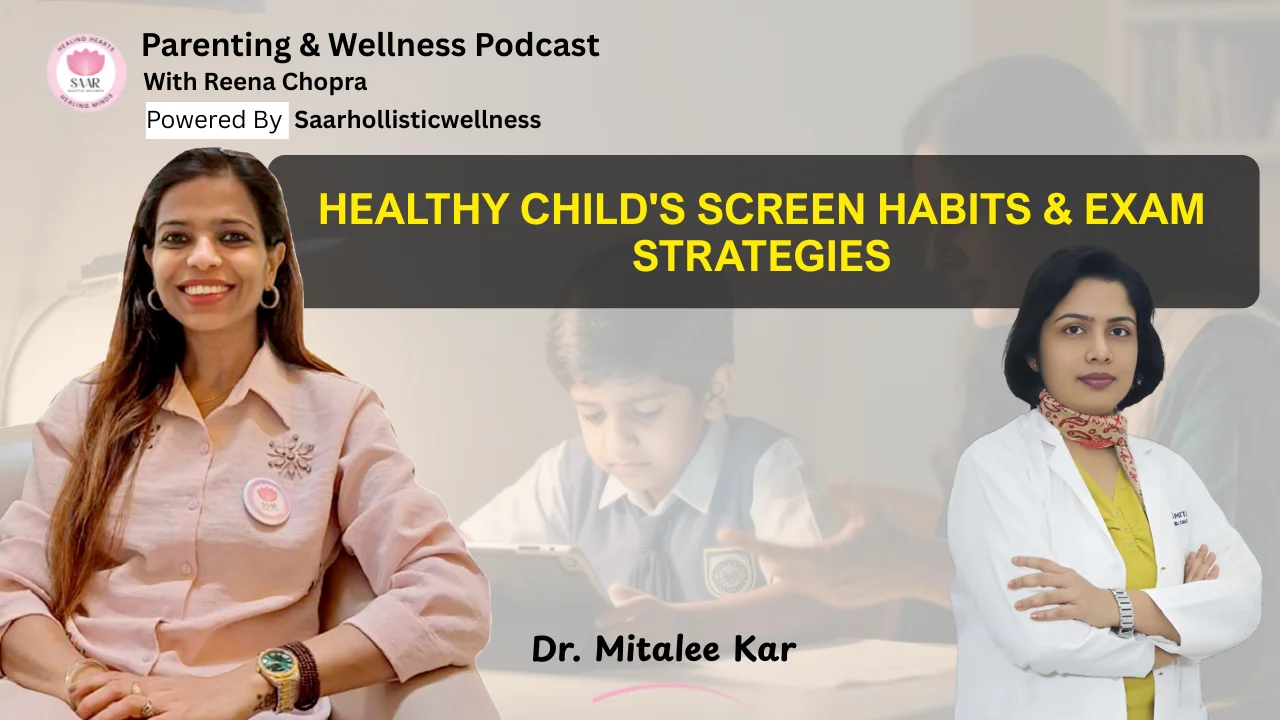
In a recent episode of the Parenting Podcast by Saar Holistic Wellness, psychologist Reena Chopra sat down with Dr. Mitalee Kar, Consultant Pediatric Neurologist, to decode the science behind screen habits, sleep health, and academic performance.
Together, they offered practical advice every parent in India can start using today.

The Real Impact of Screen Time on Your Child’s Brain
Dr. Mitalee begins with a powerful reminder — “Screens are not evil, but overexposure without boundaries changes how a child’s brain works.”
Children today are experiencing something neurologists call “digital fatigue.” Constant exposure to screens overstimulates the visual and sensory systems, keeping the brain in a state of mild stress.
This leads to:
- Difficulty focusing during offline tasks.
- Restless sleep or delayed bedtime.
- Frequent headaches and eye strain.
- Reduced motivation to study.
Reena Chopra adds that emotional side effects are equally concerning — “Children become more irritable, impatient, and dependent on dopamine hits from screens.”
In simple terms, too much screen time rewires both the brain’s biology and the child’s behavior patterns.
Sleep: The Secret Weapon for Academic Success
Both experts agreed — sleep is the most underrated performance booster for children.
The blue light from devices suppresses melatonin, the sleep hormone. As a result, children may stay awake later but wake up tired, unfocused, and emotionally reactive.
Dr. Mitalee shares a key insight: “Memory consolidation happens during deep sleep. When children lose sleep, they lose learning.”
Healthy Sleep Checklist for Kids
- No screens at least 90 minutes before bedtime.
- Maintain a consistent sleep and wake schedule.
- Replace late-night revision with morning study sessions.
- Dim the lights and create a calm bedtime ritual — storytelling, journaling, or gratitude talk.
Reena reminds parents, “When children sleep well, their emotional regulation improves — and so does their ability to handle exam stress.”
Screen Time Rules That Actually Work
Every parent has tried to set screen limits — and every child has tried to break them.
So how do you create rules that stick?
Dr. Mitalee recommends the 3R Approach — Replace, Restrict, and Reward.
Here’s how it works:
📱 Replace
Offer stimulating offline alternatives — puzzles, coloring, gardening, music, or family board games. The key is to give the brain the same engagement it seeks from screens, but in a healthier way.
⏰ Restrict
Create specific “screen windows” — for example:
- 30 minutes after school
- 1 hour for educational use
- No screens during meals or before bedtime
🌟 Reward
Acknowledge good behavior, not by giving more screen time, but through positive experiences — outdoor play, a picnic, or a fun activity with parents.
Reena adds, “Children follow what we model, not what we preach. If parents scroll endlessly, they’ll never believe your no-screen rule.”
The solution starts with mindful adult behavior.
Understanding the “Headache Generation”
A surprising trend Dr. Mitalee has seen in her clinic: children aged 8–15 complaining of unexplained headaches.
Many parents fear serious medical issues, but in most cases, the cause is simple — screen overuse, dehydration, and lack of rest.
When the brain’s visual system is forced to focus for long periods without breaks, it triggers muscle tension and fatigue.
Combine that with poor posture and stress, and you have what she calls “the modern student’s migraine.”
The good news? It’s reversible.
Encourage:
- 20-second eye breaks every 20 minutes of screen use (the 20-20-20 rule).
- Frequent hydration (at least 6–8 glasses a day).
- Proper sitting posture during study time.
These small tweaks can drastically reduce physical strain and improve mental clarity.
Exam Stress: How to Support Without Pressure
Exams are a mental marathon — not just for students, but for parents too.
Dr. Mitalee and Reena agree that parental pressure often amplifies anxiety instead of improving results.
“Children don’t fail because they lack ability — they struggle because they fear disappointing us.” — Reena Chopra
🌿 Mindful Exam Support Plan
- Create a calm study space. No clutter, no noise, no screens.
- Prioritize effort over marks. Praise discipline, not just grades.
- Include mindful breaks. Stretching, deep breathing, or music.
- Teach time management. Use planners, not panic.
- Keep communication open. Ask how they feel, not just what they studied.
When parents model calmness, children learn resilience — the true skill exams are meant to test.
The Parent’s Role in Digital Discipline
In every conversation about children’s screen time, one truth remains: discipline starts with adults.
Reena Chopra emphasizes:
“When parents eat while watching TV, work on their phones at the dinner table, or scroll late into the night — kids learn that screens are the norm.”
The healthiest families are those who set shared digital boundaries:
- No phones at the table.
- Family reading or conversation time.
- Shared offline hobbies (gardening, cooking, sports).
By replacing passive scrolling with active connection, parents not only protect their child’s brain — they strengthen emotional bonds too.
When to Seek Professional Help
Sometimes, despite all efforts, children continue showing signs of emotional distress:
- Persistent irritability or withdrawal.
- Constant fatigue or sleep trouble.
- Declining academic performance.
- Headaches or eye pain after screen use.
If these symptoms persist, consult a pediatric neurologist or child psychologist.
Early intervention ensures faster recovery and long-term well-being.
“A checkup doesn’t mean something’s wrong — it means you care enough to be sure.”
— Dr. Mitalee Kar
Building a Healthier Digital Future
Technology isn’t leaving — but our relationship with it can evolve.
Dr. Mitalee and Reena believe in a “Digital Wellness Mindset” — where balance, not avoidance, is the goal.
Here’s how you can start:
- Talk openly about online habits.
- Involve children in setting screen rules.
- Focus on progress, not perfection.
- Celebrate small victories (one gadget-free day, a full night’s sleep, a stress-free exam).
Raising Focused, Happy, and Healthy Kids
Children learn by watching us — and they thrive when we guide, not control.
A balanced screen routine, emotional awareness, and a calm approach to academics can completely transform a child’s confidence and performance.
As Reena Chopra beautifully puts it,
“Your child doesn’t need a perfect parent — they need a mindful one.”


