
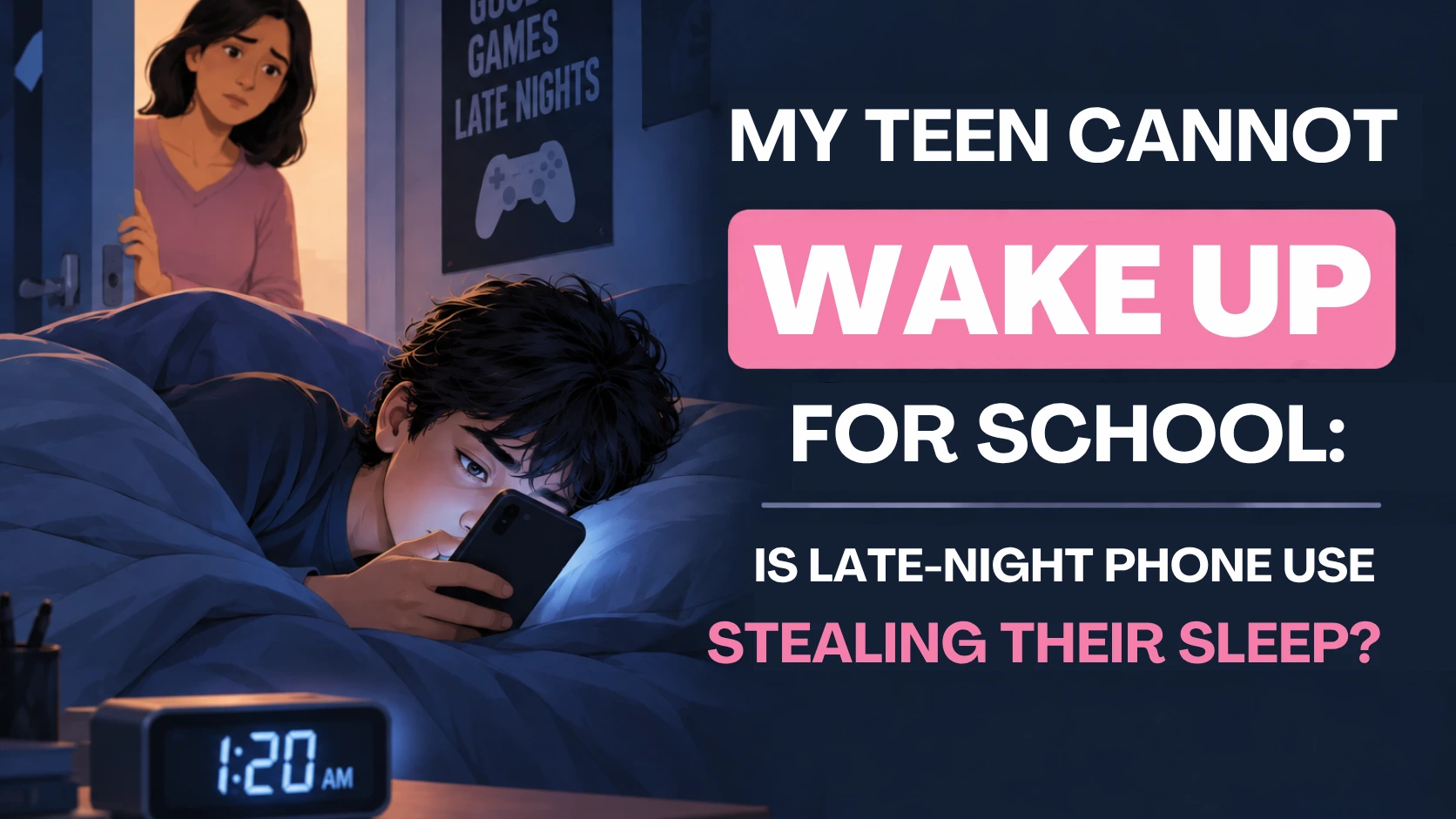
Every morning becomes a battle. You call your teen three times. They pull the blanket over their head. They miss breakfast, rush to school, and return home exhausted and irritable.
It is tempting to call this laziness. But many teenagers are not choosing to be difficult. They may be chronically short on sleep.
A 2026 study of 1,452 school-going adolescents in Central Delhi found that 22.5% were sleep-deprived. The students who were sleep-deprived had lower average academic grades and higher depressive-symptom scores than peers who were not sleep-deprived. This does not mean every tired teen has depression or that a phone is always the cause. Sleep still deserves attention.
Psychologist Reena Chopra of Saar Holistic Wellness encourages parents to see the pattern before judging it: a teen who cannot wake up may be struggling with a sleep debt, stress, anxiety, an overloaded routine, or a late-night digital habit not a lack of character.
How Much Sleep Does a Teenager Need?
Most teenagers need 8 to 10 hours of sleep each night. During adolescence, the body clock naturally shifts later, so many teens do not feel sleepy as early as younger children. This biological change can clash with early school start times, long commutes, tuition, homework, and family schedules.
Signs of Teen Sleep Deprivation Parents May Miss
Teen sleep deprivation can look like:
- Difficulty waking up or frequent school lateness
- Sleeping for hours on weekends
- Irritability, anger, tears, or low patience
- Falling asleep in class, the car, or during study time
- Trouble focusing or remembering what they studied
- Headaches, low energy, or frequent minor illnesses
- Craving caffeine, energy drinks, or sugary snacks
- Anxiety becoming stronger at night
- More arguments about phones, homework, and mornings
Sleep loss can make ordinary teenage emotions feel much bigger. It does not prove a mental-health condition, but it can worsen stress and make coping harder.
Is Late-Night Phone Use the Problem or a Symptom?
Phones can delay sleep. Notifications, videos, games, group chats, and endless scrolling keep the brain alert when it needs to slow down. In a 2026 survey of 5,000 urban Indian parents, 62% said their teenagers slept after 11 pm because of smartphone use.
But it is also important to ask why your teen is online late at night.
They may be:
- Finishing homework sent on WhatsApp or school platforms
- Talking to friends because daytime is too busy
- Escaping exam worry, loneliness, or family conflict
- Watching videos to switch off a racing mind
- Feeling afraid of missing messages or group-chat drama
- Using the phone in bed because it has become their only private downtime
If we treat the phone as the only villain, we may miss the stress underneath it.
Why Teenagers Find It Hard to Put the Phone Down at Night
Notifications Create a Fear of Missing Out
A teen may worry that an unanswered message will lead to exclusion, gossip, or a friendship problem by morning. That worry is real, even if it seems small to adults.
Late Nights May Feel Like Their Only Free Time
After school, coaching, homework, family demands, and chores, some teens feel that night is the only time that belongs to them. Taking away the phone without changing the overall routine can feel like taking away their one break.
Stress Can Keep the Body Awake
A phone may be the visible habit, but anxiety, low mood, bullying, relationship worries, or academic pressure can be what keeps a teen awake.
A good sleep plan asks both questions: “What time is the phone used?” and “What is my teen trying to manage at that time?”
How to Talk About Late-Night Phone Use Without a Daily Fight
Start outside the morning rush or bedtime argument.
Try:
“I have noticed you look exhausted and mornings are hard. I am not trying to control you. Can we work out what is keeping you awake and make a plan together?”
Avoid labels such as “addicted,” “lazy,” or “irresponsible.” They often create defensiveness, not change.
Listen for practical barriers too. Is homework arriving late? Does the family eat dinner very late? Is your teen sharing a room? Are they afraid to miss social conversations? A plan that ignores their reality will not last.
A Teen Sleep Plan That Families Can Actually Follow
1. Agree on a Wind-Down Time, Not Just a Phone Ban
Start with a realistic target. If your teen sleeps at 1 am, demanding 9:30 pm immediately may fail. Move bedtime 15 to 30 minutes earlier every few nights.
Choose a predictable wind-down routine: dim lights, a shower, light reading, music, stretching, a written to-do list for tomorrow, or quiet conversation.
2. Charge Devices Outside the Bed Area
Where possible, keep phones charging outside the bedroom or away from the bed. This reduces automatic scrolling after lights-out.
If a device must be nearby for an alarm, turn off non-essential notifications and use Do Not Disturb. Parents should follow comparable boundaries too; teens notice double standards quickly.
3. Protect an Hour Before Sleep
Aim for a calmer final hour. This does not mean perfection. It means fewer emotionally intense chats, gaming sessions, reels, arguments, or homework deadlines immediately before bed.
4. Keep Wake-Up Times Fairly Steady
Sleeping until afternoon on weekends can make Sunday night harder. Let teens rest, but try to keep wake-up time within one or two hours of their school schedule when possible.
5. Review the Overall Load
If a teen has school, travel, coaching, homework, and multiple activities from morning to night, no phone rule can create enough sleep on its own. Consider what can be reduced, moved, or protected.
When a Teen’s Sleep Problems Need Professional Support
Talk with a doctor or qualified mental-health professional if sleep difficulty is persistent, severe, or affecting daily life. Seek support if your teen has:
- Ongoing low mood, panic, or intense anxiety
- Frequent nightmares or trauma-related fear
- Loud snoring, pauses in breathing, or extreme daytime sleepiness
- Major changes in appetite, mood, or school attendance
- A pattern of staying awake all night or sleeping most of the day
- Thoughts of self-harm, suicide, or not wanting to live
If your teen mentions self-harm, suicide, or immediate danger, seek urgent local emergency or mental-health support. In India, call 112 in an emergency.
Research Sources for Publishing
- A 2026 study of 1,452 Central Delhi school adolescents reported 22.5% sleep deprivation and associations with lower grades and higher depressive symptoms. Read More…
- The American Academy of Sleep Medicine recommends 8–10 hours of sleep for teenagers aged 13–18. Read More…
- A 2026 urban Indian parent survey reported concerns about smartphones delaying teen bedtimes; its findings are parent-reported rather than clinical prevalence data. Read More…
Your teen does not need a lecture at 11 pm. They need a family environment where rest is protected, stress can be discussed, and support is available before exhaustion becomes a crisis.


