
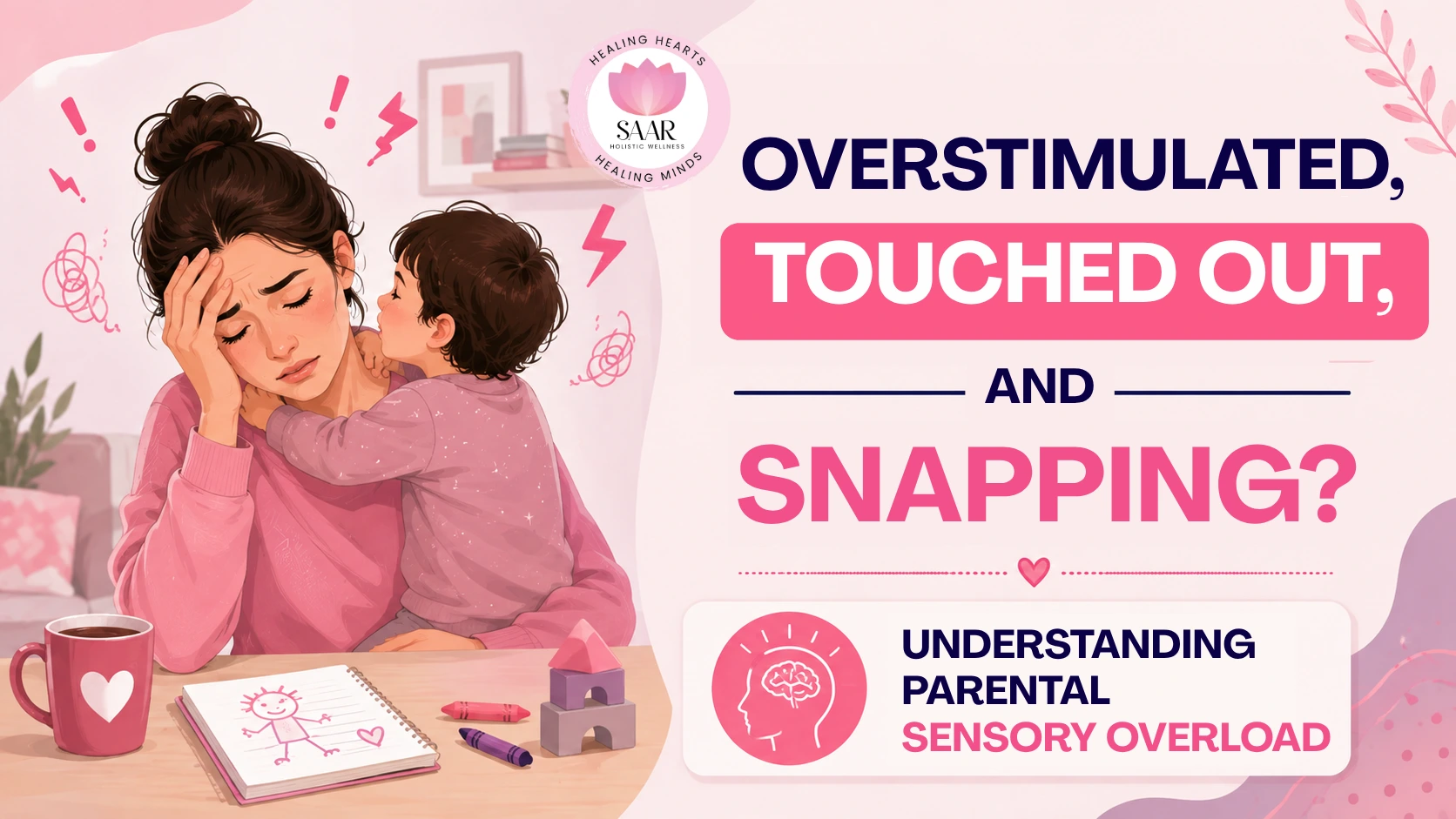
A child is crying. Someone is asking for a snack. The pressure cooker whistles. Your phone is ringing. The television is on. There are toys under your feet, messages waiting to be answered, and one more person saying, “Mumma, look!”
Then suddenly, something small happens and you snap.
If you have ever felt that you cannot bear one more sound, touch, question, or demand, you are not alone. A 2025 survey of more than 1,000 parents found that 72% experienced sensory overload while caring for children. Noise, sibling arguments, clutter, and constant demands were among the most common triggers.
For many mothers, this feeling is followed by guilt: “Why did I get so angry? Why can’t I handle normal parenting?”
Psychologist Reena Chopra, founder of Saar Holistic Wellness, wants mothers to hear this clearly: feeling overstimulated does not make you a bad mother. It means your mind and body may be carrying too much, for too long, with too little space to reset.
What Is Parental Sensory Overload?
Parental sensory overload, sometimes called motherhood overstimulation, happens when your brain receives more sensory input than it can comfortably process.
That input may come from:
- Loud crying, shouting, toys, television, or multiple people talking
- Constant physical contact, such as breastfeeding, carrying, climbing, or being pulled at
- Bright lights, clutter, strong smells, or crowded rooms
- The mental noise of planning meals, school work, appointments, and family needs
- Being asked questions or making decisions all day without a pause
Your body may respond by becoming tense, irritated, restless, tearful, numb, or desperate to escape the noise.
This is not about loving your children less. It is about your nervous system reaching its limit.
Signs You May Be an Overstimulated Mom
Sensory overload in mothers does not look the same for everyone. You may notice:
- Getting angry faster than usual
- Feeling irritated by normal sounds, touch, or mess
- Wanting everyone to stop talking at once
- Feeling “touched out” when your child wants another hug or cuddle
- Headaches, muscle tension, jaw clenching, or fatigue
- Crying over small things
- Finding it hard to focus or make simple decisions
- Scrolling on your phone because your mind feels too full to respond
- Feeling guilty after shouting
- Wanting to hide in the bathroom, bedroom, or car for a few quiet minutes
These feelings are signals, not character flaws. Your system is asking for less input and more support.
Why Does Noise Make Me Angry as a Mother?
When you are already tired, hungry, stressed, or carrying the family’s invisible mental load, your capacity becomes smaller.
A normal level of noise may then feel unbearable.
For many Indian mothers, there is another layer: the expectation to be endlessly available. You may be managing children, work, cooking, school WhatsApp groups, elderly parents, relatives, and household decisions, all while trying to stay calm.
No one sees every task you are holding in your mind. But your body feels it.
Anger is often not the first emotion. Under it may be exhaustion, loneliness, resentment, worry, hunger, or the feeling that there is no room for you.
Parental Sensory Overload Is Different From Being “Short-Tempered”
You may have been told, “Just be more patient.”
But patience is hard to access when your body is in a stress response.
When the nervous system feels overloaded, it can move into fight, flight, freeze, or shutdown mode. That may look like shouting, leaving the room, going silent, or feeling emotionally numb.
This does not excuse hurtful behaviour. But it helps us understand where change needs to begin.
You do not need more shame. You need a plan that helps you notice overload earlier and respond more safely.
Common Triggers for Sensory Overload in Mothers
Loud, Repeated Noise
Crying, sibling fights, loud toys, background television, and children talking at the same time can quickly build up.
If possible, reduce the sounds you can control. Turn off the television. Put noisy toys away for part of the day. Keep one room calm and low-stimulation.
Constant Touch
Being needed physically all day can feel intense, especially for mothers with babies, toddlers, or children who seek a lot of closeness.
Wanting space from touch does not mean you are rejecting your child. You can say kindly:
“I love you. My body needs two quiet minutes, and then I can cuddle again.”
Too Many Demands at the Same Time
The hardest moment is often not one big problem. It is five small problems arriving together.
Try not to answer every request immediately. Pause, choose the most urgent need, and take one task at a time.
Hunger, Poor Sleep, and No Recovery Time
A tired brain gets overwhelmed more easily. If you are skipping meals, sleeping poorly, or never getting an uninterrupted break, your emotional capacity will naturally reduce.
Rest is not a reward you earn after doing everything. It is a basic need.
What to Do in the Moment When You Feel You Might Snap
1. Create Safety First
If you feel close to shouting or losing control, place your child in a safe space appropriate for their age. I can be a cot, play area, or room with another safe adult and step back briefly.
Take slow breaths. Splash water on your face. Stand near an open window. Do not continue the argument when your body is flooded.
2. Reduce One Source of Input
You do not need to fix the entire day. Choose one thing to lower.
- Switch off the television
- Move to a quieter room
- Put the phone on silent for ten minutes
- Ask one child to play in another space
- Lower the lights
- Step outside for fresh air
Small reductions in noise and demand can help your body settle.
3. Name What Is Happening Without Blaming Your Child
You can say:
“There is too much noise for me right now. I need a quiet minute so I can speak calmly.”
This teaches your child that feelings can be handled without shame.
4. Do Not Make Big Parenting Decisions While Overloaded
When you are at your limit, avoid giving long lectures, harsh punishments, or making sweeping promises.
First regulate. Then return to the issue when everyone is calmer.
Small Changes That Reduce Motherhood Overstimulation
Protect a Daily Quiet Window
Even ten or fifteen minutes of quiet can help. This may be after school, before bedtime, during a walk, or while another adult takes over.
If possible, do not use every quiet minute for chores. Sit, stretch, breathe, drink water, or simply do nothing.
Share the Load Clearly
“Please help more” is difficult for others to act on. Be specific.
Try:
- “Can you handle bedtime on Tuesday and Thursday?”
- “Please take the children to the park for one hour this evening.”
- “Can you answer the school messages today?”
Support becomes more real when the task is named.
Lower the Standard for a While
On a difficult day, a simple meal, an untidy room, or a postponed chore is not failure.
Your family does not need a perfect mother. They need a mother who has enough support to stay emotionally present.
Build a Calm-Down Plan Before You Need It
Make a short list of things that help you reset:
- A glass of water
- A five-minute balcony break
- A shower
- Prayer, breathing, or meditation
- A walk
- Music through headphones
- Calling a friend
- Handing over childcare to your partner for twenty minutes
Keep the list where you can see it. When you are overloaded, you should not have to think of a solution from scratch.
Sensory Overload, Parental Burnout, and Depression: When to Seek Support
Parental sensory overload can occur on its own, but it may also sit alongside parental burnout, anxiety, postpartum depression, or ongoing stress.
It is a good idea to seek professional support if you are:
- Snapping or shouting often and feel unable to stop
- Feeling numb, hopeless, or disconnected from your family
- Constantly anxious or unable to rest
- Having panic symptoms
- Feeling angry most of the day
- Avoiding your child because you feel emotionally empty
- Experiencing thoughts of harming yourself or someone else
If you feel you may harm yourself or another person, seek urgent local emergency or mental-health support immediately.
You deserve support before you reach breaking point.
Research Sources for Publishing
- A 2025 survey of more than 1,000 Illinois parents found that 72% reported sensory overload related to child-rearing; common triggers included arguments, noise, and clutter. Read More…
- The accompanying report explains the survey methodology and describes “touched out” experiences among parents. Read More…
You are allowed to need quiet. You are allowed to ask for help. And you are allowed to care for yourself without guilt.


