
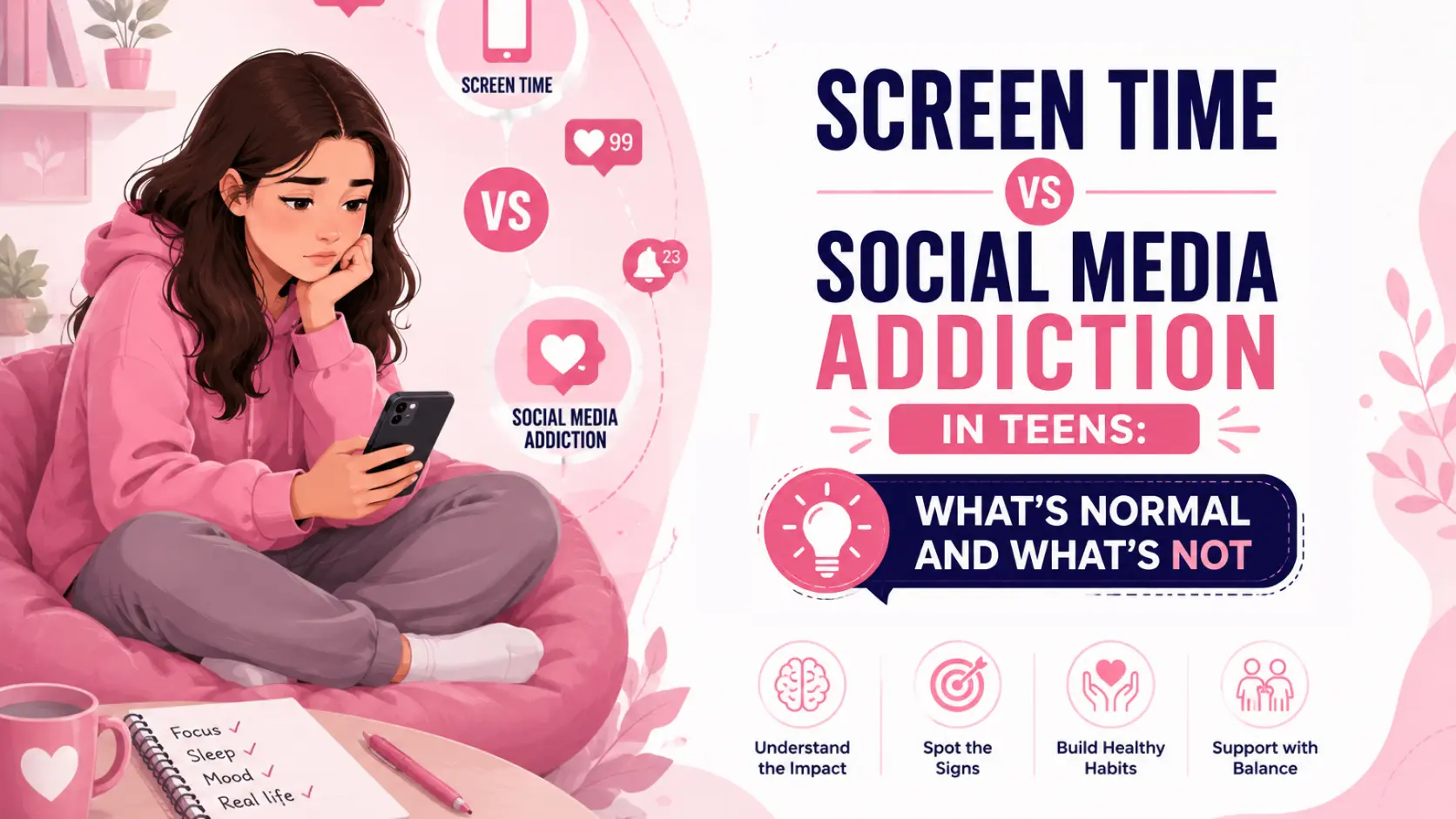
A recent Indian survey found that 83.2% of secondary school students exceed the recommended two hours of daily screen use, and nearly half of urban parents report their child spends three or more hours a day on social media, videos, and online games. In my practice, this is one of the most common worries mothers bring to me. Almost every second parent I speak to asks some version of the same question: “Is this normal teenage behaviour, or is something wrong?”
I have worked with children and teenagers for 17 years now, and I can tell you this: not all screen time is the same, and not all worry is misplaced. But there is a real difference between a teenager who enjoys their phone and one who is showing early signs of social media addiction. Knowing that difference is what helps you respond with the right kind of support, instead of guilt or panic.
Why This Confusion Is So Common Right Now
Screens are not going anywhere. Your teen’s school assignments, friendships, and even their sense of identity are shaped partly online. So the old advice of simply “cutting the phone” rarely works, and honestly, it often backfires.
What I see instead is parents oscillating between two extremes either ignoring the signs because “all kids are like this now,” or reacting with strict bans that create secrecy rather than change. Neither approach addresses what is actually happening underneath.
What Normal Teenage Screen Time Looks Like
Most teenagers use screens for a mix of schoolwork, entertainment, and social connection. Normal use tends to have flexibility built into it. Your child can put the phone down when asked, even if reluctantly. They still show up for meals, sleep reasonably on time, and their mood does not swing dramatically based on notifications.
Some signs that fall within the range of typical teenage behaviour:
- Checking the phone frequently out of habit, not distress
- Preferring texting over calling
- Mild irritability when interrupted mid-scroll
- Comparing their life to friends’ posts occasionally
Signs That Point Toward Social Media Addiction
Social media addiction is different from heavy use, it involves a loss of control, not just a lot of hours. This is the distinction I ask parents to look for.
Watch for these patterns:
- Withdrawal-like reactions when the phone is taken away, emotions like anger, panic, or genuine distress that feels disproportionate
- Sleep disruption from late-night scrolling that persists even when the teen knows it’s affecting them
- Using the phone to avoid feelings like sadness, boredom, or social anxiety rather than to genuinely connect
- A drop in academic performance, hobbies, or in-person friendships that were previously important
- Lying about how much time they spend online
- Restlessness or low mood that improves noticeably when they’re offline for a stretch
If you’re seeing three or more of these consistently over a few weeks, it’s worth paying closer attention not with accusation, but with curiosity.
Why Indian Families Face This Differently
I want to name something that generic parenting content often misses. In many Indian homes, screen use gets tangled up with academic pressure, joint family dynamics, and a cultural discomfort with naming emotional struggles. A teen who is anxious or lonely may not have the language or the permission to say so. The phone becomes the outlet instead.
I also see grandparents and extended family members having strong, sometimes conflicting opinions on screen rules, which can leave parents feeling caught in the middle rather than confident in their own judgment.
What You Can Do, Starting Today
You don’t need a dramatic intervention to begin. Small, consistent shifts matter more than one big rule change.
- Get curious before you get strict. Ask what they enjoy online, and actually listen. This opens a door that bans usually close.
- Model the behaviour you want to see. Teens notice when parents are equally attached to their own phones.
- Protect sleep first. Screens out of the bedroom after a set time is often the single highest-impact change.
- Name feelings, not just behaviour. Instead of “stop scrolling,” try “you seem low today is everything okay?”
- Watch the pattern, not the moment. One late night isn’t an addiction. A consistent, distressing pattern is worth addressing.
When to Seek Professional Support
If your teen’s screen use is affecting their sleep, grades, friendships, or mood over several weeks and conversations at home aren’t shifting anything it may be time to bring in outside support. This isn’t a sign you’ve failed as a parent. It’s often the fastest way to actually help your child.
In my practice, I work with both the teenager and the parents together, because screen habits are rarely just about the screen. They usually point to something the teen is feeling underneath stress, disconnection, or a need for control that we can address directly.


