
Playtime Is the New Classroom
Playtime isn’t a break from learning — it is learning.
Every time a child touches, builds, paints, or questions, new neural pathways light up in their brain. The toys they use can either limit or expand those pathways.
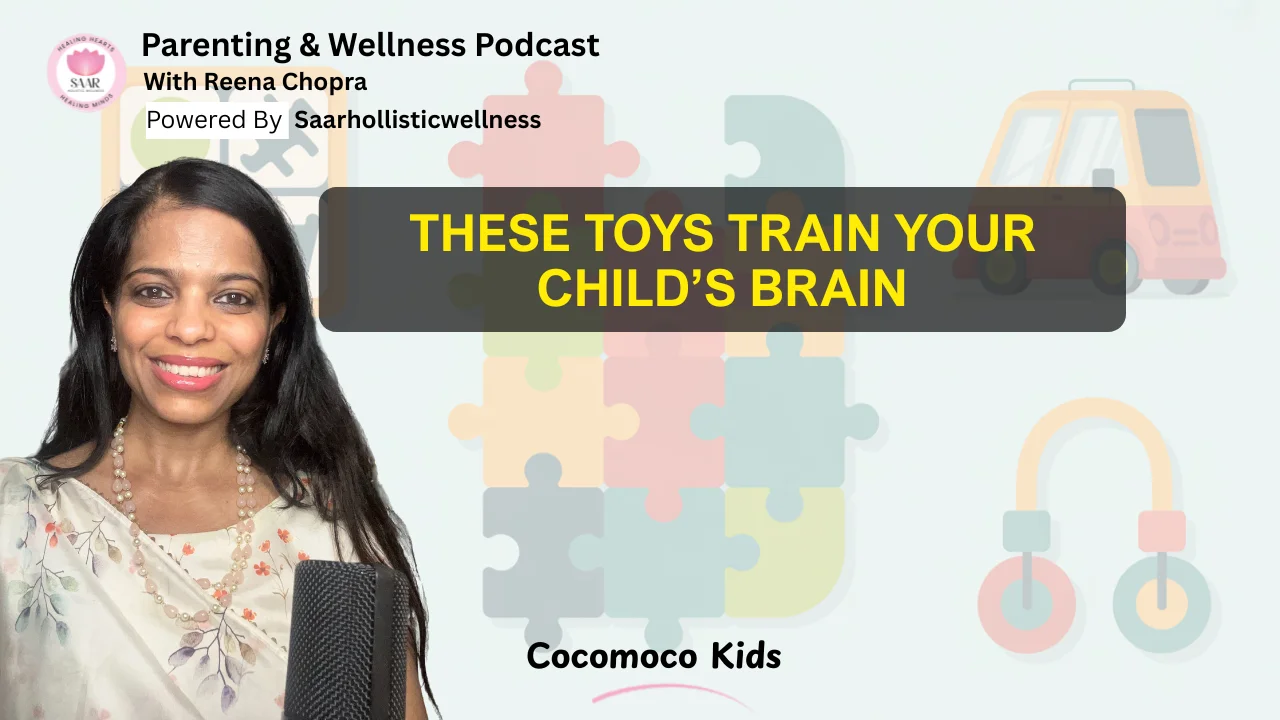
In my recent Parenting Podcast, I explored this topic with the creative team at Cocomoco Kids, who are redefining what “smart play” looks like for modern Indian families.

The Real Problem: We Parent on Auto-Pilot
Many parents think they’re teaching — but they’re actually controlling.
When we rush to fix, interrupt, or over-guide, we take away a child’s chance to build problem-solving skills.
“The problem usually isn’t the child,” I said in the podcast. “It’s the parent’s anxiety showing up as overhelping.”
Children don’t need perfect parents; they need self-aware ones.
Offer Choices, Not Commands
When you give your child two or three options — “Do you want to play puzzle or paint?” — you teach them decision-making, self-trust, and responsibility.
That’s why learning-based toys are so powerful: they promote curiosity within a safe structure.
Cocomoco’s kits and puzzles are designed to create this balance — enough freedom to explore, enough structure to learn.
Boundaries: Love in a Clear Form
Boundaries aren’t punishment; they’re emotional safety nets.
When you say, “You can watch TV after playtime,” and stick to it, your child learns cause and effect.
Inconsistent rules between parents or grandparents, however, confuse children and increase behavioral issues.
💡 Tip: Create a shared “Family Agreement” — one rule sheet everyone follows.
The Science of Consistency
Neuroscience calls it predictable patterning.
When a child knows what to expect — in tone, time, or consequence — their stress hormones reduce.
They learn faster, sleep better, and show higher confidence.
Consistency is love expressed as structure.
Affirmations That Shape Self-Belief
Before bed, or after school, use affirmation cards to reprogram your child’s inner voice.
Say together:
“I am kind. I am brave. I can try again.”
These simple rituals strengthen prefrontal cortex development — the part of the brain responsible for resilience and focus.
How Smart Toys Build Cognitive Muscles
Unlike screens that demand nothing, smart toys demand thinking, touching, planning, and laughing.
They activate all senses — visual, auditory, tactile — creating a whole-brain workout.
Benefits include:
- Improved attention span
- Better fine-motor control
- Higher problem-solving ability
- Increased parent-child bonding
The best part? Kids don’t even realize they’re learning.
Parents Need Play Too
Mindful parenting isn’t about perfection — it’s about participation.
When you sit beside your child, stack blocks, or join a quiz, you show them that curiosity never gets old.
And that’s the biggest life lesson of all.
Final Takeaway
Smart toys train more than brains — they nurture confidence, patience, and connection.
In a world of overstimulation, play can be your child’s meditation.
Make space for joy, movement, and mindful learning — and you’ll raise not just a smart child, but a happy one. 🌿
Learn more about child brain and emotional development on our blog at
👉 Saar Holistic Wellness
Become a certified parenting professional through our
🎓 Parenting Coach Program
Explore creative learning toys at
🧩 Cocomoco Kids
Watch the full conversation on YouTube → https://youtu.be/05cFLcUDTRE


