
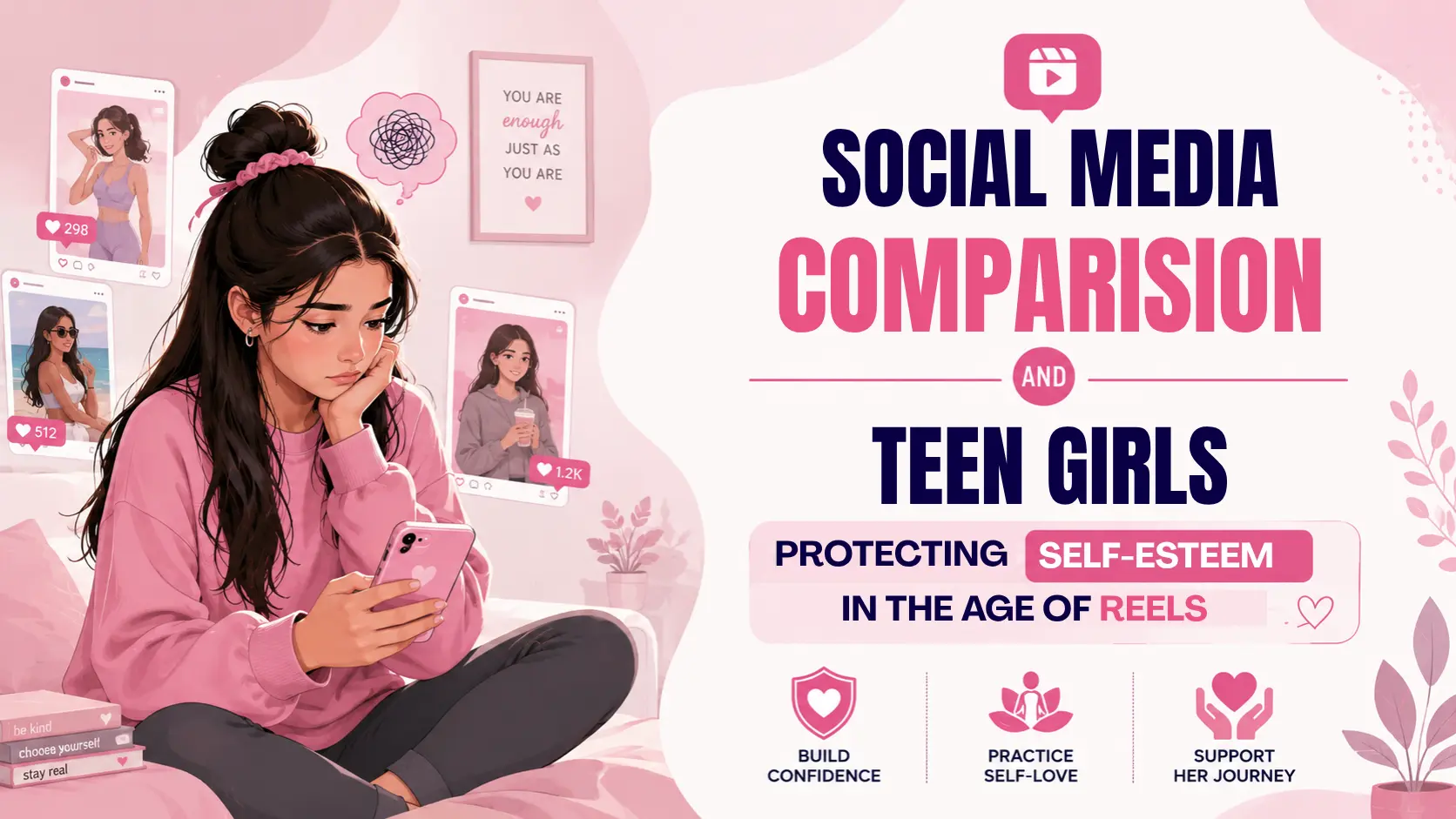
A few years ago, internal research conducted by Instagram’s own parent company found something the platform never advertised: roughly a third of teenage girls said that on days they already felt bad about their bodies, scrolling Instagram made that feeling worse, not better. The company knew this. The girls scrolling didn’t.
I share this statistic with parents often, not to alarm them, but because it validates something many mothers already sense but can’t quite prove: this isn’t just “screen time.” It’s a steady, algorithm-fed comparison machine, running quietly in your daughter’s pocket, every single day.
It’s Not Vanity It’s Neurology
One thing I want to gently correct in how we talk about this: teenage girls comparing themselves to influencers and Reels aren’t being shallow. Their brains are doing exactly what adolescent brains are wired to do scanning for social belonging, status, and acceptance, at the exact developmental stage when identity is most fragile.
Research on adolescent social media use has found that the same reward circuits in the brain that respond to winning money or eating something delicious light up when a teen sees their post doing well. Validation online isn’t a small dopamine hit; it’s wired into the same system that shapes long-term self-worth. That’s what makes comparison culture so much harder to simply “switch off.”
Why Girls Are Hit Differently Than Boys
Across the studies I follow, one pattern repeats consistently: appearance-focused, image-heavy platforms affect teenage girls’ self-esteem more than boys’. Girls use Instagram-style, visual platforms more heavily during adolescence, and appearance-based comparison skin, body shape, “aesthetic” lifestyles tends to hit girls’ self-worth harder than the more achievement-based comparisons boys often engage in.
In the Indian context, I’d add a second layer to this. Many of the teenage girls I work with are comparing themselves not just to influencers, but to a very specific, often unrealistic archetype: glowing skin, a certain body type, a “put-together” life while also managing very traditional expectations around appearance from family. The pressure isn’t only coming from the screen. It’s coming from both directions at once.
What This Comparison Actually Looks Like at Home
Parents often ask me what the signs look like in daily life. It’s rarely dramatic more often, it shows up as:
- Spending unusually long periods editing or re-taking photos before posting
- Sudden new self-criticism about skin, weight, or appearance that wasn’t there before
- Checking likes or views repeatedly, and mood visibly shifting based on the numbers
- Comparing herself out loud “why doesn’t my life look like that” even in passing
- Avoiding photos or specific angles she used to be comfortable with
None of these mean something is broken. They mean the comparison has started shaping how she sees herself and that’s worth addressing early, while it’s still manageable.
How I Coach Parents to Respond Without Confiscating the Phone
Taking the phone away rarely solves this; it usually just adds secrecy to the mix. What actually helps is shifting how she relates to what she’s seeing.
1. Talk about the algorithm, not just the app. Explain, simply, that what she sees isn’t “the internet” it’s a feed built specifically to keep her scrolling, often by showing her exactly the content most likely to trigger comparison. Understanding this as a system, not reality, creates useful distance.
2. Normalize the editing, openly. Most teens intellectually know photos are filtered but knowing it and feeling it are different. Watching a filter transformation together, out loud, does more than a lecture ever will.
3. Protect identity outside the feed. Girls with a strong sense of self outside of how they look through sport, art, friendships, academics are more resilient to comparison culture. Actively nurture at least one space where her worth isn’t tied to appearance.
4. Model your own relationship with social media. Daughters absorb far more from watching how their mothers talk about their own bodies and feeds than from any conversation about “healthy screen habits.”
5. Keep the door open without judgment. If she does share that she’s feeling low after scrolling, resist the urge to say “then just stop using it.” That response usually shuts the conversation down. Curiosity keeps it open.
When Comparison Turns Into Something More
If you’re noticing persistent low mood, disordered eating patterns, or a self-esteem dip that isn’t lifting even when she’s away from her phone, that’s a sign this has moved beyond ordinary comparison and deserves professional support.
A Story From My Practice
A 16-year-old client once told me, quite matter-of-factly, that she compared her skin tone to influencers every single morning before deciding whether the day felt “worth trying.” Her mother had no idea this ritual existed from the outside, her daughter simply seemed a little more particular about her appearance than before.
What we uncovered together was that this daily comparison had quietly become the way she measured her entire self-worth, not just her looks. Once her mother understood this wasn’t vanity but a genuine, daily blow to her confidence, the conversations at home shifted from comments about her appearance (“you look tired today”) to questions about how she was actually feeling. Small shifts in how a parent talks about appearance at home can either reinforce comparison culture or quietly interrupt it.
The Added Weight of Fairness and “Marriageability” Talk
I’d be doing Indian parents a disservice if I didn’t name this directly: in many of our households, comments about skin tone, body shape, or “looking presentable” are still framed, even indirectly, around future marriage prospects. A daughter who is already comparing herself to filtered images online doesn’t need this layered on top.
If you notice these comments slipping out at family gatherings, it’s worth gently redirecting them not confronting relatives publicly, but making clear to your daughter, privately and consistently, that her value in your eyes has nothing to do with how she measures up to anyone’s beauty standard, online or offline.
Building Media Literacy Early, Not Just Reactively
One long-term strategy I recommend to parents is treating media literacy the way you’d treat any other life skill something taught proactively, not only brought up after a problem appears. Simple habits like discussing why a particular Reel went viral, or pointing out lighting and editing choices in a casual, curious way, build a kind of mental filter over time. A daughter who understands how the machine works is far less likely to be quietly run by it.
Your daughter’s self-worth was never meant to be decided by an algorithm. With the right support at home, it doesn’t have to be.


