
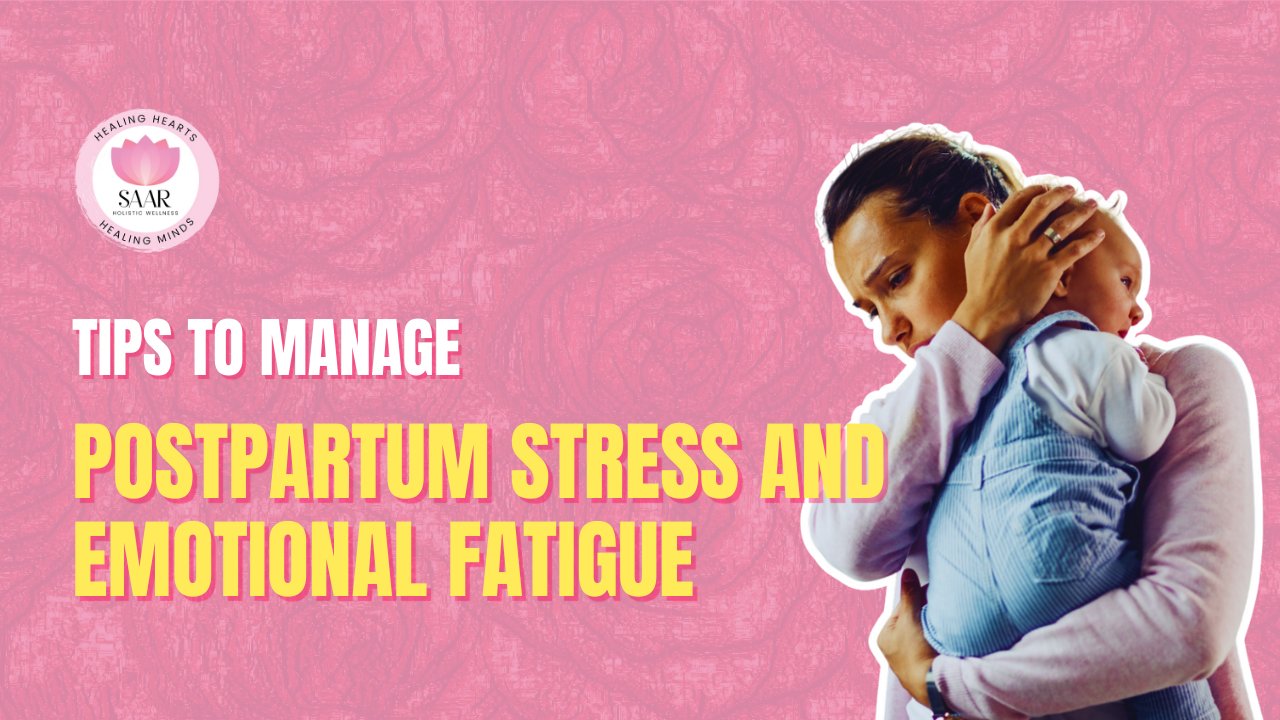
After childbirth, many women feel emotionally exhausted, overwhelmed, and mentally drained. Understanding how to manage postpartum stress and emotional fatigue starts with knowing that this phase is intense and that your experience is valid.
This guide is written for new mothers who are looking for honest support, not unrealistic expectations.
What Is Postpartum Stress and Emotional Fatigue? (A Guide for New Mothers)
Postpartum stress is more than physical tiredness. It includes emotional overload, mental exhaustion, and a sense of losing control after childbirth.
Emotional fatigue often appears as:
- Constant overwhelm
- Irritability or numbness
- Feeling disconnected from yourself
- Lack of motivation
Recognising these signs is the first step in any guide to handle postpartum stress and emotional fatigue.
Why New Mothers Struggle With Postpartum Stress and Emotional Fatigue
Many new mothers silently struggle because postpartum stress is influenced by:
- Hormonal changes
- Sleep deprivation
- Pressure to adjust quickly
- Lack of emotional support
Understanding why this happens helps reduce guilt and self-blame.
Tips to Manage Postpartum Stress and Emotional Fatigue Without Guilt
Below are practical, realistic tips to manage postpartum stress and emotional fatigue, especially designed for new mothers.
1. Stop Expecting Yourself to Function Normally During Postpartum Recovery
One of the most important tips to manage postpartum stress and emotional fatigue is lowering expectations.
Your body and mind are healing. Productivity can wait recovery cannot.
2. Acknowledge Emotional Fatigue After Childbirth Instead of Ignoring It
Emotional fatigue doesn’t mean you’re weak.
Acknowledging “I am emotionally exhausted” allows healing to begin and prevents long-term burnout.
3. Redefine Rest to Handle Postpartum Stress More Effectively
Sleep may be broken, but rest doesn’t disappear.
Redefining rest is a key part of any guide to handle postpartum stress and emotional fatigue.
4. Reduce Mental Load to Manage Postpartum Stress and Emotional Exhaustion
Mental overload contributes heavily to postpartum stress.
Reducing decision-making and responsibilities protects emotional energy.
5. Reconnect With Yourself to Manage Emotional Fatigue After Childbirth
Many new mothers feel they’ve lost themselves.
Small moments of self-connection help reduce emotional fatigue and restore identity.
6. Talk About Your Feelings to Handle Postpartum Stress in a Healthy Way
Talking openly helps regulate emotions.
This is why many new mothers benefit from one-to-one counselling support to manage postpartum stress and emotional fatigue.
7. Know When to Seek Professional Help for Postpartum Stress and Emotional Fatigue
If emotional exhaustion includes:
- Persistent sadness
- Anxiety or panic
- Emotional numbness
- Feeling disconnected
Professional support can help you recover safely.
How One-to-One Counselling Helps Manage Postpartum Stress and Emotional Fatigue
One-to-one counselling supports new mothers by:
- Reducing emotional overwhelm
- Providing a safe space to talk
- Helping manage guilt, stress, and fatigue
- Supporting emotional recovery after childbirth
This is a supportive process not a judgemental one.
A Gentle Reminder for New Mothers Managing Postpartum Stress
Managing postpartum stress and emotional fatigue takes time.
You are healing.
You are learning.
You are allowed to feel tired emotionally and mentally.
This guide to handle postpartum stress and emotional fatigue exists to remind you:
👉 You matter too.


