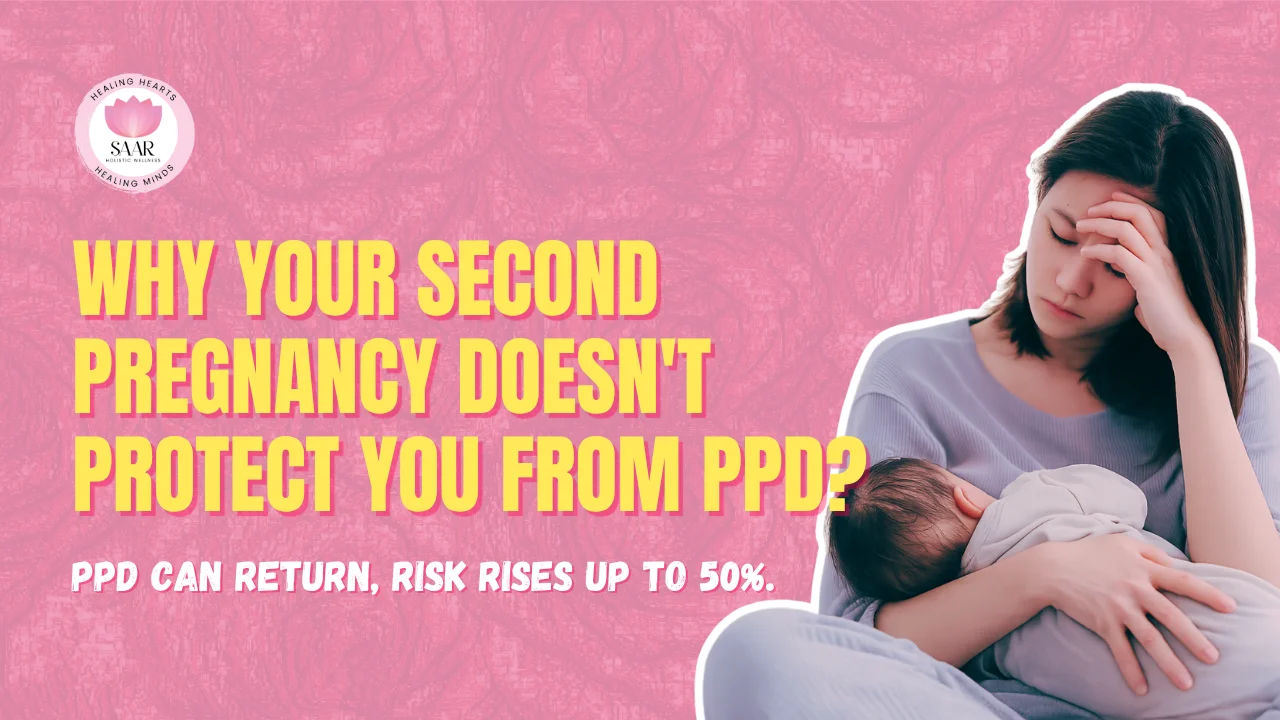
Here is something that surprises many mothers I speak with: globally, about 1 in 5 women experience postpartum depression and if you’ve had PPD once, your risk of it returning in a second pregnancy rises by up to 50%. (Source: postpartumdepression.org, 2025). Yet, so many mothers heading into their second pregnancy believe they are somehow protected. “I know what to expect this time,” they tell themselves. “I’ve done this before.”
I understand that feeling completely. Experience does bring wisdom. But PPD doesn’t care how experienced you are.
In my practice, I’ve worked with mothers who sailed through their first postpartum period only to be blindsided by depression after their second. And I’ve worked with mothers who had PPD the first time and assumed, heartbreakingly, that they deserved it again like it was a sentence, not a treatable condition. Both situations break my heart, because neither had to feel so alone with it.
If you’re pregnant with your second child, or already postpartum and struggling, I want you to read this carefully. What you’re feeling is real. And it has a name.
The Myth That “Experience” Protects You
When we’re expecting our second baby, there’s a quiet confidence that comes with familiarity. You’ve navigated the newborn fog before. You know what cluster feeding feels like. You know the difference between baby blues and something deeper.
But here’s what that confidence can sometimes do: it can make us dismiss warning signs as “just adjustment” because we expect it to be easier. The mind tells us: I already know how to do this. I should be fine.
The truth is that PPD doesn’t work on a logic of fairness or familiarity. It is not a test of how prepared or experienced you are. It is a medical condition rooted in hormonal shifts, brain chemistry, sleep deprivation, and the enormous psychological weight of expanding your family.
In fact, for some mothers, the second postpartum period is harder emotionally, not easier. And there are very real reasons for that.
Why Your Body and Mind Face Different Pressures This Time
Every postpartum experience is unique even for the same mother. After your second birth, your body goes through the same dramatic hormonal crash it did the first time: estrogen and progesterone levels that surged during pregnancy drop sharply within the first 24 hours after delivery, often back to pre-pregnancy levels within just three days. That’s not a small thing. That hormonal withdrawal affects mood, energy, and emotional stability regardless of whether it’s your first or fourth child.
But this time, the context is different.
You’re not just recovering from childbirth, you’re also parenting a toddler. You’re managing a sleep-deprived newborn and a child who still needs your presence, your patience, and your emotional availability. The mental load has doubled, even tripled, almost overnight.
There’s also the guilt that can creep in for second-time mothers specifically: guilt about dividing your attention, guilt that the older child is acting out, guilt that you’re not bonding with the new baby fast enough. This kind of layered emotional pressure is something unique to this season of motherhood and it can quietly erode a mother’s mental wellbeing in ways that go unnoticed until she’s deep in it.
And in India, where research shows that about 22% of mothers experience PPD, and where the pressure of familial expectations, the sex of the baby, and lack of adequate support all compound the picture, the second postpartum period can be especially isolating.
The Unique Warning Signs to Watch For This Time
With a first baby, PPD often looks like what most people imagine: persistent sadness, difficulty bonding, crying without knowing why. With a second child, the signs can present differently and that’s partly why they get missed.
Watch out for:
Exhaustion beyond the ordinary. Yes, you’re caring for two children. But if the tiredness feels unshakeable if rest doesn’t restore you, that’s worth paying attention to.
Irritability and anger, not just sadness. In my experience, this is one of the most underrecognised symptoms of PPD, especially in second-time mothers. Many women come to me describing themselves as “snapping at everyone” or feeling rage they don’t understand. This is not a character flaw. It can be PPD.
Feeling invisible or resentful. When the whole household shifts to accommodate the new baby and the needs of the older child, mothers often end up last on every list including their own. That invisibility can deepen into depression quietly.
Disconnection from the new baby or the older child. Guilt about not feeling “enough” love is one of the most common things mothers share with me in sessions. If you feel emotionally numb or distant, please don’t carry that shame alone.
A sense that things will never feel normal again. This hopelessness is something to take seriously; it’s not melodrama, it’s a symptom.
If You Had PPD the First Time, Please Read This
If you experienced postpartum depression after your first child, research is clear: your risk of it recurring is significantly higher. One large population-based study found that women who had PPD after their first birth had a dramatically elevated rate of recurrence after their second.
This is not meant to scare you. It’s meant to prepare you.
Going into your second postpartum period with a plan identifying your support systems early, speaking openly with your doctor or gynaecologist during pregnancy, and having a therapist or counsellor you can reach out to can make an enormous difference. Prevention and early intervention are genuinely possible. PPD is highly treatable, but only when we name it.
I also want to say this directly to the mothers who are reading this and thinking: I had PPD before and I felt so ashamed. I don’t want to go through that again. Your previous experience is not a prediction of failure. It is information. And it gives us the chance to support you better this time.
What Helps And What You Can Start Doing Now
You don’t have to wait until you’re in crisis to seek support. In fact, the earlier we address maternal mental health, the better the outcomes for you, and for your children.
A few things that genuinely help:
Talk about it before it gets heavy. Whether it’s your partner, your mother, a close friend, or a professional, don’t wait until you’re drowning. Naming your feelings out loud, even imperfectly, breaks the isolation.
Accept that asking for help is an act of love. For your baby. For your older child. For yourself. The strongest thing a mother can do is admit she needs support.
Reduce invisible labour where possible. If there are tasks that can be delegated or deferred, defer them. The house does not need to be spotless. Your toddler needs a present, emotionally available mother far more than they need a tidy living room.
Work with a professional. Therapy, counselling, and when appropriate medication are all valid, evidence-supported options. There is no prize for suffering through PPD without help.
And finally: please don’t compare your second postpartum experience to your first. They are not the same chapter of your life. Give yourself the grace of treating them differently.
You Don’t Have to Navigate This Alone
There is still so much silence around postpartum depression, and even more silence around PPD that happens with a second or third child as though experiencing it then is somehow less valid, or more shameful.
It isn’t. It is simply motherhood, asking more of you than you expected. And you deserve care.


