
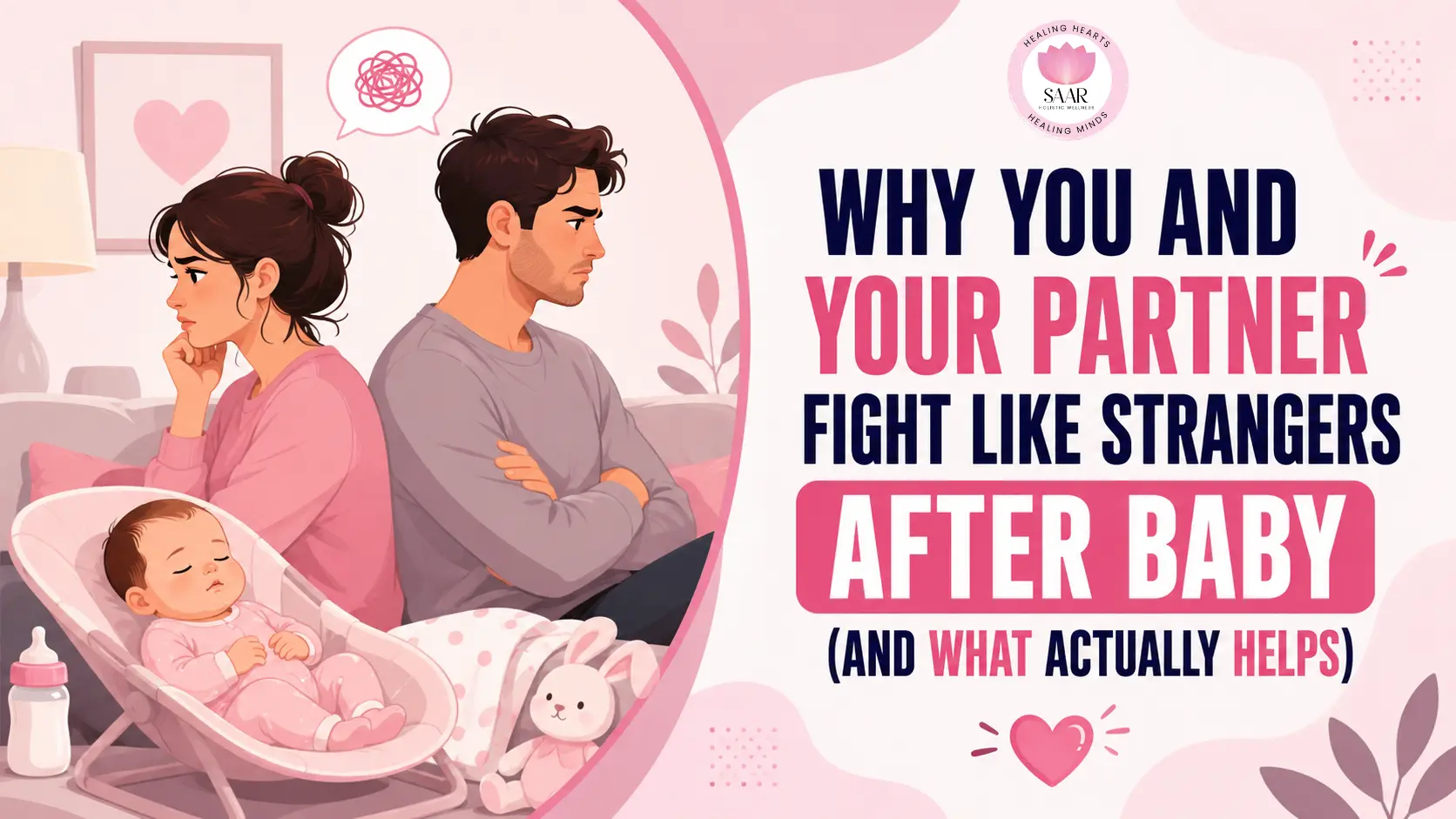
Research from the Gottman Institute found that nearly 67% of couples experience a real decline in relationship satisfaction in the first three years after having a baby. If you’re reading this at midnight with a baby finally asleep on your chest, wondering why you and your partner seem to be fighting over the smallest things lately, I want you to know something first: you are not failing at this.
In my 17 years working with new parents, I have sat across from hundreds of couples who walked in convinced their marriage was broken. Almost every time, what I actually find is two exhausted, well-meaning people who never got a manual for this stage of life.
Why New Parents Fight More Than They Ever Did Before
The fighting rarely starts because the relationship was weak to begin with. It starts because everything changed at once, and nobody warned you.
Sleep deprivation is the biggest hidden trigger. When you are running on three hours of broken sleep, your brain’s ability to pause before reacting simply isn’t available to you. A comment that would have rolled off your back a year ago can feel like a personal attack now. This isn’t a character flaw. It’s biology.
Then there’s the mental load. Someone has to remember the pediatrician appointment, the diaper stock, the vaccination schedule, and whose turn it is to wake up at 3am. When this load falls unevenly, resentment builds quietly, often without either partner naming it out loud.
Identity loss plays a huge role too. You were a couple before you were “mom and dad.” Many parents tell me they miss the version of their relationship that existed before, and grieving that loss is something almost nobody talks about.
It’s Not About How Often You Fight
Here’s something I tell every couple in my practice: conflict itself is not the problem. What matters far more is how you fight. Are you able to repair after an argument? Do you still feel like a team underneath the tension, or has contempt crept in?
If you notice criticism, sarcasm, or a growing emotional distance rather than just tiredness-driven snapping, that’s usually the signal that it’s time for outside support, not a sign you’ve failed.
How Couple Counselling Helps New Parents Reconnect
This is where couple counselling becomes genuinely useful, not as a last resort, but as a proactive tool. In sessions, we work on:
Rebuilding communication that survives exhaustion. You learn to name what you need in a way that doesn’t sound like blame, even on your worst, most sleep-deprived day.
Rebalancing the invisible workload. Many couples have never actually sat down and mapped out who does what. Counselling gives you a structured, judgment-free space to do this.
Reconnecting as partners, not just co-managers of a household. We work on small, consistent rituals of connection that don’t require date nights you don’t have energy for.
Understanding each other’s stress responses. Your partner withdrawing isn’t rejection. Your partner needing to talk it out isn’t nagging. Once you understand the pattern, it stops feeling personal.
A Pattern I See Often in My Practice
Many of the couples I work with come from families where “adjusting quietly” was the expectation, especially for mothers. I often hear versions of, “I didn’t want to complain, everyone said this is just how it is after a baby.” I want to gently challenge that idea. Struggling doesn’t mean you’re doing it wrong, and staying quiet about it doesn’t make you stronger. It usually just means the resentment builds for longer before anyone addresses it.
In joint family setups particularly, there can be added pressure to appear united in front of parents or in-laws, even when things feel strained behind closed doors. This extra layer of performing okayness can make couples feel even more isolated in their struggle. Naming what’s actually happening, even just to each other first, is often the first real step toward things getting lighter.
You Don’t Have to Wait Until Things Feel Unfixable
One thing I say often to the mothers and fathers I work with: you don’t need to be in crisis to ask for help. Some of the strongest couples I’ve supported came in simply because they wanted to protect what they had, not because it was already broken.
If you’ve been feeling like you and your partner are drifting into a pattern of short tempers and long silences since your baby arrived, that feeling deserves attention. It is fixable, and you don’t have to figure it out alone.


