
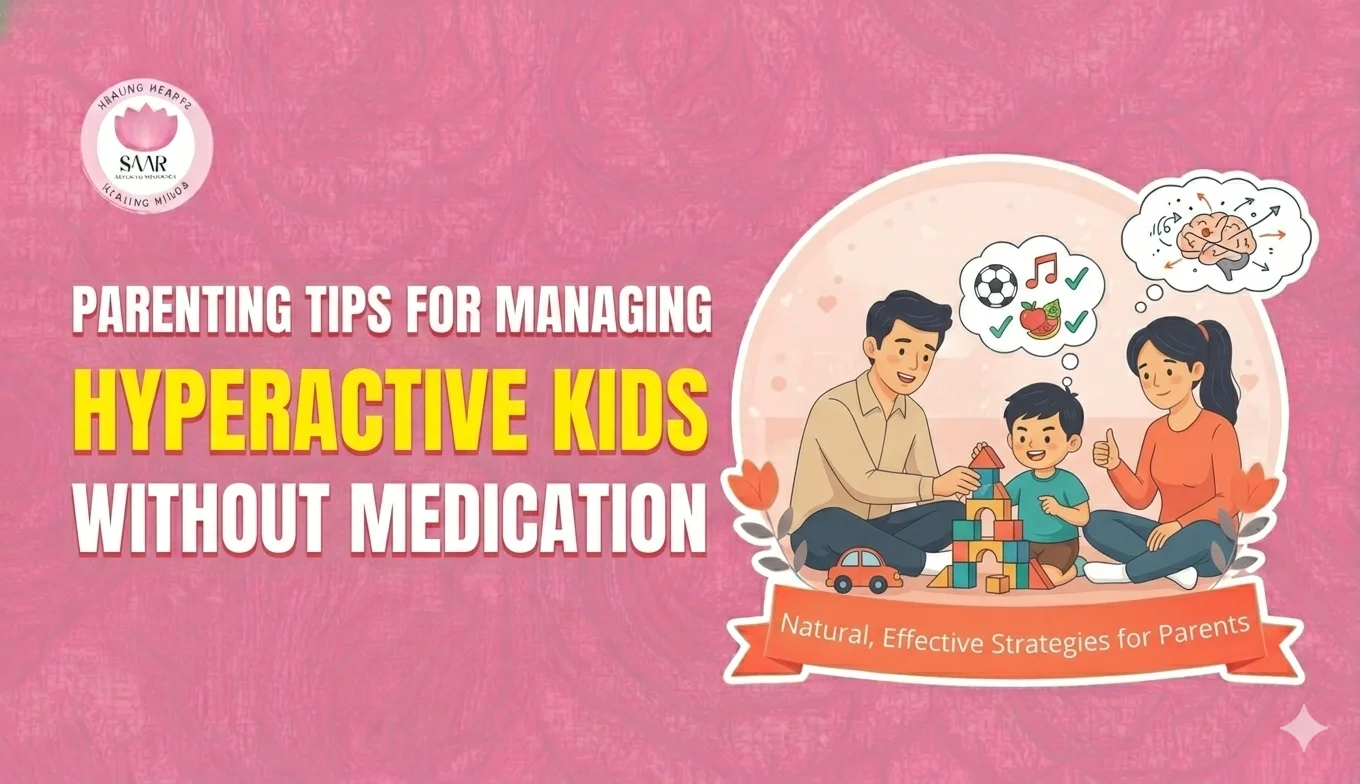
Parenting a hyperactive child can feel like running a marathon every single day.
The constant movement.
The impulsive reactions.
The repeated reminders.
The school complaints.
Many parents wonder:
“Can I manage my hyperactive child without medication?”
The answer is — in many cases, yes.
With the right structure, emotional tools, and consistency, significant improvement is possible.
This article shares practical, realistic strategies that work — especially when used patiently over time.
First, Understand What You’re Managing
Hyperactivity is not “bad behavior.”
It is often a regulation issue.
Hyperactive children typically struggle with:
- Impulse control
- Emotional regulation
- Attention management
- Sensory overstimulation
- Transitioning between tasks
When you understand that your child isn’t choosing to be difficult, your parenting approach shifts from punishment to guidance.
1. Create Predictable Daily Routines
Hyperactive children thrive on structure.
Unpredictability increases impulsivity.
Try:
- Fixed wake-up and sleep times
- Scheduled homework hour
- Regular meal timings
- Clear playtime and screen time limits
When children know what to expect, anxiety reduces — and so does disruptive behavior.
Consistency is more powerful than strictness.
2. Use Short, Clear Instructions
Long lectures overwhelm hyperactive children.
Instead of:
“Why don’t you ever listen? How many times do I have to tell you to clean your room?”
Try:
“Pick up your toys.”
Pause.
“Now put them in the basket.”
One step at a time improves compliance.
3. Build Movement Into the Day
Hyperactive kids have high physical energy. Suppressing it completely leads to explosions.
Include:
- Outdoor play
- Cycling or running
- Dance breaks
- Mini movement breaks between homework
Movement is not the enemy.
Unregulated energy is.
4. Focus on Emotional Regulation Skills
Instead of only correcting behavior, teach skills.
Help your child learn:
- Deep breathing (5 slow breaths)
- Counting to 10 before reacting
- Naming emotions (“I feel angry”)
- Taking a calm-down break
Skills change behavior long-term.
Punishment only suppresses it temporarily.
5. Practice Calm Discipline
Yelling increases overstimulation.
Hyperactive children already have a fast nervous system. Harsh discipline speeds it up further.
Use:
- Firm but calm tone
- Clear consequences
- Immediate but short corrections
- Positive reinforcement for small improvements
Progress may be slow — but consistency builds results.
6. Reduce Overstimulation at Home
Too much screen time, loud environments, or clutter can worsen hyperactivity.
Try:
- Limiting screen exposure
- Creating a quiet study corner
- Maintaining organized spaces
- Encouraging outdoor time over gadgets
Small environmental changes can make a big difference
7. Collaborate With School
Ask teachers:
- What triggers behavior most?
- Can short movement breaks help?
- Are seating adjustments possible?
Home and school consistency strengthens outcomes.
A Special Note for Mothers 💛
Let’s pause here.
Managing a hyperactive child without medication requires extra patience, structure, and emotional control — which often falls heavily on the mother.
You may feel:
- Tired of repeating instructions
- Guilty after losing patience
- Embarrassed after school complaints
- Worried about the future
And the questions begin:
- “Did I not raise my child properly?”
- “Am I not giving enough time?”
- “Is everyone judging me?”
- “What if this affects my child’s future?”
Some days, you feel strong.
Some days, you feel completely drained.
But struggling does not mean failing.
It means you’re handling something that requires more support than usual.
And sometimes, you need help too.
When a mother feels calmer and supported,
a hyperactive child feels safer and more regulated.
You deserve guidance — not judgment.
When to Consider Professional Guidance
If behavior:
- Is intense and daily
- Affects academics or friendships
- Causes emotional distress
- Leads to constant conflict at home
Seeking professional support does not automatically mean medication.
It may simply mean:
- Behavior therapy
- Parenting coaching
- Emotional regulation training
- Structured behavioral plans
Early guidance can reduce long-term stress.
If you are:
- Feeling exhausted managing daily behavior
- Unsure whether medication is necessary
- Confused about what strategies actually work
- Tired of blaming yourself
👉 You don’t have to navigate this alone.
Parenting guidance can help you:
✔ Understand your child’s hyperactivity clearly
✔ Learn calm discipline techniques
✔ Reduce guilt and emotional burnout
✔ Build a structured, peaceful home routine
Because managing hyperactivity is not about control.
It’s about regulation, connection, and support.
And with the right approach, change is possible.


