
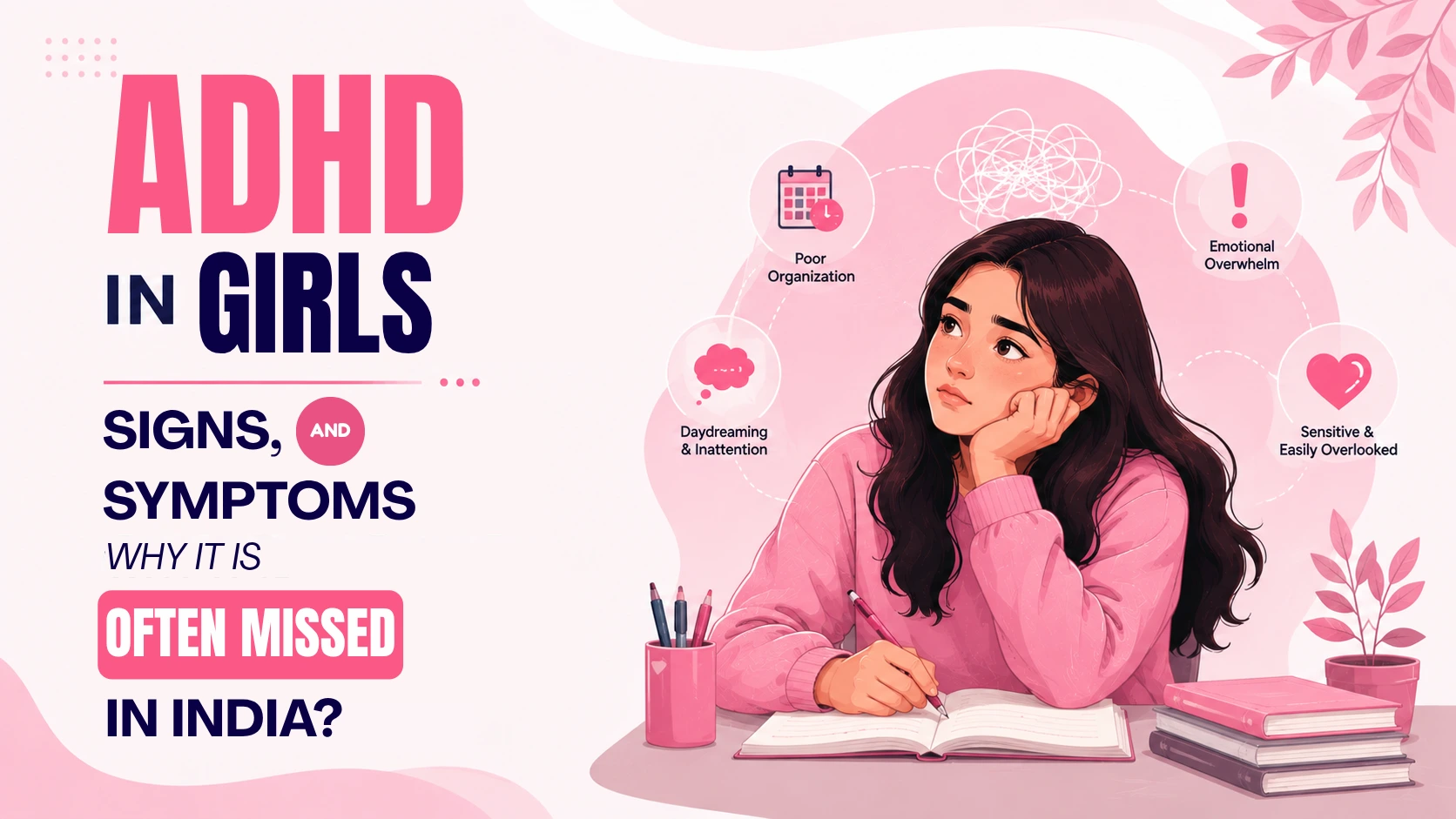
A girl sits quietly in class. She does not disturb anyone. She may even get decent marks.
But every day, she comes home exhausted. Homework takes hours. She loses things constantly. She cries when small plans change. She is called careless, distracted, emotional, or lazy.
And because she is not running around the classroom or getting into trouble, adults may not think of ADHD.
A 2024 study of 700 school-aged children in Hyderabad found that 9.57% screened positive for ADHD. The study also found that boys were identified much more often than girls. This does not mean every quiet or forgetful girl has ADHD. But it does remind us of something important: many girls struggle quietly for a long time before someone notices.
As a psychologist and a mother, Reena Chopra has spent more than 17 years supporting children and families through emotional, behavioural, and parenting challenges. One concern she often hears from parents is:
“She is intelligent, but why does everything feel so hard for her?”
Sometimes, the answer is not a lack of effort. It may be that the child needs a deeper understanding, the right support, and an assessment from a qualified professional.
What Does ADHD in Girls Look Like?
ADHD stands for Attention-Deficit/Hyperactivity Disorder. It is a neurodevelopmental condition that can affect attention, planning, organisation, impulse control, and emotional regulation.
Many people still imagine ADHD as a child who cannot sit still, talks loudly, or disrupts class.
That can happen. But it is not the only way ADHD appears.
In girls, ADHD may look more like:
- Daydreaming during class
- Forgetting instructions or losing belongings
- Taking a very long time to begin or complete work
- Struggling to organise school bags, books, or daily routines
- Becoming overwhelmed by simple tasks
- Feeling deeply hurt by criticism or rejection
- Trying very hard to be perfect
- Staying quiet to avoid being noticed
- Doing well in one subject but falling behind in another
- Feeling mentally tired after a normal school day
A child can be bright, kind, polite, and still be struggling with ADHD.
Good marks do not always mean a child is coping well. Some girls work twice as hard to keep up. They may stay up late, depend heavily on parents, panic before deadlines, or quietly feel that they are “not good enough.”
10 Quiet Signs of ADHD in Girls Parents and Teachers Can Miss
These signs are not a diagnosis checklist. Many children experience some of them occasionally.
What matters is whether the pattern is persistent, seen in more than one setting, and affecting school, friendships, confidence, or daily life.
1. She Daydreams or Seems “Lost in Her Own World”
Your daughter may look calm and quiet, but her mind may be somewhere else.
She may miss parts of a teacher’s instruction, forget what she was asked to do, or stare at her notebook while everyone else has moved on.
Adults may say, “She just needs to focus.”
But for a child with inattentive ADHD, focusing is not always a simple choice.
2. She Keeps Losing Things
Water bottles, pencil boxes, homework sheets, school ID cards, hair clips, books, and even important messages from school can go missing often.
This is not always carelessness.
For some girls, it can be linked to difficulties with organisation, working memory, and keeping track of multiple tasks.
3. Homework Takes Much Longer Than It Should
A bright child may understand the lesson but still struggle to begin homework.
She may sharpen pencils, go for water, get distracted by one tiny sound, cry over a difficult question, or need repeated reminders to return to the task.
The issue may not be intelligence. Starting, planning, and finishing can feel much harder than it looks from outside.
4. She Is Extremely Sensitive to Criticism
Some girls with ADHD feel emotions deeply.
A small correction from a teacher, a disagreement with a friend, or a comment from a parent may lead to tears, anger, shame, or complete withdrawal.
This does not mean she is “too dramatic.”
It may mean she is already working very hard to manage things that others find easier.
5. She Tries to Be Perfect
Perfectionism can sometimes hide ADHD in girls.
A girl may spend far too long on one assignment because she is afraid of getting it wrong. She may avoid starting work because she feels overwhelmed. She may become upset if her handwriting is not perfect or if a routine changes unexpectedly.
Perfectionism is not always confidence. Sometimes, it is a child trying hard to hide how lost she feels.
6. She Talks a Lot in Safe Spaces
Not every girl with ADHD is quiet.
Some girls are very chatty at home, with close friends, or when they feel comfortable. They may interrupt, jump quickly from one topic to another, overshare, or struggle to wait for their turn.
At school, however, they may hold everything in because they do not want to be labelled as “difficult.”
7. She Seems Organised on the Outside but Feels Chaotic Inside
Some girls become excellent at masking.
They may colour-code notes, keep their room looking neat before guests arrive, or appear very responsible in front of teachers. But internally, they may feel anxious, exhausted, and constantly afraid of forgetting something important.
A child who looks organised may still be struggling to stay organised.
8. She Finds Friendships Confusing or Draining
Friendship challenges can be one of the quieter ADHD symptoms in teenage girls.
She may talk too much when nervous, interrupt without meaning to, miss social cues, or feel rejected after small changes in a friendship.
She may also become overly dependent on one friend because managing a group feels confusing or emotionally tiring.
9. She Has Strong Emotional Reactions After School
Some children hold themselves together all day at school and release their stress at home.
Your daughter may come home irritable, tearful, tired, or angry over something small. This can be especially confusing for parents because teachers may say she is “fine” in class.
But being quiet at school does not always mean she is comfortable at school.
10. She Says, “I’m Lazy,” “I’m Stupid,” or “I Can’t Do Anything Right”
This is one of the signs parents should take seriously.
When a child repeatedly struggles with tasks that seem easy for others, she may begin to blame herself.
Over time, this can affect confidence, motivation, friendships, and emotional wellbeing.
No child should grow up believing that her brain is a problem. She may simply need support that fits the way she learns and processes the world.
ADHD in Girls vs Boys: It Is Not a Competition
Every child is different. Boys can also have inattentive ADHD, and girls can also be highly active, impulsive, and loud.
Still, research suggests that girls are more likely to show inattention and internal emotional struggles, while boys are more often noticed for outward hyperactivity or disruptive behaviour.
This is one reason ADHD in girls is often missed.
A boy who keeps leaving his seat may be referred for support quickly.
A girl who quietly forgets homework may simply be told to “try harder.”
Neither child needs blame. Both need understanding.
Why ADHD in Girls Is Often Missed in India
The “Good Girl” Expectation
In many Indian homes and schools, girls are expected to be calm, obedient, organised, emotionally controlled, and helpful.
So when a girl is quiet, adults may assume everything is fine.
But some girls learn to hide their struggles because they do not want to disappoint parents, teachers, or family members.
Her Difficulties May Be Labelled as Personality
A girl with ADHD may be called:
- Lazy
- Careless
- Over-sensitive
- Moody
- Shy
- Disorganised
- A daydreamer
- Not serious about studies
These labels can stay with a child for years.
Instead of asking, “Why is she like this?” it helps to ask:
“What might be making this difficult for her?”
Anxiety Can Hide ADHD Symptoms in Teenage Girls
Anxiety and ADHD can sometimes appear together. A girl may worry constantly because she is afraid of forgetting something, missing a deadline, being judged, or making a mistake.
This is why a thoughtful assessment matters.
ADHD should never be diagnosed through social media posts, a single online quiz, or one difficult week at school.
A qualified professional considers the child’s developmental history, behaviour at home and school, learning needs, emotional wellbeing, and other possible explanations.
Is It ADHD, Anxiety, a Learning Difference, or Something Else?
It is understandable to search online when you are worried about your child. But similar symptoms can have different causes.
Forgetfulness, low focus, emotional outbursts, school stress, and tiredness may also be related to:
- Anxiety
- Sleep problems
- Learning differences
- Bullying or friendship stress
- Depression or low mood
- Vision or hearing concerns
- Family stress or a major life change
- Overwhelming academic pressure
This is why the goal should not be to attach a label quickly.
The goal is to understand what your child is experiencing and give her the right support.
What Parents Can Do if They Notice ADHD Symptoms in Their Daughter
Observe Patterns Without Judging
For two to three weeks, gently note down what you notice.
You can write down:
- When she struggles most
- What happens before she becomes upset
- Whether homework takes longer than expected
- What teachers say about her attention and participation
- Whether she loses items or forgets instructions often
- How she manages friendships and routines
This information can be useful if you decide to speak with a psychologist, paediatrician, or school counsellor.
Speak to Her Teacher With Curiosity
Instead of asking only, “Is she behaving in class?” ask questions such as:
- Does she need repeated instructions?
- Does she finish classwork on time?
- Does she seem distracted or daydreamy?
- Does she struggle during transitions?
- Does she ask for help when confused?
- Does she appear anxious about mistakes?
A child’s behaviour can look different at home and school. Both perspectives matter.
Protect Her From Shame
Avoid saying:
- “Why can’t you be more responsible?”
- “You are so lazy.”
- “You never listen.”
- “Your friends can do it, so why can’t you?”
Try saying:
- “I can see this feels difficult. Let’s break it into smaller steps.”
- “You are not in trouble. I want to understand what is happening.”
- “We can figure this out together.”
- “Needing support does not mean something is wrong with you.”
These small changes can make a child feel safer and more open.
Seek an ADHD Assessment When Needed
Consider professional support if the difficulties have been present for a long time and are affecting school, friendships, confidence, family life, or day-to-day routines.
An ADHD assessment for girls should look beyond obvious hyperactivity. It should include the child’s emotional experience, academic workload, organisational skills, social challenges, and coping patterns.
How to Support Girls With ADHD at Home
You do not need to make your home feel like a strict classroom. Small supports can make everyday life feel more manageable.
Keep Instructions Short and Clear
Instead of saying, “Clean your room, finish homework, pack your bag, and come for dinner,” give one or two steps at a time.
For example:
“First, put your maths book in the bag. Then come back and we’ll do the next step.”
Use Visual Reminders
A simple checklist near the study table or front door can help with routines.
For example:
- Water bottle
- Homework
- Pencil case
- School diary
- ID card
- Lunch box
Visual reminders reduce arguments because the child does not have to rely only on memory.
Build Breaks Into Homework Time
Many children focus better with short, planned breaks.
Try a simple pattern: 20 minutes of work, followed by a five-minute movement or water break. Adjust the timing according to your child’s age and needs.
Focus on Progress, Not Perfection
Celebrate effort, not only marks.
A child who starts homework without being reminded ten times has made progress. A child who remembers one item on her own has made progress.
Small wins build confidence.
When Should You Seek Help Urgently?
Seek prompt professional support if your daughter is showing:
- Persistent sadness or hopelessness
- Extreme anxiety or panic
- Severe school refusal
- Self-harm behaviour or talk of wanting to disappear
- Major changes in sleep, appetite, or daily functioning
- Complete withdrawal from friends and family
You do not have to wait until things become unbearable. Early support can protect a child’s confidence and emotional wellbeing.
A Gentle Reminder for Parents
Your daughter may not need more scolding, pressure, or comparison.
She may need someone to notice the effort behind her quietness.
When parents move from frustration to curiosity, children feel safer. And when a girl feels safe, understood, and supported, she can begin to see herself differently too.
Research Sources for Publishing
- Indian ADHD research reports wide variation across regions and assessment methods; a recent review discusses diagnostic inequities, including the under-recognition of girls. Read More…
- A 2024 study of 700 school-aged children in Hyderabad reported that 9.57% screened positive for ADHD, with more boys identified than girls. Read More…
- A major review found girls with ADHD are often under-recognised because their symptoms may be less overt and more inattentive or internalised. Read More…
- ADHD assessment considers whether symptoms began in childhood, occur across more than one setting, and affect functioning. Read More…


