
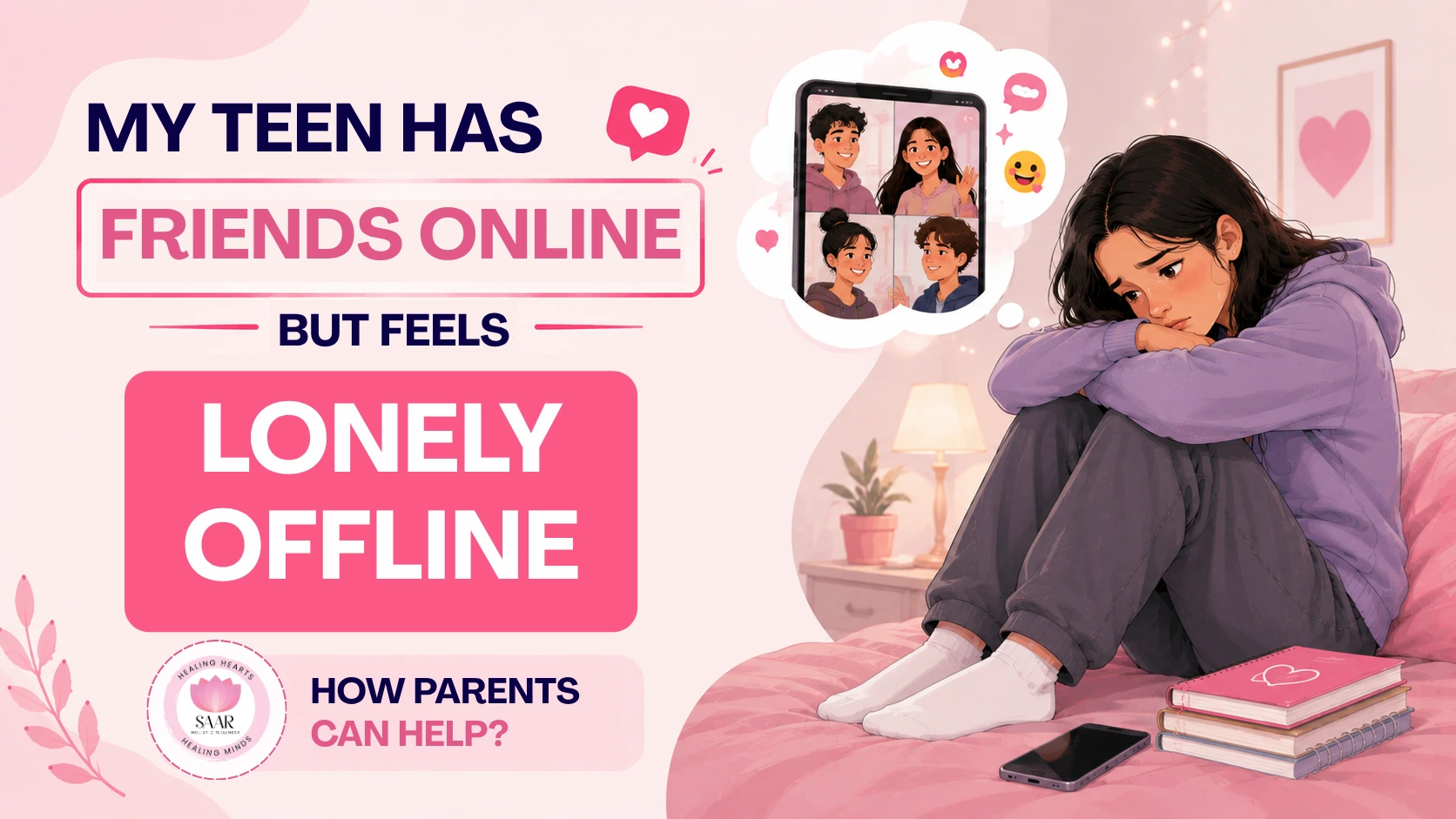
Your teenager is constantly on Discord, gaming with friends, sending memes, or chatting in group messages.
So why do they still say, “I have no one,” “Nobody gets me,” or “I feel lonely”?
It can be confusing for parents. You may see hundreds of contacts and think, “But you are always talking to someone.” Yet connection is not counted by followers, group chats, or game invitations.
India’s NCERT Manodarpan survey of 379,842 students in Classes 6 to 12 found that 27% felt lonely two or three times a week. The survey does not tell us why each student was lonely. But it confirms something important: a teenager can be surrounded by classmates, family, and online conversations and still feel emotionally alone.
Psychologist Reena Chopra, founder of Saar Holistic Wellness, encourages parents to look beyond screen time alone. The better question is not “How many online friends does my teen have?” It is “Does my teen feel seen, safe, and able to be real with someone?”
Can a Teenager Have Online Friends and Still Feel Lonely?
Yes. Online friendships can be genuine, supportive, and meaningful. A teen may find people with shared interests, identities, humour, or experiences that they do not find easily at school.
Online connection is not automatically shallow or harmful.
But a teen may still feel lonely when:
- Conversations stay surface-level
- They feel excluded from group chats or gaming sessions
- Their online relationships feel unpredictable
- They are comparing themselves to others’ highlight reels
- They have no one to sit with, talk to, or relax with offline
- They are worried about being judged if they share their real feelings
- They have been bullied, rejected, or left out at school
- They use the phone to escape loneliness but do not feel better afterward
Being connected is not the same as feeling connected.
Signs Your Teen May Be Feeling Lonely
Teenage loneliness does not always look like sadness. It can show up as irritability, withdrawal, endless scrolling, or saying “I am fine.”
You may notice that your teen:
- Spends most free time alone in their room
- Has online friends but rarely meets peers in person
- Stops going to activities they once enjoyed
- Feels left out after looking at social media
- Becomes upset when they are not included in plans
- Says nobody understands them
- Has a strong fear of missing out (FOMO)
- Avoids school or talks about not fitting in
- Sleeps too much, too little, or late into the day
- Loses interest in hobbies
- Seems quieter, more angry, or more tearful than usual
- Shares worries with strangers online but not with family
One sign does not mean a teen is in crisis. Look for a change from their usual self, especially if it lasts for weeks or affects school, sleep, eating, friendships, or daily functioning.
Why Online Friends May Not Solve Offline Loneliness
Online Spaces Can Feel Safer but Less Grounded
Online friendships may offer a low-pressure way to connect. Your teen can choose when to respond, avoid eye contact, and leave a conversation more easily.
That can be helpful. But if all connection is online, a teen may miss the everyday warmth of shared routines: walking home together, sitting beside someone in class, playing sport, sharing food, or being comforted when they look upset.
Comparison Can Deepen the Feeling of Being Left Out
A teen may see photos of classmates at a birthday party, outing, or lunch they were not invited to. Even when the images do not show the full story, the hurt can feel very real.
Avoid dismissing it with “It is only social media.” Instead, say:
“I can see why that would sting. Being left out hurts.”
Social Anxiety Can Keep a Teen at a Distance
Some teenagers want offline friendships but worry intensely about rejection, embarrassment, or not knowing what to say. Online conversations may feel manageable while face-to-face situations feel frightening.
If fear is regularly stopping your teen from attending school, joining activities, or seeing people, it may be useful to explore social anxiety with a qualified professional.
School Stress, Bullying, or Identity Concerns May Be Underneath
Loneliness can grow after a friendship breakup, move, bullying experience, academic struggle, family conflict, or change in confidence.
A teenager may not name these problems directly. They may just say they are tired, bored, or do not want to go anywhere.
Do not assume the phone is the entire story. Ask what the phone may be helping them cope with.
How Parents Can Talk About Teen Loneliness Without Making It Worse
Choose a Low-Pressure Moment
Do not start the conversation in the middle of an argument about screen time.
Try during a car ride, walk, meal preparation, or while doing something side by side. Some teens talk more easily when they do not have to make eye contact.
Lead With What You Notice
Instead of asking, “Do you have friends or not?” try:
“I have noticed you seem a little down after being online lately. I am not here to judge your friends. I just wanted to check how you have been feeling.”
This is less likely to make your teen defensive.
Listen Before You Fix
If your teen opens up, do not rush to offer a lecture, call another parent, or say, “Just make new friends.”
Try:
“That sounds lonely.”
“Thank you for telling me.”
“What would feel supportive from me right now listening, helping you think of options, or just sitting with you?”
Feeling heard is often the first step toward feeling less alone.
Respect Online Friends While Keeping Safety in View
Calling all online friends “fake” can shut down communication. Instead, stay interested.
Ask:
- “What do you enjoy doing together online?”
- “Do you know how old they are and where they are from?”
- “Do you ever feel pressured to share personal details or photos?”
- “What would you do if someone online made you uncomfortable?”
Encourage privacy: no sharing of address, school, live location, passwords, intimate images, or personal documents. Keep the tone protective, not suspicious.
Practical Ways to Help a Lonely Teen Build Offline Connection
Start Small and Specific
“Go make friends” is too big and too vague.
Help your teen choose one manageable step, such as:
- Sitting with one familiar classmate at lunch
- Inviting one person for chai, a game, or a short outing
- Joining a club, sport, class, or volunteering activity
- Reconnecting with an old friend by message
- Attending a hobby group with a sibling or cousin at first
The goal is not to become popular. It is to create one or two relationships where your teen feels accepted.
Use Interests as a Bridge
Shared interests make conversation easier. Art, music, books, gaming, sports, coding, dance, theatre, photography, language classes, animal care, and volunteering can offer more natural ways to meet people.
A structured group may feel less intimidating than an unplanned social event.
Build Connection at Home Too
Parents cannot replace peers, but home can be a strong protective base.
Try small, repeatable rituals:
- A ten-minute evening walk
- Tea or a snack together after school
- A weekly movie or game night
- Cooking one meal together
- A non-judgemental check-in before bed
Do not make every conversation about marks, behaviour, career, or the phone. Let some time simply be about being together.
Support Routine, Sleep, and Movement
Loneliness can worsen when a teen is isolated, sleep-deprived, and inactive. Gentle structure helps even when motivation is low.
Support regular sleep, meals, daylight, movement, and one predictable activity outside the bedroom. This is not a punishment plan. It is a way to give the mind and body more chances to feel steady.
What Not to Say to a Lonely Teen
Avoid statements such as:
- “You have so many friends online. How can you be lonely?”
- “Just go out more.”
- “When I was your age, we did not have these problems.”
- “Stop being so sensitive.”
- “You are always on your phone that is why.”
- “You should be grateful.”
These phrases may come from worry, but they can make a teen feel more misunderstood.
You can set healthy boundaries around screens while still acknowledging that loneliness is real.
When Loneliness Needs Professional Support
Seek support if your teen’s loneliness is intense, lasts for weeks, or comes with signs of anxiety or depression.
It is especially important to act if your teen:
- Stops attending school or activities
- Is being bullied or harassed
- Withdraws from everyone
- Has major changes in sleep, appetite, or mood
- Talks about being worthless, hopeless, or a burden
- Uses alcohol, drugs, or risky online spaces to cope
- Mentions self-harm, suicide, or not wanting to be alive
If your teen mentions self-harm, suicide, or immediate danger, seek urgent local emergency or mental-health support immediately.
A qualified psychologist can help your teen understand the feelings underneath their withdrawal and build skills for safer, more satisfying connection.
Research Sources for Publishing
- NCERT’s Mental Health and Well-being of School Students, A Survey, 2022 included 379,842 students in Classes 6–12 from 28 States and 8 Union Territories. It reported that 27% felt lonely two or three times a week. Read More…
- The report notes that, as students moved from middle to secondary stage, they reported lower satisfaction with personal and school life and less availability of people with whom to share feelings. Read More…
- A 2025 Pew Research Center survey provides non-India context: many US teens said social media helped them feel more connected to friends, while parents often overestimated teens’ comfort discussing mental health. Read More…
Your teen may not need you to solve every friendship problem. They may first need to know that their loneliness makes sense and that they do not have to carry it alone.


