
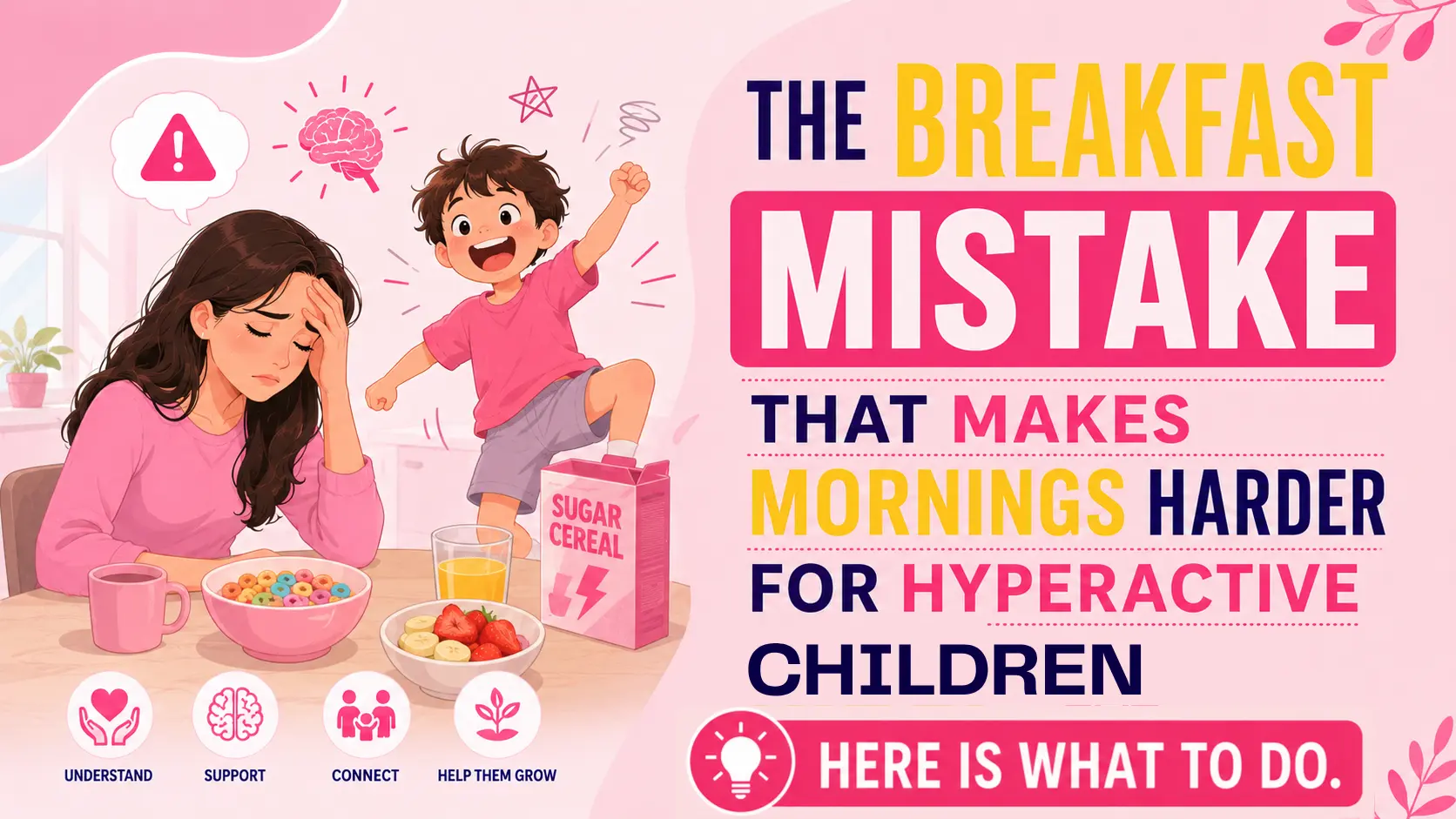
A 1998 study in the Archives of Pediatrics & Adolescent Medicine found that children who ate breakfast regularly showed lower hyperactivity, better attention, and fewer behaviour problems in school. In my own practice, I see this game almost weekly. A mother will describe a chaotic morning: a meltdown over shoes, a fight over homework that was forgotten, a child who simply cannot sit still at the table and when I ask what he ate before leaving the house, the answer is often “just some toast” or “nothing, we were late.”
I am not saying breakfast is the whole answer. Hyperactivity in children is layered sleep, screen time, emotional regulation, and yes, sometimes ADHD itself all play a part. But breakfast is one of the few things we can control every single day, and it is one of the fastest levers I have seen parents pull with real results.
In my 17 years of working with families, I have found that what a hyperactive child eats first thing in the morning can shape the next four hours more than we realise.
Why Breakfast Matters So Much for a Hyperactive Child
Children with hyperactivity or ADHD often have less steady blood sugar regulation than other kids. A sugary or all-carbohydrate breakfast think a bowl of sweet cereal, a plain paratha, or juice and toast gives a quick spike of energy followed by a crash. That crash usually happens right around the time your child is sitting in a classroom, needing to focus.
Research backs this up clearly. Studies on children with ADHD have repeatedly found that a high-carbohydrate breakfast leads to worse attention scores than a high-protein one. This isn’t about willpower or discipline on your child’s part, it’s biology. A brain that’s running on an unstable fuel source will struggle to regulate impulses and attention, no matter how much your child wants to sit still.
This is also why I gently push back when parents blame themselves for a “bad morning.” You are not failing your child by having chaotic mornings, you are simply working against a biological pattern that most parents were never taught about.
What a Calming, Focus-Friendly Breakfast Looks Like
When parents ask me for the best breakfast for a hyperactive child, I don’t hand them a rigid meal plan. I give them a formula, because real mornings need flexibility.
The formula: Protein + Complex Carbohydrate + Healthy Fat
- Protein steadies blood sugar and supports the neurotransmitters (like dopamine) that hyperactive and ADHD brains often need more support with.
- Complex carbohydrates release energy slowly, avoiding the sugar crash.
- Healthy fats support brain function and help your child feel full longer, reducing mid-morning irritability.
Some breakfasts I regularly recommend to Indian and globally-based families I work with:
- Vegetable-stuffed paratha with a side of curd, instead of a plain one
- Moong dal chilla with paneer or a boiled egg
- Besan chilla with a handful of nuts
- Oats cooked with milk, a spoon of peanut butter, and chopped fruit
- Boiled eggs with whole-grain toast and avocado
- A smoothie with milk or yoghurt, banana, and a spoon of nut butter, for children who resist sitting for a full meal
Notice that none of these require a specialty ingredient or an hour in the kitchen. Sustainable changes are the only changes that actually stick in a busy household.
Foods That Tend to Work Against Focus
I never like giving parents a long list of “forbidden foods” that usually backfires and creates guilt or power struggles at the table. Instead, I ask parents to notice patterns with these categories:
- Breakfast cereals high in added sugar
- Packaged fruit juices (even the “100% juice” kind spikes blood sugar quickly)
- White bread or refined flour with nothing else on the plate
- Foods with artificial colours or preservatives, which some research links to increased hyperactivity in sensitive children
I always tell parents: try removing one thing at a time and observe your own child, rather than overhauling the whole kitchen overnight. Every child’s sensitivity is different, and what matters most is what you learn about your own child, not a generic rulebook.
Making It Work on Rushed Mornings
I know the theory is easy, and the 7 a.m. reality with a hyperactive child is not. So here are a few adjustments that busy parents I work with have found realistic:
- Prep the night before. Chop vegetables for the chilla batter or boil eggs in advance, so mornings only need assembly, not cooking.
- Keep two or three “go-to” options on rotation rather than trying to be creative every day. Predictability actually helps hyperactive children, who often do better with routine than with variety.
- Let your child help, even in a small way stirring, pouring, or choosing between two options. A child who feels some control over breakfast is often more willing to sit and eat it.
- Don’t fight over finishing the plate. A few bites of a protein-rich breakfast are still more stabilising than a full plate of only carbohydrates. Aim for progress, not perfection.
Quick swaps that make a real difference:
| Instead of | Try |
| Sweetened cereal with milk | Plain oats with milk, banana, and a spoon of nut butter |
| Plain toast and jam | Toast with peanut butter and boiled egg on the side |
| Packaged fruit juice | Whole fruit, or a homemade smoothie with milk |
| Plain maggi or noodles | Vegetable and paneer-stuffed paratha with curd |
When Breakfast Isn’t the Whole Story
Sometimes a parent changes the breakfast completely and still sees a difficult morning. If that’s you, please don’t feel like you’ve failed. Diet is one piece of a much bigger picture that includes sleep quality, emotional regulation skills, and sometimes an underlying condition like ADHD that benefits from professional support alongside nutrition.
A calmer morning is possible but it rarely comes from one single fix. It comes from understanding your specific child.
This is exactly the kind of pattern-spotting I help parents with in one-on-one sessions looking at your child’s whole day, not just their plate, to understand what’s really driving the hyperactivity you’re seeing.


