
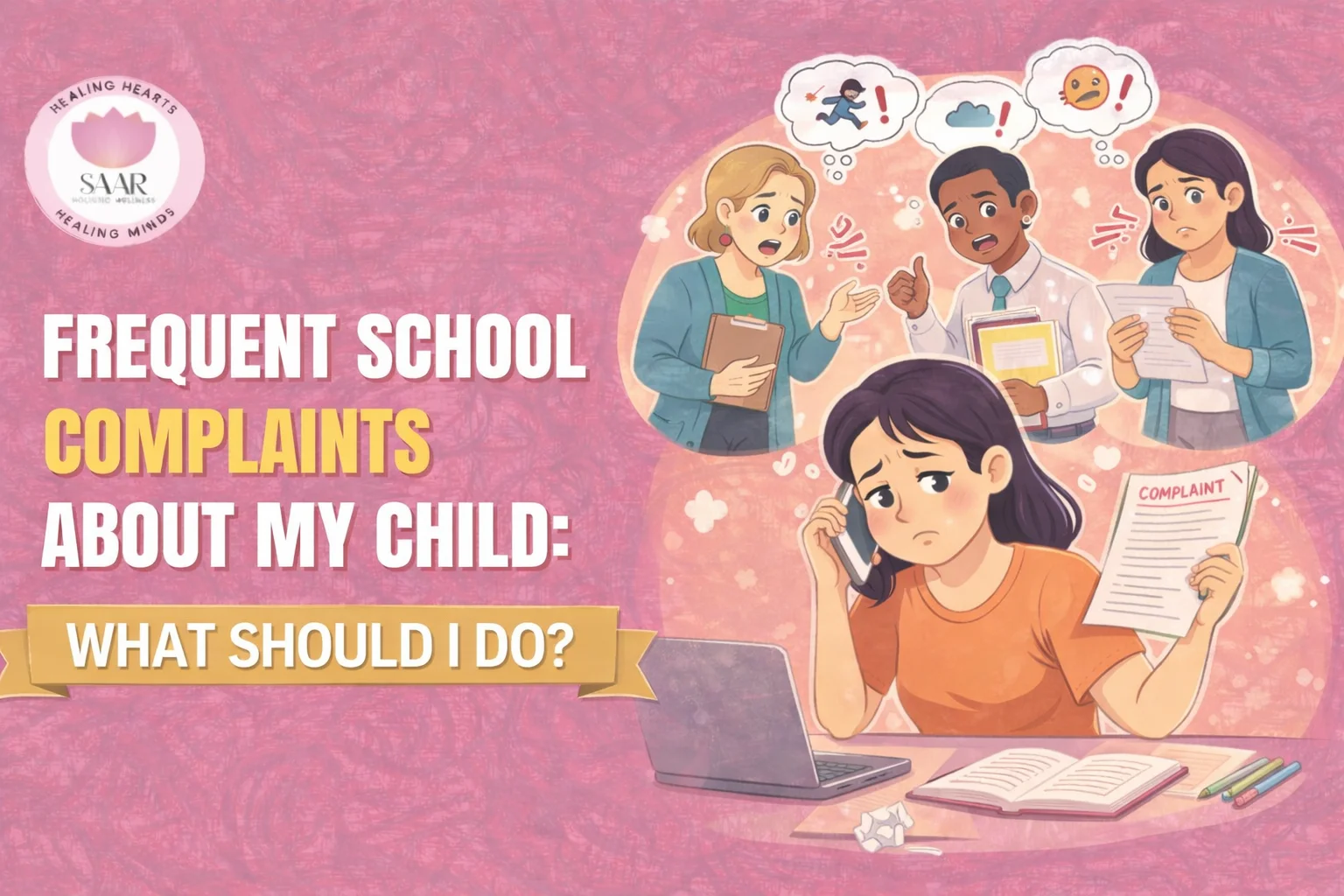
When the School Call Starts Making You Anxious
At first, it was just one complaint.
“Your child talks too much.”
“Your child doesn’t sit in class.”
“Your child pushed another child.”
“Your child is not focusing.”
You thought okay, it happens.
But then the complaints became frequent. Weekly. Sometimes daily.
Now, whenever the school number flashes on your phone, your heart sinks a little.
You start thinking: “What happened today?”
If this is your reality, you are not alone. Many parents go through this phase, and it is emotionally exhausting.
What Frequent School Complaints Really Mean
Let’s understand something very important:
Frequent school complaints usually do not mean:
- Your child is bad
- Your child is intentionally troubling the teacher
- Your child wants to create problems
Most of the time, frequent complaints mean your child is struggling with something, such as:
- Sitting for long periods
- Paying attention
- Following instructions
- Controlling impulses
- Managing emotions
- Handling frustration
- Managing energy in a structured classroom
School requires children to sit, listen, focus, wait, and control their emotions and some children find this much harder than others.
So complaints are often a sign of difficulty, not disobedience.
A Special Note for Mothers
Let’s talk honestly, because this part hurts the most.
When school complaints come, people don’t just complain about the child — they indirectly blame the mother.
They say things like:
- “You need to be more strict.”
- “You’re too soft.”
- “He only behaves like this because of you.”
- “Other kids don’t do this.”
But what people don’t see is:
- You waking up early every day
- Getting your child ready for school
- Packing bags and tiffin
- Helping with homework
- Managing mood swings and meltdowns
- Talking to teachers
- And still trying your best every single day
So if you are a mother dealing with frequent school complaints, please remember:
👉 You are not a bad mother.
👉 You are a tired mother who needs support and the right strategy.
What Parents Should Do When Complaints Become Frequent
1️⃣ Don’t Scold Immediately
When a child already had a bad day at school, scolding at home makes them feel worse and more resistant.
First understand, then correct.
2️⃣ Talk to the Teacher Calmly
Ask questions like:
- When does this behavior happen most?
- During which subject?
- Is it during writing, sitting, or transitions?
Patterns help find solutions.
3️⃣ Talk to Your Child Without Anger
Instead of:
“Why are you doing this every day?”
Try:
“Is something difficult in school? Tell me.”
Children talk more when they feel safe, not scared.
4️⃣ Focus on Skill-Building
Many children with frequent complaints need help with:
- Sitting tolerance
- Listening skills
- Emotional control
- Impulse control
These are skills and skills can be taught.
5️⃣ Work With the School, Not Against Them
When parents and teachers work together, children improve faster.
5️⃣ Work With the School, Not Against Them
When parents and teachers work together, children improve faster.
If you are dealing with:
- Frequent school complaints
- Daily stress because of school calls
- Feeling blamed and judged
- Not knowing how to help your child
You don’t have to handle this alone.
Our one-to-one parenting counselling sessions help parents:
- Understand why school complaints happen
- Learn practical behavior strategies
- Help children with attention and emotional regulation
- Communicate confidently with teachers
- Reduce stress at home
👉 Book a one-to-one session today because sometimes, parents need guidance too.


