
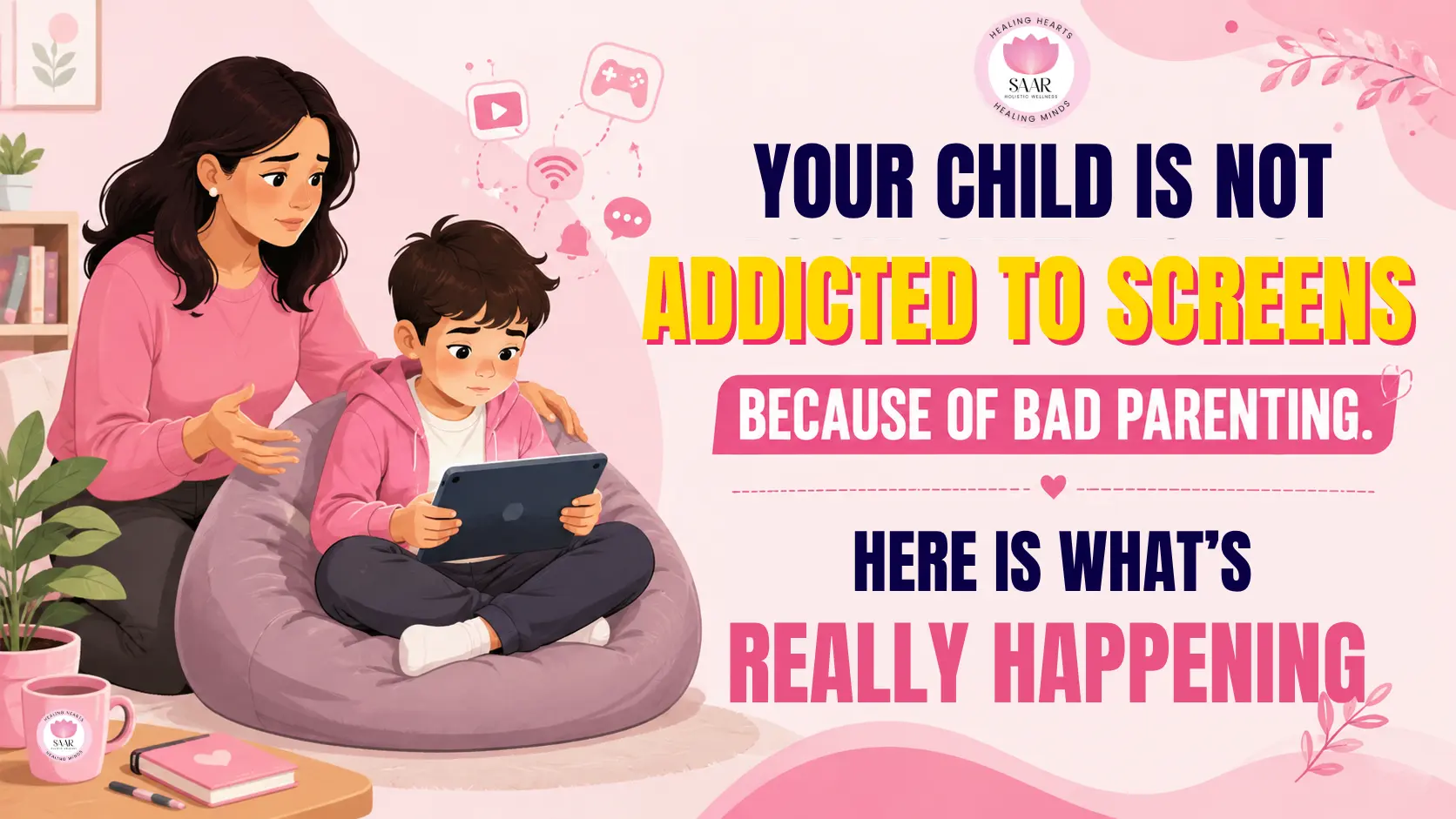
More than half of parents, 54 percent, have felt their child is addicted to screens. And 3 in 5 parents, 60 percent, feel guilty about their child’s screen time, with the top reasons including excessive time spent on screens, using them as a substitute for direct engagement, and sacrificing family time. (Source: Lurie Children’s Hospital Screen Time Survey, 2025)
I read those numbers and I think of every mother who has handed over a phone in a moment of exhaustion and then sat with the weight of it long after the screen was put away.
If you are one of those parents, I want you to read this next line carefully: you are not a careless parent. You are a tired parent using the tools available to you in a world that was not designed to make conscious parenting easy.
This blog addresses both sides of the screen conversation. It is for the parent who feels guilty about relying on screens and the parent who is actively trying to reduce them. Because both of those struggles come from the same place: a deep wish to do right by your child.
Why Children Become So Attached to Screens The Brain Science
Screens are not simply devices. For a child’s brain, they are a highly efficient reward system. Every video, every game, every swipe delivers rapid stimulation, instant feedback, and immediate gratification. The brain responds to this with dopamine, its primary reward chemical. And dopamine says one thing: “This feels good. Do it again.”
No waiting. No effort. No frustration. No imagination required. The brain naturally chooses the path of least resistance to reward. And screens are the most optimised reward path a child has ever encountered.
Screens tap into the parts of the brain that control the reward system. While social media and screens give us those small dopamine hits, the feeling is fleeting, which makes the user want to keep scrolling to get their next boost.
Now compare screens to real life: homework requires effort. Play requires imagination. Conversation requires patience. These are richer, more complex sources of reward but they require more from the brain before the reward arrives. A brain that has been trained on fast rewards naturally finds slower rewards less appealing over time.
This is not weak parenting. This is neurobiology.
What Healthy Screen Use Looks Like and What Becomes Concerning
Out of over 4,000 children surveyed, about 30 percent were showing signs of addiction to social media and 40 percent to video games by age 11. (Source: JAMA, 2025)
But screen use is not binary. Not all screen time is equal, and not all attachment is addiction. The shift from healthy use to concerning use is clearest when screens begin to replace other essential activities: sleep, movement, face-to-face interaction, boredom, and emotional connection.
Signs that screen use has become harder to manage include: resistance that goes well beyond a normal “I don’t want to stop,” significant behaviour changes after even short periods of use, a child who seems unable to engage meaningfully with anything that does not involve a screen, and increasing emotional dysregulation that is clearly tied to screen access.
The goal is not to be alarmed by every moment of resistance. It is to notice patterns, not incidents.
5 Real Parenting Scenarios Around Screens and What Actually Helps
“I Gave It for 10 Minutes. It Turned Into 30. And then came the battle.”
You intended a short window. But the boundary blurred, and then removing the screen created a conflict that felt completely disproportionate.
This is the dopamine cycle in action. The brain was mid-reward when you ended the screen. The removal feels, neurologically, like loss. Not just inconvenience. Loss. That is why the reaction is strong.
What actually helps: Prepare the brain before removal, not during it. “Five minutes left.” “Last video now.” “After this, we’ll do something together.” You are preparing the brain to shift, which reduces the intensity of the transition. The battle happens when removal is sudden. The calm comes when the brain is prepared for what comes next.
“Why Is My Child More Irritable After Screen Time, Not Less?”
This is one of the most common things parents describe to me, and one of the most misunderstood. You gave the screen hoping it would calm and settle your child. After it ended, they were harder to manage than before.
After screen exposure, the brain is in a state of high stimulation. When the screen turns off, the brain experiences a dopamine drop. That drop creates frustration, low patience, and emotional imbalance. Your child is not becoming more difficult. They are coming down from stimulation, and that descent feels uncomfortable.
What actually helps: Build transition time after screens rather than going immediately into demands or homework. A brief movement break, a walk outside, or a calm physical activity helps the brain move from high stimulation back to baseline before the next task is introduced.
“When I Take the Screen Away, the Reaction Is Extreme.”
Crying. Anger. Negotiation that goes on and on. And you are left wondering whether the reaction is normal, or whether something more is happening.
The intensity of the reaction reflects how deep into the reward cycle the brain was when access ended. This is not manipulation, though it can feel like it. It is the brain reacting to the interruption of a neurochemical cycle it was invested in.
What actually helps: Instead of removing suddenly, replace rather than restrict. “Let’s keep it here.” “Come sit with me.” “Let’s do something together for a bit.” You are offering connection as a replacement for the screen reward rather than leaving the brain with nothing. Connection, offered warmly and genuinely, can compete with dopamine. Removal alone cannot.
“I Give Screens Because I Am Exhausted. And then I feel terrible about it.”
You are tired. Mentally. Emotionally. Physically. The screen buys you fifteen minutes of quiet. And then, once your child is absorbed, you feel the guilt settle in.
I want to speak to this directly and honestly. <cite index=”38-1″>49 percent of parents rely on screen time every day to help manage parenting responsibilities. 1 in 4 say they have used screens because they could not afford childcare. 71 percent have used screens to manage their child’s behaviour in public.</cite>
You are not alone. And you are not failing.
Parental burnout is real. The exhaustion that leads to reaching for a screen is not a character flaw. It is a sign that you are carrying too much. The question to ask in those moments is not “Am I a bad parent?” but “What do I actually need right now?” Sometimes you need rest. Sometimes you need five minutes of quiet. Giving yourself permission to acknowledge that need honestly is the beginning of making more conscious choices around screens. Awareness changes guilt into choice.
“How Do I Know If We Have Found a Healthy Balance?”
The goal is not a screen-free childhood. That standard is neither realistic nor necessary. The goal is a connection-rich childhood where screens have a place but do not fill the places that human connection, movement, and creative boredom are meant to fill.
Children need movement to regulate energy. They need interaction to build connections. They need boredom to develop self-direction, creativity, and internal motivation. When screens begin to replace these experiences rather than occasionally supplement them, development is affected.
What actually helps: Create small, consistent non-screen moments rather than dramatic all-or-nothing rules. Talking during meals. Helping in the kitchen. Short play before bedtime. These moments may feel small. But they build emotional security at a depth that screens never can.
A Note to the Parent Who Is Holding Both Guilt and a Tired Heart
Research indicates that parental guilt around screen use enhances parental stress, which in turn relates to lower parent-child relationship satisfaction. In other words, the guilt itself, not just the screen use, affects the quality of your relationship with your child.
This matters. Because the antidote to problematic screen use is not more guilt. It is more connected. And you cannot offer connection from a place of chronic self-blame.
Your child does not need a perfect screen policy. They need a present parent. And a parent carrying heavy guilt is less present, not more. Becoming aware, making small changes, and offering yourself the same compassion you are trying to extend to your child is the path forward.
The Full Guide to Navigating Screens, Guilt, and Connection
Chapter 9 of I Am Not Hyper, I Am Helpless covers every aspect of child screen addiction and parental guilt, from the dopamine science behind screen attachment to the specific daily scenarios that make screens feel necessary. It is written without judgment, without extreme rules, and without the expectation of a perfect household.


