
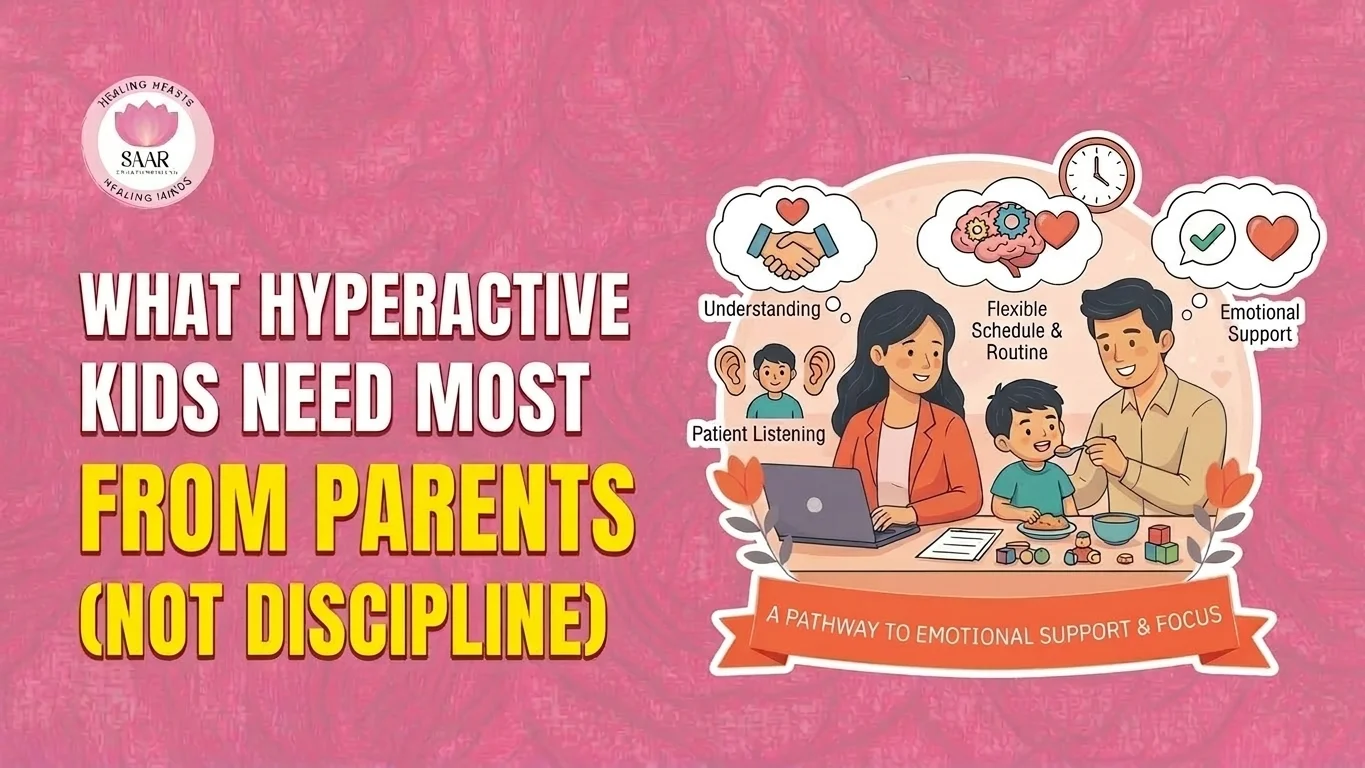
When a child is constantly moving, interrupting, reacting impulsively, or getting school complaints, the first instinct is often discipline.
“Be stricter.”
“Set stronger consequences.”
“Don’t let them get away with it.”
But here’s the truth:
👉 Hyperactive children don’t need more discipline.
They need more support.
Because hyperactivity is rarely about defiance.
It’s about regulation.
Let’s understand what they truly need from you.
1. They Need Understanding Before Correction
Hyperactive kids often struggle with:
- Impulse control
- Emotional regulation
- Attention management
- Transitioning between tasks
When they interrupt or overreact, it’s usually not intentional misbehavior.
It’s a skill gap.
Instead of:
“Why are you like this?”
Try:
“I see you’re finding this hard. Let’s figure it out.”
Understanding lowers resistance. Correction becomes easier after connection.
2. They Need Structure, Not Chaos
Hyperactive children thrive on predictability.
Unclear expectations increase anxiety and impulsivity.
They need:
- Fixed daily routines
- Clear rules
- Step-by-step instructions
- Consistent follow-through
Structure makes them feel safe.
Safety improves regulation.
3. They Need Help Regulating Emotions
Telling a hyperactive child to “calm down” doesn’t work.
They need to be taught how.
Teach:
- Deep breathing
- Counting before reacting
- Taking short breaks
- Naming feelings (“I feel angry”)
Emotional regulation is learned — not demanded.
4. They Need Movement — Not Suppression
Many parents try to reduce activity completely.
But movement helps regulate energy.
Allow:
- Outdoor play
- Physical breaks
- Sports
- Short activity bursts between tasks
The goal isn’t to stop energy.
It’s to channel it.
5. They Need Calm Parents
This is the hardest one.
Hyperactive children often trigger frustration.
But shouting or harsh reactions overstimulate their nervous system further.
Calm repetition builds skills.
Emotional reactions escalate chaos.
Progress may be slow but calm consistency works.
6. They Need Encouragement More Than Criticism
Hyperactive children hear “No” and “Stop” more than most kids.
Over time, they may begin believing:
“I’m bad.”
“I always mess up.”
Notice small improvements.
Praise effort:
“I saw you waited your turn today.”
“You tried to calm down. That’s progress.”
Encouragement builds confidence. Confidence improves behavior.
A Special Note for Mothers 💛
Let’s pause here.
When a child is hyperactive, the emotional weight often falls heavily on the mother.
You hear the school complaints.
You manage the daily reminders.
You handle public embarrassment.
You try to stay calm — even when you’re exhausted.
And the questions begin:
- “Did I not raise my child properly?”
- “Am I not giving enough time?”
- “Is everyone judging me?”
- “What if this affects my child’s future?”
Some days you feel patient.
Some days you feel overwhelmed.
And then guilt follows.
But hear this clearly:
👉 Your child’s hyperactivity is not proof of your failure.
It simply means your child needs different strategies — and you need support in learning them.
When a mother feels calmer and guided,
a hyperactive child feels safer and more regulated.
You don’t have to carry this alone.
A Gentle Reminder
Hyperactive kids don’t need:
- More yelling
- More punishment
- More comparison
They need:
✔ Understanding
✔ Structure
✔ Emotional coaching
✔ Calm consistency
✔ Encouragement
And parents need support too.
If you’re tired of daily discipline battles…
If you feel stuck between being too strict and too soft…
If you want strategies that actually work…
👉 It may be time to seek parenting guidance.
With the right tools, you can:
✔ Understand your child’s behavior clearly
✔ Replace frustration with structured calm
✔ Reduce guilt and emotional burnout
✔ Build a stronger parent-child connection
Because hyperactive children don’t need harsher discipline.
They need supported parents.
And change begins with understanding.


